Uzbekistan’s Premier Law University Launches Landmark Digital Law Programme, Signaling a New Era for Legal Education in Central Asia
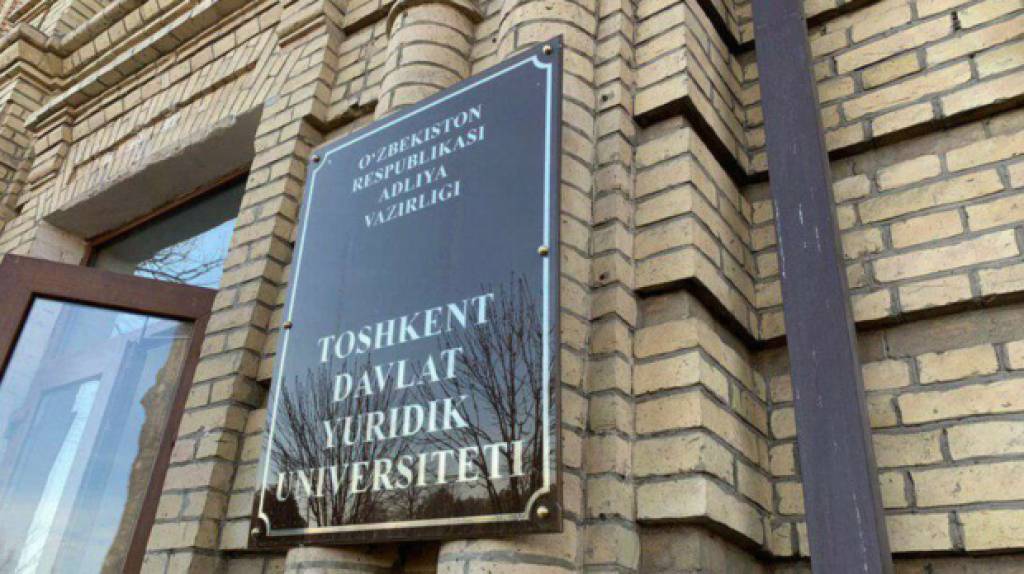
Tashkent State University of Law (TSUL) is preparing to launch what officials call an unprecedented programme in Uzbekistan’s higher education landscape – a fully English-language international bachelor’s degree in Digital Law, with its first cohort set to begin in the 2026/2027 academic year. The initiative, grounded in a specific presidential decree, places TSUL at the forefront of a global movement to produce lawyers capable of navigating the complex intersection of technology and law.
A Presidential Mandate
The programme’s creation was not born of academic initiative alone. It flows directly from Presidential Decree No. 232, signed on November 26, 2025, which formally tasked TSUL with establishing an international Digital Law educational track. For university administrators, the decree serves as both a mandate and a benchmark: the programme must meet international standards from the outset.
“Today, digital technologies are penetrating every sphere of our lives”, said Dildora Umarkhanova, representing TSUL’s academic leadership, in materials prepared for the programme’s launch. “Artificial intelligence, blockchain, and big data – all of these require legal regulation. Yet qualified specialists in this field remain scarce – not only in Uzbekistan but globally”.
The presidential decree places the Digital Law programme within Uzbekistan’s broader strategic vision, articulated in the Digital Uzbekistan 2030 strategy, which envisions the comprehensive digitization of public services, e-government systems, and regulatory frameworks. TSUL’s leadership advances a straightforward argument: transformation cannot succeed without a generation of lawyers who understand the technology they are asked to govern.
Admission: A Two-Stage Architecture
Perhaps the most immediately striking aspect of the new programme is its admissions architecture, which departs markedly from existing practice at Uzbek universities. Whereas conventional admission to TSUL has historically proceeded through a single round of state-administered tests covering law, foreign language, mathematics, and history, the Digital Law programme introduces a rigorous two-stage selection process.
In the first stage, applicants must demonstrate English-language proficiency at a minimum B2 level, as verified by an internationally recognized certificate such as IELTS or TOEFL. In addition, candidates will take an IQ-based cognitive assessment. University officials are explicit about the rationale: the Digital Law curriculum demands not merely the retention of legal norms but also the capacity for abstract reasoning, rapid adaptation to novel situations, and logical problem-solving across technical domains.
“We need to assess not only knowledge but also the intellectual potential of the applicant”, explained Bekhruz Shamsutdinov, responsible for the programme’s admissions design. The cognitive test, he noted, will be culturally neutral and language-independent, so a candidate’s cultural background will not influence their results – a design principle aligned with contemporary standards in high-stakes assessment.
Candidates who pass the first stage proceed to the second: taking state examinations administered by the Agency for the Assessment of Knowledge and Skills. Crucially, this maintains continuity with Uzbekistan’s established higher education framework while adding a substantive layer of international-standard screening. University officials note that comparable dual-stage admission processes are standard at leading law faculties in the United Kingdom, the United States, and other jurisdictions where cognitive aptitude testing is part of professional entry requirements.
Prospective applicants are advised to monitor TSUL’s official website. Registration for the 2026/2027 cohort will open in June 2026.
Amirjon Mardonov,
Lecturer at the Department of Law and Technologies,
Tashkent State University of Law