Uzbekistan youth present solutions to global food security challenges at the Rome Global Summit
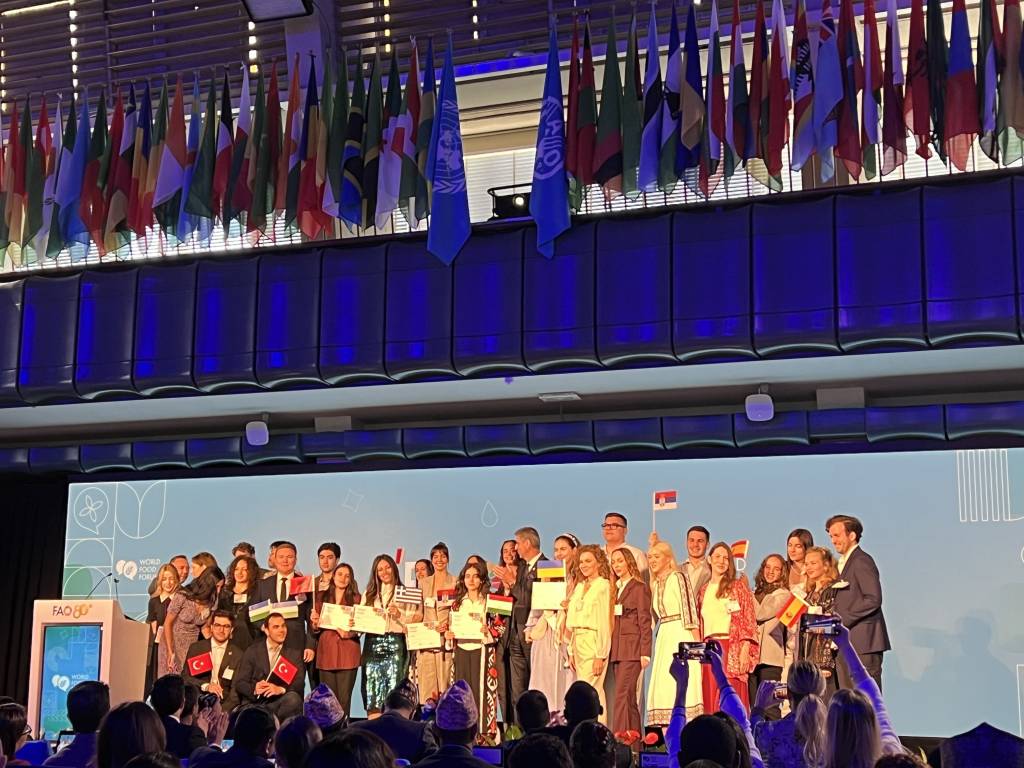
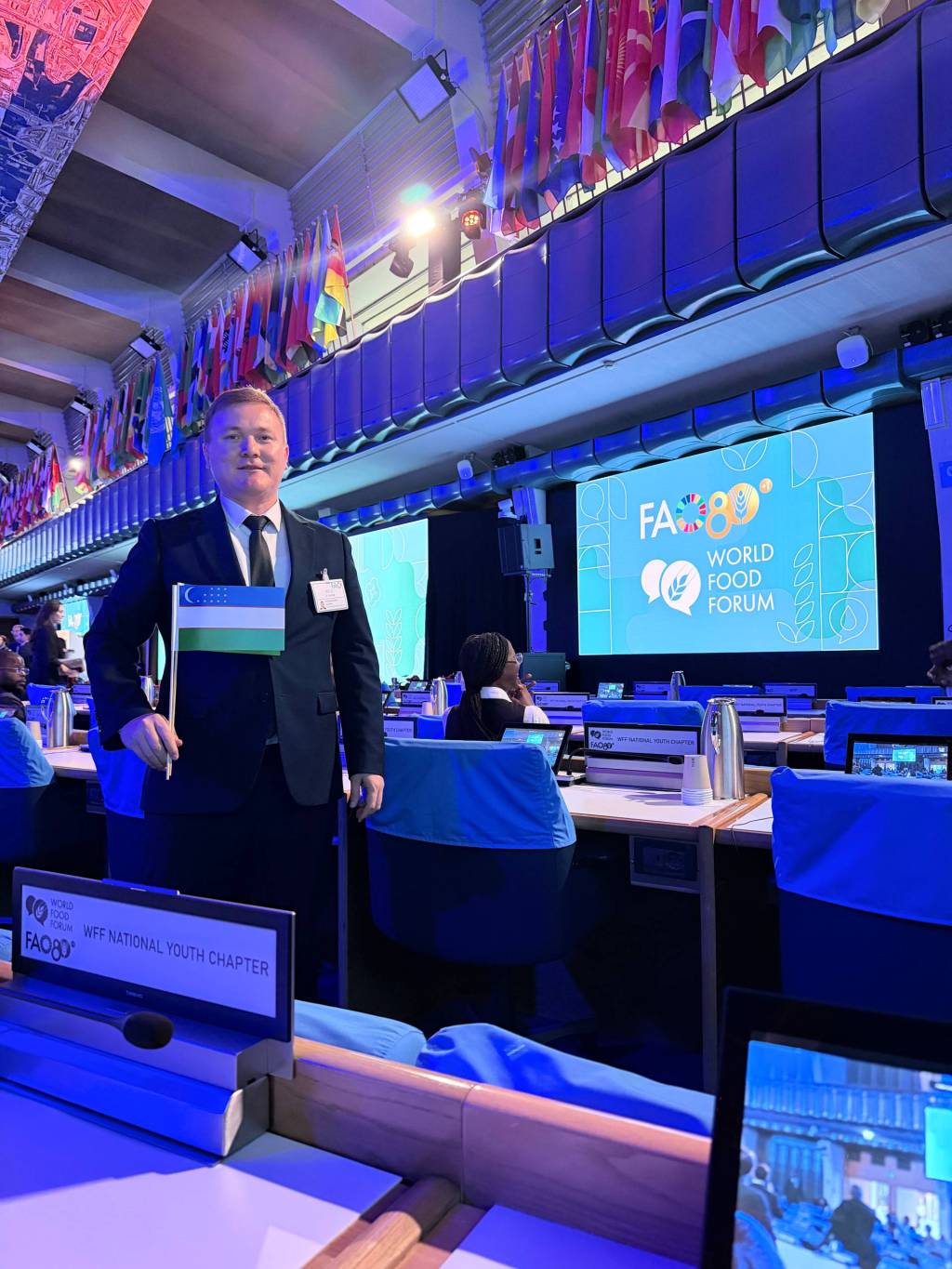
The World Food Forum 2026 took place at FAO Headquarters in Rome, Italy. A youth delegation from Uzbekistan also took an active part in this major international event, which aimed to build sustainable, inclusive, and climate-resilient agrifood systems.
Government officials, young professionals, and representatives of the WFF Uzbekistan National Youth Chapter attended the event. Led by Sherzod Umarov, Assistant FAO Representative in Uzbekistan, they shared the country’s experience and initiatives in international discussions on agrifood systems development and exchanged experiences with international partners.

At the Global Youth Forum’s opening ceremony, 35 new national youth platforms were officially launched worldwide, and youth activists received certificates.
The WFF network currently unites more than 100 national platforms worldwide. Uzbekistan National Youth Chapter, established in 2025 at the initiative of young people and with support from the Ministry of Agriculture and FAO, is the first of its kind in Central Asia. During the forum, the platform’s coordinator, Shavkat Kholdorov, and other youth leaders discussed local initiatives addressing food security and climate change adaptation.
Challenges young pastoralists face
As part of the event, FAO’s Regional Offices for Europe and Central Asia and for Asia and the Pacific hosted an interregional dialogue on the future of young pastoralists.
During the dialogue, which brought together representatives from Uzbekistan, Kazakhstan, Mongolia, Nepal, and Bhutan, Ahmadjon Nurullayev, Chief Specialist at the Social Policy Laboratory of the International Agriculture University, presented findings from national consultations held in Uzbekistan. The survey highlighted key challenges that need to be addressed to support the sector’s development:
71% of young pastoralists reported that livestock productivity had declined;
58% of respondents reported losses from livestock deaths;
70% of participants identified limited access to water sources, veterinary services, and markets as a major obstacle.
It was also noted that climate variability, restrictions on seasonal migration, and insecure grazing rights are reducing young pastoralists’ incomes.
A practical proposal from Uzbekistan
To address these challenges, Uzbekistan’s representative proposed a regional program to support young pastoralists. The initiative focuses on the following key areas:
– Develop community-based pasture management plans and strengthen the legal framework. Expand access to water, veterinary care, and financial services. Launch a pilot project to ensure young women and men are formally included in decision-making.
– Build regional cooperation to share drought-related information and monitor pasture conditions.
These proposals fully align with the efforts of the International Year of Rangelands and Pastoralists 2026, proclaimed by the United Nations General Assembly.
At the forum, the Minister of Agriculture Ibrohim Abdurahmonov met young Uzbekistan professionals training within the FAO system.
During the meeting, participants discussed the responsible use of water resources, adapting to climate change, implementing innovations, and strengthening food security. The Minister encouraged young professionals to help develop the sector by studying advanced solutions and adapting them to Uzbekistan’s needs.
The active participation of Uzbekistan youth in the World Food Forum highlighted the country’s commitment to global agricultural reform. The initiatives proposed and issues discussed will undoubtedly provide a strong foundation for developing sustainable agriculture in Uzbekistan and throughout Central Asia.
Fardona Yakhshiboyeva, UzA