Uzbekistan–UAE: a strategic partnership for economic development

Relations between Uzbekistan and the United Arab Emirates continue to develop on the basis of mutual trust, friendship, and mutually beneficial partnership. Since establishing diplomatic relations in 1992, the two countries have strengthened political dialogue, and cooperation in trade, investment, energy, and transport, as well as in education and advanced technologies, has expanded significantly.
Statistical data also confirm these dynamics. According to the National Statistics Committee, trade turnover between Uzbekistan and the UAE reached $1.3 billion in 2025. In January-August 2026, this figure totaled $1.2 billion.
Investments: over 450 enterprises and new projects
Investment cooperation has become a key pillar of bilateral economic relations. According to the Ministry of Investment, Industry and Trade of the Republic of Uzbekistan, more than 450 enterprises with UAE capital operate in Uzbekistan. Over the past three years, UAE investment in Uzbekistan has totaled approximately $3 billion.
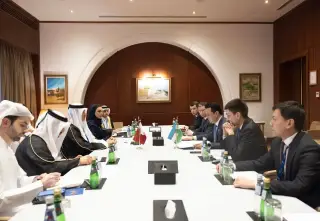
The high-level talks held on January 15, 2025, in Abu Dhabi, marked an important milestone in developing the economic partnership. The parties identified priority areas for cooperation, including artificial intelligence, digitalization, green energy, urban planning, infrastructure, tourism, and private business development. In addition, the parties set a goal to increase mutual trade tenfold by 2030 and to bring the investment project portfolio to $50 billion.
Green energy: turning agreements into projects
Masdar is a major investor in Uzbekistan’s energy sector. Six energy projects worth a total of $1.5 billion have been implemented in cooperation with Masdar.
The importance of such initiatives extends beyond increasing power generation volumes. They also help diversify energy sources, meet industrial demand, and modernize the country’s energy infrastructure.
On October 16, 2026, the President of Uzbekistan Shavkat Mirziyoyev met with heads of Masdar and AMEA Power. According to the President’s Press Service, since the beginning of the year, mutual trade between Uzbekistan and the UAE has increased by 40 percent. The prospects for implementing major investment projects were also discussed at the meeting.
Business relations with Dubai: New opportunities for entrepreneurs
On August 26 this year, the launch of the Uzbekistan Business Council in Dubai was announced, with the aim of fostering direct contacts among entrepreneurs, helping them find new partners, and promoting trade and investment initiatives.
According to available data, by the end of 2025, the number of Uzbekistan companies affiliated with the Dubai Chamber of Commerce reached 826, a 21.3 percent increase from 2024. In the first half of 2026, an additional 75 Uzbekistan companies joined the chamber. These figures indicate growing interest among domestic businesses in the UAE market.
Prospects for further interaction were also discussed on October 7, 2026, at a business roundtable during the Investopia Bridge Forum in Abu Dhabi. The participants discussed opportunities for cooperation in energy, telecommunications, artificial intelligence, finance, agriculture, food security, tourism, and transportation logistics.
Partnership outcomes and what lies ahead
Over 34 years of diplomatic relations, cooperation between Uzbekistan and the UAE has evolved into a multifaceted economic partnership spanning trade, investment, energy, and entrepreneurship. The growth in trade turnover, the rising number of enterprises with Emirati capital, and the implementation of energy projects clearly demonstrate the dynamics of bilateral interaction.
The next stage is to ensure practical returns from the agreements reached. To do so, Uzbekistan must diversify exports, expand joint production, create new jobs, and ensure investment projects launch on time.
Ongoing cooperation between Uzbekistan and the UAE creates additional opportunities to strengthen both countries’ economic potential and expand mutually beneficial ties. Ultimately, the effectiveness of this partnership should be assessed by its specific results – its contribution to sustainable economic development and to the improvement of people’s well-being.
Musulmon Ziyo, UzA