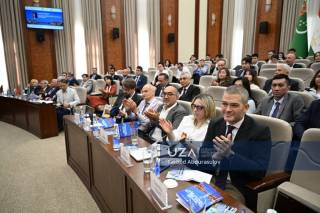
Uzbekistan delegation attends the Issyk-Kul International Forum
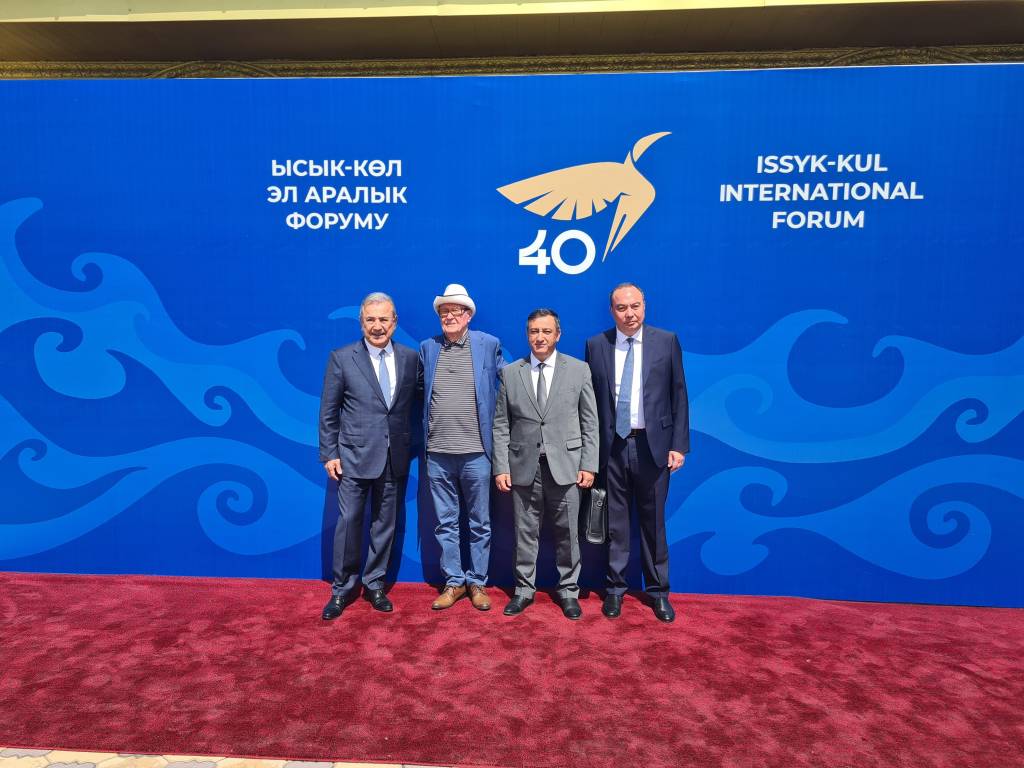
A delegation of the Republic of Uzbekistan, led by Sodiq Safoyev, First Deputy Chairman of the Senate of the Oliy Majlis of the Republic of Uzbekistan, participated in the Issyk-Kul International Forum.
The delegation also included Eldor Aripov, Director of the Institute for Strategic and Regional Studies under the President of the Republic of Uzbekistan, and Azamat Sulimanov, a Department Head at the Institute.
The Issyk-Kul International Forum is a well-established platform dedicated to discussing global challenges and exploring the influence of culture, science, and moral values on the world’s development. The inaugural forum took place in 1986 in Bishkek and Cholpon-Ata. Renowned humanist writer Chingiz Aitmatov was elected as the Forum’s President. Over time, it has united leading statesmen, public figures, scholars, and representatives from cultural and artistic sectors.
This year’s forum, themed “A World at a Civilizational Turning Point: Moving into the Future Together”, focused on addressing contemporary global challenges, strengthening international dialogue, and promoting humanistic values.
The forum brought together government officials, parliamentarians, heads of think tanks, scholars, cultural and artistic figures, and leading experts from 15 countries.
Participants included Bajram Begaj, the President of Albania, Nobel Prize laureate in Literature Mo Yan, writer Wang Meng, historian Peter Frankopan, Uzbek filmmaker Ali Khamraev, artist and arts manager Vasily Tsereteli, among others.
Speaking at the forum’s plenary session, S.Safoyev noted that the modern world is facing a profound crisis and a period of strategic uncertainty. He said, “Dialogue is increasingly giving way to mutual accusations, cooperation to fragmentation, and law to the use of force”.
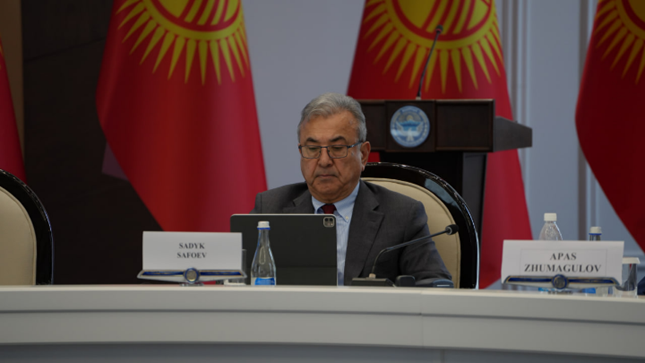
In this context, he underscored the enduring relevance of Chingiz Aitmatov’s spiritual and intellectual legacy. He noted that Aitmatov is needed today not only as a great writer of the past but also as a wise interlocutor about the future, raising timeless questions about human responsibility, historical memory, humanity’s relationship with nature, and moral choice.
Particular attention was devoted to developments in Central Asia. Mr. Safoyev emphasized that, against the backdrop of global fragmentation, the region is following a different trajectory – one marked by growing trust, cooperation, and shared responsibility for the future.
He noted that, thanks to the political will of the leaders of the Central Asian states, many issues once considered irresolvable have been successfully addressed in recent years. International partners increasingly view the region not as a collection of separate states but as a predictable area of progress and a unified, substantial market for trade and investment.
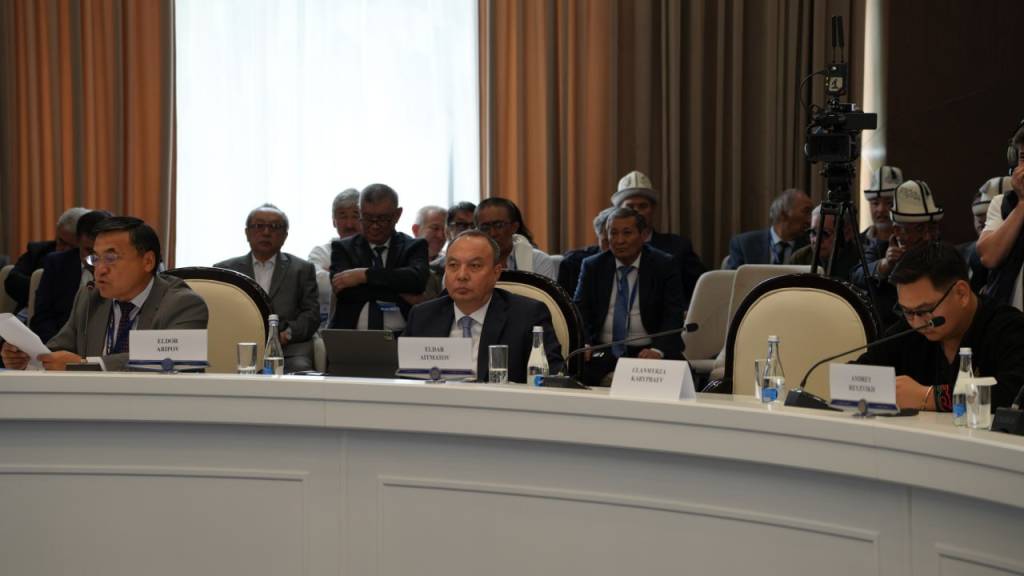
In this regard, he stated that the countries of the region should respond to contemporary challenges by deepening regional cooperation and integration. At the same time, the emergence of a regional community should be based not only on transport corridors and trade but also on shared values, historical memory, cultural heritage, and mutual trust.
In this context, Mr. Safoyev emphasized the importance of strengthening Central Asia’s regional identity. According to him, this process is a logical continuation of the policy of regional rapprochement consistently pursued by the President of the Republic of Uzbekistan, Shavkat Mirziyoyev.
“The development of a regional identity is a strategic necessity. It does not imply abandoning national identity, on the contrary, it strengthens statehood by fostering trust, predictability, and cooperation”, Mr. Safoyev stressed.
It was noted that deeper cooperation in this area is fully consistent with the ideas and values championed by Chingiz Aitmatov. As Mr. Safoyev noted, “Chingiz Aitmatov always deeply cared about the destinies of our peoples and, perhaps more than anyone else, understood that Central Asia is a region bound by a common destiny. He teaches us to remember our roots without becoming prisoners of the past, to love our people without closing ourselves off to others, and to preserve our traditions while embracing the future. In this sense, Chingiz Aitmatov’s spiritual legacy is an integral part of our shared identity”.
UzA