Uzbekistan and Ecuador: Current commonalities between the two nations
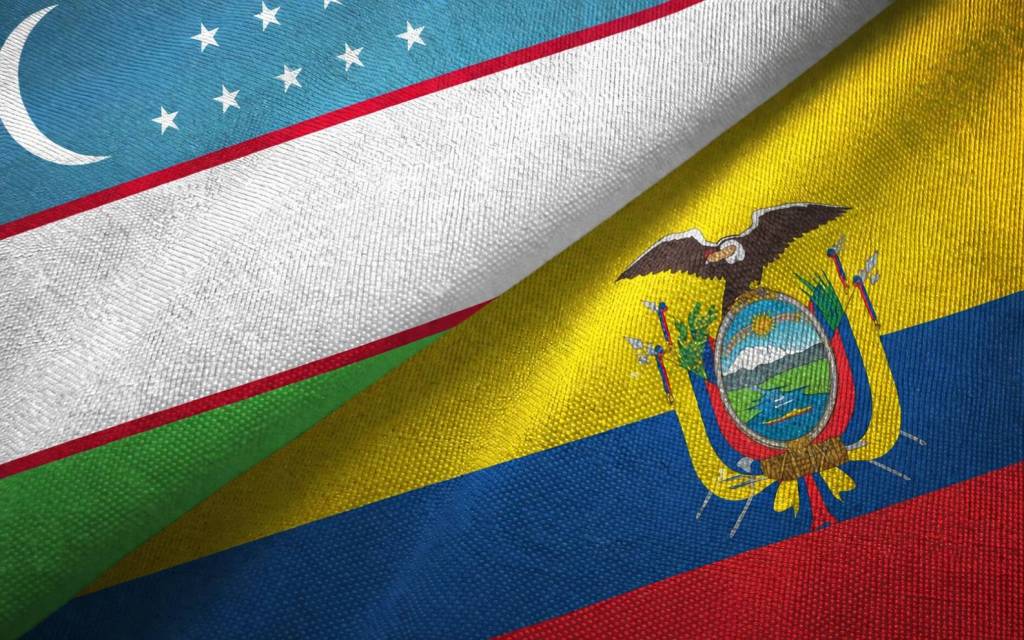
Uzbekistan and Ecuador, separated by thousands of kilometers, different continents, and lacking close historical connections, established diplomatic relations on July 19, 2011, through an exchange of notes. Recently, their relationship has become more pragmatic, largely driven by the growth of economic ties, especially following Uzbekistan’s accession to the World Trade Organization (WTO).
Ecuador is situated in northwest South America and gets its name from the Spanish word 'ecuador', meaning “equator”, as the zero latitude runs through it. It borders the Pacific Ocean, Colombia, and Peru, and includes the renowned Galápagos Islands, famous for their unique environment and their significance in Charles Darwin’s studies. With the Andes Mountains, the Amazon rainforests, and the Pacific coastlines, Ecuador ranks among the most biodiverse countries globally. Its economy mainly relies on oil extraction and agricultural exports. Ecuador is a leading producer and exporter of bananas, as well as coffee, cocoa, flowers, and seafood. Tourism also contributes significantly to its economy. Since 2000, the US dollar has been the official currency, facilitating international trade and minimizing currency risks for foreign partners.
Against this backdrop, Uzbekistan is gradually expanding its partnership with Latin American countries to diversify its global economic ties and explore new markets. Ecuador plays a key role in this strategy. Azizbek Urunov, Special Representative of the President of Uzbekistan for WTO Accession, notes that Ecuador is the country’s second-largest trading partner in South America.
In December 2025, Uzbekistan signed a bilateral market access protocol, a key milestone following negotiations during its WTO accession process. This is similar to a prior agreement signed with the European Union. These protocols finalize bilateral negotiations on trade in goods and services, formalize the agreements, and are a necessary step in the WTO accession process.
This development is especially important because Ecuador has been a WTO member since 1996 and has extensive experience in the international trading system. Support from a country with long-standing global trade involvement demonstrates confidence in Uzbekistan’s economic reforms and provides a solid basis for strengthening trade and economic ties.
Azizbek Urunov highlighted that Ecuador’s backing for Uzbekistan’s WTO accession is vital and creates new opportunities to boost cooperation between Central Asia and South America. This is increasingly important as Uzbekistan expands its foreign economic relations and aims to explore new markets. Currently, bananas are the primary focus of bilateral trade. The National Statistics Committee reports that Uzbekistan imported 69,000 tons of bananas valued at $20.4 million from January to March 2026. This represents a 44.7 percent increase compared to the same period last year. Ecuador remains the leading supplier, with Uzbekistan importing 53,500 tons of Ecuadorian bananas in the first quarter, making up over 77 percent of total banana imports.
Ecuador’s prominent position is expected, given its long history as one of the world’s top banana exporters. Its advantageous natural environment, advanced agricultural sector, modern cultivation and storage methods, and effective export infrastructure allow it to deliver bananas to markets across Europe, North America, Asia, and the CIS. Meanwhile, in Uzbekistan, bananas are among the most favored imported fruits because of their year-round availability and reasonable prices.
The increase in imports results from various factors, including growing local demand, the expansion of modern retail chains, advances in international logistics, and the establishment of new transport routes via transit countries. These elements collectively enhance the reliability of product supplies to the Uzbek market.
Simultaneously, the scope for collaboration between the two nations goes well beyond current trade levels. Although Ecuador’s imports are primarily agricultural products, Uzbekistan’s ability to expand its exports in this sector remains largely untapped.
Uzbekistan has a competitive edge in providing textiles, fruits and vegetables, processed foods, mineral fertilizers, construction materials, and chemical products.
In turn, Ecuador is not only a major banana exporter but also one of the world’s leading producers of cocoa, coffee, flowers, shrimp, and other agricultural products. This creates opportunities to expand mutual trade and implement joint projects in the agro-industrial sector, food processing, logistics, and digitalization of investment and trade.
Geographical distance continues to be a key factor limiting cooperation. Uzbekistan and Ecuador lack direct transport links, relying instead on complex multimodal routes that pass through seaports and multiple transit countries. Nonetheless, the growing development of international transport corridors and global logistics chains is steadily diminishing this obstacle, making trade between these regions more feasible.
Uzbekistan’s growing cooperation with Ecuador exemplifies a wider trend of strengthening relations with Latin American nations. As its foreign trade network broadens, Uzbekistan aims to establish new partnerships, reduce reliance on traditional markets, and create more opportunities for domestic producers and exporters. Should this positive trend persist, Uzbekistan and Ecuador might stand out as a leading example of successful economic expansion between Central Asia and South America.
Aziza Alimova, UzA