The Presidential Administration: legal basis of powers, collaboration, and accountability
On August 14, 2026, Constitutional Law “On the Presidential Administration of the Republic of Uzbekistan” was adopted. For the first time, the activities of the Presidential Administration have been comprehensively regulated at the level of a constitutional law.
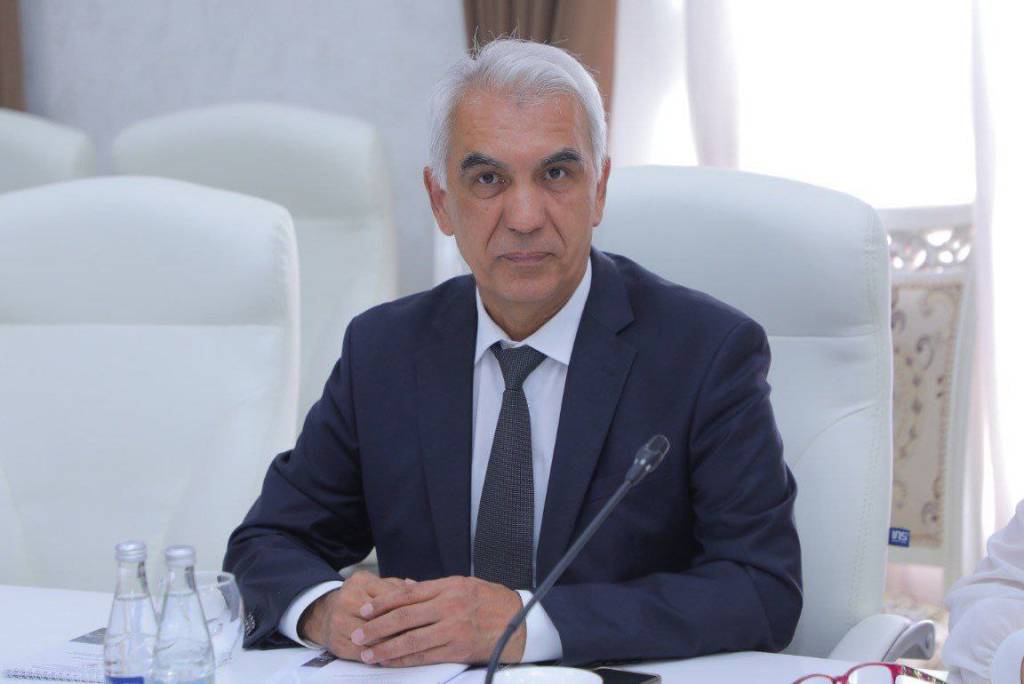
UzA correspondent interviewed Foziljon Otakhonov, a Professor at Tashkent State University of Law and a Doctor of Law, about the essence of Constitutional Law, its role in government systems, and recent innovations affecting law enforcement practice.
– Foziljon Khaydarovich, could you please explain what prompted the adoption of the new Constitutional Law and highlight its main significance?
– The Presidential Administration holds a unique and significant role within the national government framework. Consequently, establishing detailed regulation of its functions through a Constitutional Law marks a crucial institutional milestone. The purpose of Constitutional Law is to govern the activities of the Presidential Administration from a legal standpoint. It outlines the Administration’s legal status, core principles, formation, functions, and powers. It also details the legal position of the Head of the Presidential Administration, its relationships with other state bodies, and the protections in place for its staff.
Of particular importance is that the supremacy of the Constitution and laws, the priority of human rights and freedoms, objectivity, independence, openness and transparency are established as the fundamental principles of the Administration’s activities.
In this regard, it would be incorrect to view this Law merely as a document regulating internal organizational matters. It is an important institutional step that clarifies the legal boundaries of powers and responsibilities within the system of state bodies.
– What is the legal status and primary role of the Presidential Administration according to the Law?
– The functions of the Administration are not limited to monitoring implementation. Under Constitutional Law, the Presidential Administration is a state body that assists the President, as Head of State, in ensuring coordination and cooperation among state authorities and provides organizational, legal, and analytical support for exercising the President’s powers.
At the same time, within the framework of implementing the decrees, resolutions, orders, and instructions of the President, the Administration coordinates the activities of state bodies and organizations, as well as enterprises with state participation, monitors the implementation of these acts, and organizes oversight of their implementation. The Administration is directly subordinate to and accountable to the President.
In addition, the Administration’s main functions include providing organizational, legal, and analytical support for state policy and reforms; helping strengthen legality and public order in the country; contributing to respect for citizens’ rights and freedoms; and developing proposals to improve the effectiveness of state bodies.
Another important point is that the Administration is entitled to independently draft presidential decrees, resolutions, and orders. Thus, its activities encompass not only monitoring implementation but also preparing decisions and developing proposals on matters of state policy.
– What is the legal foundation for the relations between the Presidential Administration, the chambers of the Oliy Majlis, the Cabinet of Ministers, and territorial state bodies?
– The Constitutional Law clearly regulates these matters as well. The Administration ensures ongoing dialogue with the chambers of the Oliy Majlis on priority areas of state policy, supports the exercise of the President’s right to legislative initiative, and coordinates the preparation of programmatic documents and other matters submitted by the President to the chambers of Parliament. It also provides organizational support for the exercise of the President’s right to return a law to the Oliy Majlis with objections.
In relations with the Cabinet of Ministers and state bodies and organizations subordinate to it, the Law provides for coordinating interagency cooperation within the framework of implementing presidential acts, monitoring and organizing oversight of their implementation, and monitoring the implementation of national development strategies, state programs, and national projects.
Regarding territorial authorities, a specific mechanism provides for cooperation with the Council of Ministers of the Republic of Karakalpakstan, the regional hokimiyats, and the Tashkent City Hokimiyat. In particular, the Administration coordinates the activities of the regional and Tashkent City hokimiyats, conducts monitoring and oversight, analyzes the socio-economic development of the territories, and submits well-founded proposals to the President to resolve identified problems.
– What legal boundaries have been set for interactions with the judiciary? Could this cooperation influence judicial independence?
– The key point is to clearly establish the legal framework for this cooperation. Under Article 19 of the Constitutional Law, in cooperation with judicial authorities and judicial self-governing bodies, the Administration prepares proposals and analytical materials for the President on relevant cooperation matters and provides organizational, legal, and analytical support for the President’s powers relating to interaction with judicial authorities and judicial self-governing bodies.
The Administration also oversees reforms in the judicial and legal sectors, drafts proposals to improve the judicial system, and works to strengthen the organizational and legal framework for courts and judicial self-governing bodies.
An important point is that such cooperation should not be construed as interference with the judiciary’s procedural independence. Constitutional Law defines the Administration’s interaction with the judiciary within the framework of specifically established legal powers.
– What measures does Constitutional Law establish to fight corruption, prevent conflicts of interest, and promote transparency and information security?
– The Constitutional Law also establishes specific mechanisms in this area. The activities of compliance and internal anti-corruption control units established within state bodies and organizations to enhance the effectiveness of anti-corruption measures and strengthen measures to prevent conflicts of interest and corruption-related incidents are coordinated by the Administration’s Compliance Service.
It is also provided that deputy heads or advisers of heads of state bodies and organizations at the republican level responsible for compliance and internal anti-corruption control are appointed and dismissed by the Head of the Administration and, during their tenure, have the status of representatives of the Administration.
Openness and transparency are among the fundamental principles of the Administration’s activities. At the same time, openness does not mean disclosure of information protected by law. Constitutional Law also protects information that constitutes state secrets, as well as confidential records management and information security within the Administration.
Therefore, a key responsibility is to maintain an appropriate legal balance between transparency and information security.
– How are the legal status, protections, and responsibilities of officials and employees of the Administration outlined?
– Chapter Three of the Constitutional Law is devoted to guarantees for the activities of officials, managerial personnel, and civil servants of the Administration. It provides guarantees regarding material incentives, social protection, legal protection, immunity, and employment.
In particular, officials and managerial employees of the Administration are protected by the state while performing their assigned duties. Obstructing the performance of their duties, insulting their honor and dignity, threatening or using violence against them, or encroaching upon their life, health, or property entails liability established by law.
At the same time, alongside legal protection, the law requires compliance with legislation governing the Administration and fulfillment of established duties. In other words, rights and duties, powers, and responsibilities are interconnected concepts.
– Finally, what do you consider the most significant aspect of this Constitutional Law in the legal regulation of the activities of state bodies?
– In my view, the significance of this Constitutional Law can, in a sense, be expressed by the following formula: powers → legality → openness → accountability → responsibility.
The Constitutional Law clearly defines the legal status, functions, and powers of the Presidential Administration and links its activities to the principles of the supremacy of the Constitution and laws, the priority of human rights and freedoms, and objectivity, independence, openness, and transparency.
Most importantly, a legal norm’s effectiveness depends on its practical implementation. Ultimately, the authority and effectiveness of a state body are measured not by its powers but by how responsibly it executes its duties, strictly obeys the Constitution and laws, and prioritizes individuals’ interests.
Interviewed by Norgul Abduraimova, UzA