The German populace is increasingly placing its trust in the AfD party.
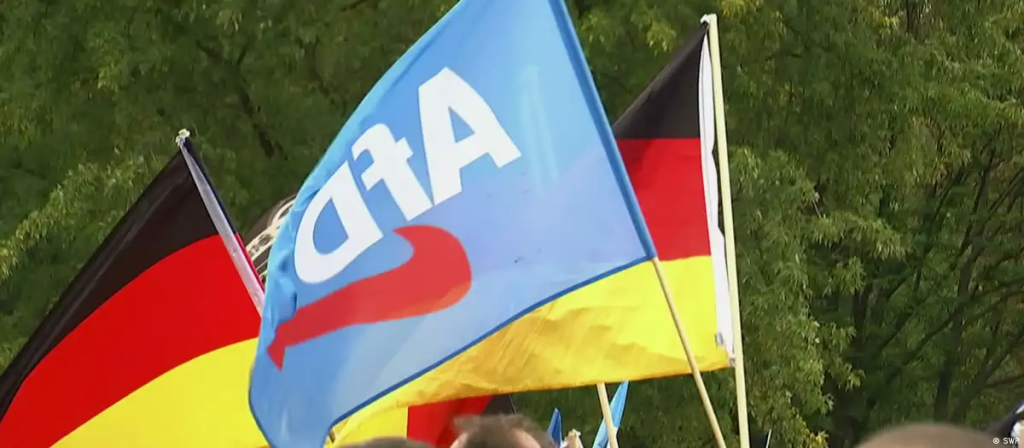
According to the German news outlet DW, dissatisfaction with the government's performance is growing. Issues such as party ratings, Ukraine, Russia, migration, and the economic outlook are creating a deep crisis of confidence in the country.
According to a survey conducted by "ARD-Deutschlandtrend" in September, the ruling coalition has faced strong distrust from citizens. Four-fifths of the population is dissatisfied with the work of the federal government. The far-right Alternative for Germany (AfD) party continues to lead the rankings. Significantly ahead of the bloc formed by the merger of Chancellor Friedrich Merz's Christian Democratic Union and the Christian Social Union (CSU/XII).
If the Bundestag elections were held today, 27% of voters would vote for the AfD. Allied parties were limited to 21 percent. These days, 15 percent of voters are ready to support the Alliance 90/Green Party, 13 percent are ready to support the Social Democratic Party of Germany, 12 percent are ready to support the Left Party, and 4 percent are ready to support the Free Democratic Party. The remaining parties, collectively, can garner about 8 percent of the vote. The public assessment of the government's performance is particularly alarming. Only 15% of respondents expressed satisfaction with the activities of the Cabinet of Ministers, while 84% expressed dissatisfaction.
The primary foreign policy factor associated with Russia remains the primary cause of such fluctuations in inter-party percentages.
The topic of the RF-Ukraine war played an important role in determining social sentiment in Germany. The study shows that the Germans still view the Russians as a serious threat to the country's security. Consequently, opinions differ on exactly how to respond to this threat.
When asked how much of a threat to Germany's security Russia poses today, 67% of respondents said they believe it is strong or very strong. At the same time, the assessment varies significantly depending on political preference. 73% of Greens believe that there is a strong or very strong threat from Russia. The same opinion is held by 73% of those supporting the CDU/XII bloc and 69% of GSDP voters. Fifty-seven percent of left-wing party supporters share the same view.
The ratio of the AfD's electorate results differs significantly. Only 29% of the party's supporters perceive Russia as a threat to Germany, with the majority opposed to this view.
Serious disagreements also persist regarding the issue of military support for Ukraine. According to the study, 42% of the population believes that the issue of supplying German weapons to Kyiv is too deep. 38% of respondents stated that the current level of support is sufficient. 14% of respondents are in favor of increasing assistance.
The difference between the regions is also noticeable. In East Germany, the majority of respondents believe that military aid to Ukraine is excessive. In the western federal states, 40% hold this opinion. In the West, there are many who believe that the current support is justified or insufficient.
The Greens support Ukraine the most: 35% of them say that Germany does not provide sufficient assistance to Kyiv. 57 percent said that the current level is sufficient. Within the AfD, the opposite is true: 86% focused on the excess of military aid, while only 7% justified the situation.
The economy remains a major concern for voters
The state of the economy is assessed as unsatisfactory. 79% of citizens say that the economic situation in Germany is bad or worse, and only 20% say that it is good. It is precisely the economy, industrial policy, and job preservation that have become the most sensitive topics for German voters today.
Researchers pay special attention to the automotive industry, which remains a symbol of the German economy. For 91% of respondents, the automotive industry is important or very important for the future of the country. 73% of respondents believe that German concerns have wasted time developing electric vehicles and other alternative technologies.
The importance of the economic agenda is also confirmed by the issue of party representation. Germans believe that only the AfD can lead the economy out of the crisis: 31% of respondents hold this opinion. In this regard, the XDI/XII has a score of 24%, and the GSDP has a score of 20%.
Another important topic is migration policy. To the question of which party solves the problem of asylum and migration better, the AfD took first place with a positive answer of 43%. The CDU/XII scored 26 percent, while the remaining parties were significantly weaker.
The study was conducted by the "Infratest dimap" Institute between August 31 and September 2 by order of the socio-legal television and radio company ARD. 1,319 citizens with the right to vote participated in the survey. The overall statistical discrepancy was estimated at 2-3 percent.
Abduğafur Mamatov,
UzA