Tashkent to host the third meeting of the MBIR International Research Center Advisory Board
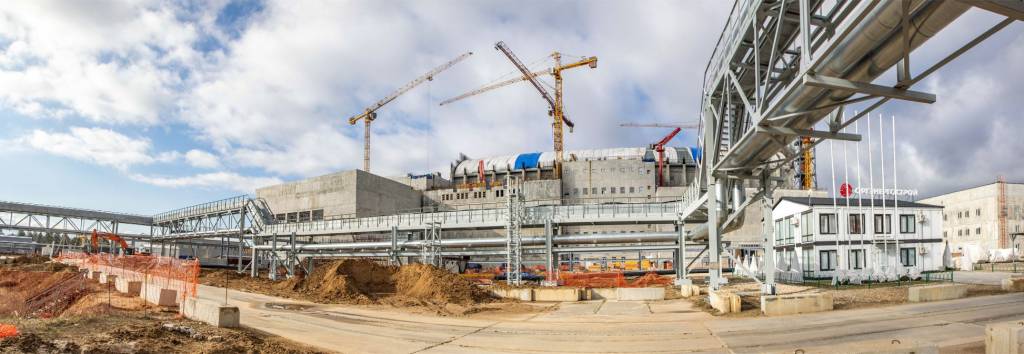
The third meeting of the Advisory Board of the International Research Center based on the MBIR Multipurpose Fast Research Reactor will take place in Tashkent this September.
The organization of this prestigious event in Uzbekistan reflects the country’s steadily expanding international cooperation in nuclear technologies. The MBIR project is recognized as one of the largest international initiatives in this field.
Academician Ilhom Sodiqov, Director of the Institute of Nuclear Physics of the Academy of Sciences of the Republic of Uzbekistan, discussed the project’s scientific significance, Uzbekistan’s participation in its implementation, and the upcoming meeting.
– MBIR is a next-generation research reactor. Once operational, it will become one of the world’s leading scientific facilities for testing new materials, producing radioisotopes, verifying nuclear physics calculations, and developing advanced nuclear energy technologies.
MBIR is a multipurpose fast-neutron research reactor under construction at the Research Institute of Atomic Reactors in Dimitrovgrad. The institute is the world’s largest specialized center for nuclear reactor research. Six research reactors are currently operating on the site. Once MBIR is commissioned, the number will increase to seven. The site is also home to one of the world’s largest research reactors, the 100 MW SM-3. MBIR will have a capacity of 150 MW. While SM-3 operates with comparatively low-energy intermediate-energy neutrons, MBIR will use high-energy fast neutrons.
The reactor is scheduled for commissioning by 2028. According to Rosatom specialists, construction is ahead of schedule. Once launched, MBIR will become the world’s most powerful fast-neutron research reactor.
Uzbekistan became one of the first countries to join the project. Rosatom established the International Research Center based on the MBIR reactor and formed a consortium of countries interested in conducting research at this unique facility.
The consortium includes the Advisory Board of the MBIR International Research Center, which sets scientific policy and develops the research program. The official document confirming Uzbekistan’s accession to the consortium was signed in November 2022 at the Atomexpo Forum in Sochi. In July 2025, the parties signed an additional agreement outlining the terms of the country’s participation in the project.
Interest in the MBIR reactor from the global scientific community is extremely high. Today, only a few research facilities in the world operate with fast neutrons, but their neutron flux density is dozens of times lower than that to be provided by MBIR. According to experts, the emergence of a comparable facility with such characteristics is unlikely in the coming decades.
Uzbekistan’s participation in the project is particularly important for the development of national science. Access to the reactor’s experimental channels will enable scientists to research the production of new radioisotopes, study the properties of materials under intense neutron irradiation, and address other pressing scientific challenges.
Interviewed by Nasiba Ziyodullayeva, UzA