One can serve the homeland even while living in the USA
COMPATRIOTS
The farther a person is from the homeland, the more deeply they seem to understand its worth, history, and destiny. Distance sometimes reveals truths the eye cannot catch, and it brings values that seem ordinary in daily life even closer to the heart.
It has been many years since my family and I have been living in America. Here, I communicate with people from various corners of the world. Different nations, languages, cultures, and histories have blended together in one place. Living in this environment, I came to understand one truth even more deeply: a nation’s greatest wealth lies not in its territory or material riches, but in its rich history tested by centuries, its national memory, its language, its values, and its self-awareness.
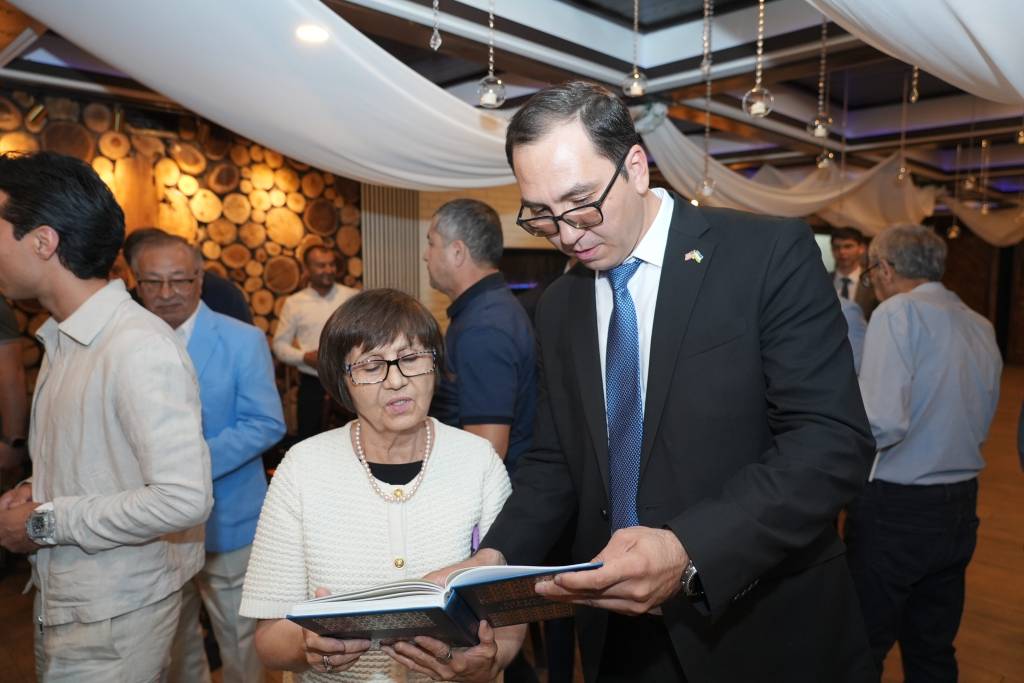
These days, an uplifted mood prevails among our compatriots and the Uzbek diaspora in New York City and in several other American states. The reason is the presentation of the book “Millat Shavkati” (“The Nation’s Glory”), authored by Qudratilla Rafiqov, Chairman of the Federation of Trade Unions of Uzbekistan, a statesman, public figure, and political scientist. I can proudly say that this was no ordinary book presentation. It became a gathering that brought compatriots together, allowed them to reunite, and brought us all together around shared thoughts and feelings – a spiritual meeting ground.
I would like to begin my thoughts with a reflection on the author. Writing about a head of state itself demands great courage and serious preparation. After all, it is not easy to present, objectively and with sound reasoning, a leader’s life path, activities, personal formation, worldview, and skill in making decisions in complex situations. Qudratilla Rafiqov has attempted this difficult task by fusing historical events, political processes, personal observations, and analytical reflection. As you read, you come to understand that it is not limited to creating a political portrait of one individual. Speaking about a head of state is, at the same time, an analysis of the changes taking place in a certain era, in society, and in the life of the nation. From this point of view, “Millat Shavkati” serves to help us understand the important stages of our country’s development, the changes in society, and the processes occurring in national thinking.
For me, “Millat Shavkati” is, above all, a book about the homeland. Its essence is not confined to Uzbekistan alone. Regardless of which corner of the world we live in – whether in Tashkent, Samarkand, New York, or Washington – every person who feels themselves to be part of this people and this history can find in this work thoughts that are close to them, that make them reflect, and that inspire them.
As I read the book, I also thought about its title: who, exactly, is “Millat Shavkati”? The work offers an interpretation of our President Shavkat Mirziyoyev, his relationship to the people and the homeland, in harmony with the country’s ongoing renewal. Uzbekistan’s internal development, its opening to the world, and the changes in its foreign relations are among the defining features of the present era. In my opinion, however, the concept of “Millat Shavkati” cannot be confined to a single individual. For me, the nation’s glory lies in the people’s self-awareness, their appreciation of their history, their shaping of the present, and their assumption of responsibility for the future. A nation’s might is determined not only by its great ancestors but also by how its present generation lives, works, acquires knowledge, and faces the world.
As someone observing our President’s wise and far-sighted policies from abroad, I can say with certainty that we see how beneficial this policy is proving to be for the lives of our people and the development of our country. In this sense, it must be especially acknowledged that our homeland’s opening to the world and the expansion of open and constructive relations with foreign states are opening the door to enormous opportunities for us. In the book’s articles – “The Awakening Lion”, “Welcome, World…”, “A Truth That Has Passed the Trials of History”, “Millat Shavkati”, and others – profound thoughts are put forward about Uzbekistan’s past and present, national memory, historical identity, the New Uzbekistan’s opening to the world, and the commonality of the peoples of Central Asia.
In recent years, relations between Uzbekistan and the USA have expanded beyond political dialogue to include the economy, investment, education, technology, energy, aviation, innovation, and many other fields, taking on new substance. The political significance of these relations is steadily growing. In September 2025, during talks between President Shavkat Mirziyoyev and US President Donald Trump, the two heads of state discussed further developing the Uzbekistan – America strategic partnership and expanding practical cooperation. The parties conducted the dialogue in an open, constructive, and friendly spirit.
Notably, President Donald Trump praised the irreversible reforms underway in New Uzbekistan and the efforts to modernize the economy, improve the population’s welfare, and elevate the country’s standing on the international stage. This is evidence that the changes underway in Uzbekistan are being recognized internationally.
In November 2025, President Shavkat Mirziyoyev’s visit to the USA once again demonstrated the practical substance of these relations. The President of Uzbekistan held negotiations with Donald Trump at the White House, and also met with representatives of American political circles and major companies. At the conclusion of the visit, agreements were reached on further developing the strategic partnership and deepening practical cooperation.
The warm and respectful dialogue between the presidents also holds special significance. During a December 2025 telephone conversation, Donald Trump sincerely congratulated Uzbekistan’s leader and its people on the New Year, wishing them peace, prosperity, and new achievements. In that same conversation, the two heads of state also discussed prospects for the Uzbekistan – USA strategic partnership.
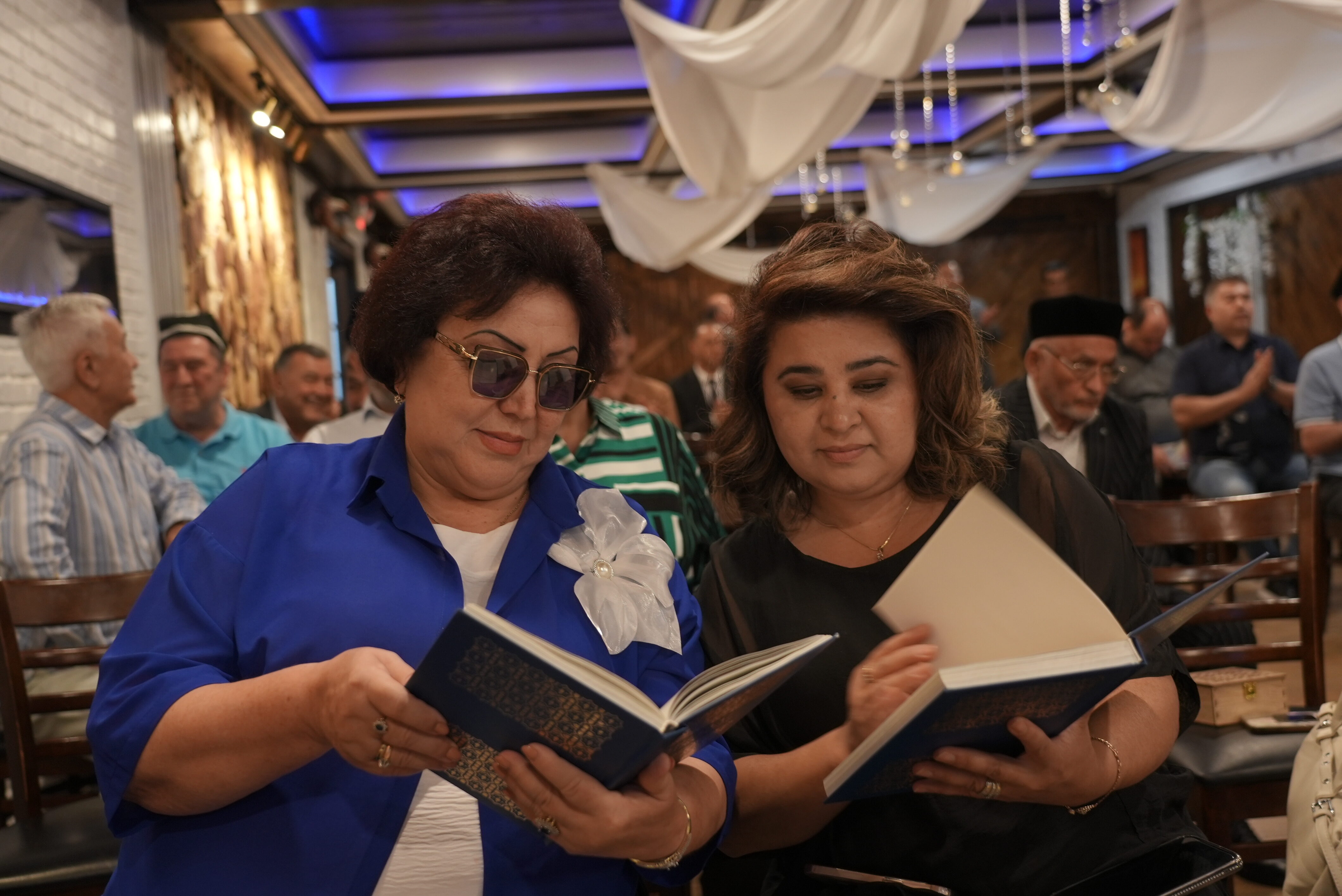
I believe this is another important aspect of presenting the book “Millat Shavkati” in America today. At the very moment we are speaking about our own history, our national identity, and our homeland, Uzbekistan’s political, economic, and humanitarian ties with the USA are also reaching a new stage.
Thus, for Uzbeks living in America, maintaining ties with the homeland is no longer merely a matter of historical memory. It is also becoming a bridge of people, knowledge, ideas, and opportunities that continually expands between the two countries. Today, as relations between Uzbekistan and the United States of America develop at a new stage, the spiritual and cultural ties between the peoples of the two countries, especially among Uzbeks living abroad, are also gaining special significance. Uzbeks living in America serve as a symbol of Uzbekistan abroad not only through their labor and achievements, but also by preserving their national identity and strengthening their ties with the homeland.
It is gratifying that today the states of Central Asia are, as it were, moving forward together as one fist, with noble goals and good intentions. In this process, without doubt, the initiatives and efforts of our country’s leader, Shavkat Mirziyoyev, occupy an important place.
During the presentations of “Millat Shavkati” in the USA, we paid special attention to young people. This is because a new generation of Uzbeks is coming of age in America today. Among them are those born in Uzbekistan who later received their education in America, as well as representatives of the second generation who were born and raised in this country. Today, they study in schools, colleges, and some of the world’s most prestigious universities in New York and other states. Among them, an increasing number of young people are achieving great results in science, medicine, law, technology, sports, and other fields.
This is a great opportunity for us. Because today’s youth may tomorrow become not only accomplished specialists in their professions, but also scholars, doctors, lawyers, athletes, entrepreneurs, and statesmen who hold important places in society. That is why it is very important to instill in them one truth: wherever they may live, in whatever language they may be educated, and whatever country’s citizenship they may come to hold, a person must not forget who they are, which nation’s child they are, and which land is their historical homeland.
There are many inspiring examples among our compatriots living in America. For instance, our compatriot Mr. Ozod Soliyev has a daughter who earned a Doctor of Science degree in medicine. In sports, young people like Mr. Harun Amatjonov are achieving high results in American competitions, proudly raising the name and flag of Uzbekistan to great heights. In chess, science olympiads, and other fields, the achievements of Uzbek youth continue to grow.
Today, some Uzbek youth studying in America may return to Uzbekistan tomorrow and dedicate their knowledge and potential to the country’s development. Most importantly, today’s second generation, growing up in America, will have children of their own tomorrow. Their children, in turn, will form the third generation of Uzbeks. Perhaps among them, in the future, will emerge senators, members of Congress, judges, prosecutors, scholars, doctors, or the heads of major companies. Given this, one of our most important tasks today is to prevent these generations from becoming severed from their history, national identity, and homeland.
In my view, this is precisely where the significance of the book “Millat Shavkati” becomes clear. The book helps Uzbek youth living abroad to feel, in their hearts, the questions: “Who are you?”, “Where are your historical roots?”, “What responsibility do you bear before your nation and your homeland?” Especially for young people who live less in an Uzbek-language environment, such books can serve as an important means of reconnecting with the national language and national thinking. In this sense, “Millat Shavkati” is not only a book about the past. It is a spiritual bridge connecting today’s generation with tomorrow.
It is no accident that the book examines the changes Uzbekistan has undergone in recent years, the idea of the New Uzbekistan, the country’s current path of development, and its future goals. The New Uzbekistan is not a concept that arose on its own. At its foundation lie historical memory, national identity, a striving for renewal, and responsibility for the future. Our youth abroad must also feel this responsibility.
At this point, I would like to focus especially on the role of sport. Why sport? Because sport is a great school that educates a person, forms will and discipline, and teaches one to endure hardship and fight for victory. But sport’s significance is even broader. It is one of the most effective means of establishing dialogue between peoples and generations and of strengthening mutual respect and friendship. When we speak of Turon, we must not confine it only to the past. Just as Turon’s history has been great, its future, above all, is tied to its youth. And young people come to know one another best through education, culture, and sport. On the sports field, a person’s labor, skill, and will matter more than their nationality, language, or where they come from. Two young people who compete against one another on the field may first be rivals. But after the competition, they may become friends, partners, and people who understand one another’s cultures.
Here too, the role of sport is incomparable. Sport is a powerful means of uniting a nation, educating young people, and introducing the country to the world. In particular, by popularizing our national sports abroad, we can instill in young people a sense of national pride and belonging to the homeland.
The idea of Turon also takes on its full meaning here. Uniting young people from different countries who speak different languages through shared history, culture, national values, and sport is one of today’s important tasks.
The book “Millat Shavkati” emphasizes that the cornerstone of development is science, education, and upbringing. In my opinion, sport is also an important component of this upbringing. Today we need young people who are not only knowledgeable but also determined, disciplined, courageous, and resolute in pursuing their goals, and who are proud of their nation. In this sense, for the International Turon Federation, sport is not simply about organizing competitions. It is an opportunity to unite young people, strengthen friendship between peoples, bring together present generations who share a common history, and create a new field for international cooperation.
In this regard, 2025 marked an important milestone in the history of Turon wrestling. The International Turon Federation – the international governing body for Turon wrestling, Uzbekistan’s national sport – was established in New York City, USA. Establishing the Federation in the United States of America opened new opportunities for our national sport to enter the international stage and to develop sports diplomacy within the framework of friendly relations between Uzbekistan and the USA.
Bringing representatives from various countries together in one place became an important step toward developing Turon wrestling as an international sporting movement. The attention and value given to Turon wrestling, our national sport, and the initiatives to develop it on the international stage are considerable. After all, popularizing national sports worldwide today is not only a way to demonstrate athletes’ skill but also an effective way to promote a country’s history, culture, and national values on the international stage.
At present, the International Turon Federation continues its work to form national federations on various continents, hold international competitions, exchange experience among athletes and specialists, and broadly popularize Turon wrestling.
Seeing the achievements of Uzbek youth in America today in science, education, and sports, one becomes convinced of one thing: if the feeling for the homeland and the sense of belonging to the nation remain firm in their hearts, then wherever they may live, they will contribute their share to Uzbekistan’s development.
In this sense, “Millat Shavkati” may become an important spiritual source not only for today’s generation but also for the third and fourth generations of Uzbeks. The greatest strength of an awakening nation is a generation that understands its identity, knows its history, and feels responsible for its future.
Perhaps, in this sense, the national pride awakening today in the hearts of Uzbeks around the world can be expressed through the image of the “Awakening Lion”. Wherever the lion may be, it does not forget who it is. A nation, too, must first understand itself to find its place on the world stage.
In this process, the role and contributions of our compatriots living abroad are also significant. Even while in America, we can support noble initiatives connected to our homeland, create new opportunities for our young athletes, showcase their achievements to the world, and contribute to the worthy promotion of Uzbekistan’s national sports on the international stage.
In this regard, we are ready to listen, with all our hearts, to the proposals and initiatives of our country’s leadership and of all people who care about the homeland’s development, and to support them. Personally, I am also ready to devote all my capacity and potential to the prosperity of my homeland and the future of our youth.
As the book states, “Each of us bears a share of responsibility for the nation’s growth”. I would apply this principle fully to sport as well. Sport is not only about raising a healthy generation, but it is also an important means of expressing national pride, love for the homeland, and the country’s honor before the world.
The very fact that we are presenting “Millat Shavkati” in America today carries great symbolic meaning for me. Standing in one of the world’s largest cultural and political centers, we are speaking about our own history, identity, and homeland. In this sense, I would like to repeat a thought from the book: “Each of us bears a share of responsibility for the nation’s growth”.
I believe this is the most important spiritual lesson of today’s meeting, of today’s book presentation, and, in general, of the work of every one of our compatriots abroad. We must draw strength from history, cherish the present, and build the future together. The world must come to know Uzbekistan not only through its great history but also through its present potential, its knowledgeable and courageous youth, its strong sports, its rich culture, its entrepreneurs, and its new generation, open to the world. This task does not rest on the shoulders of those living in the homeland alone. Every compatriot abroad also has a place in this process.
In this sense, the presentations of the book “Millat Shavkati” in New York and across several American states were not, for us, ordinary cultural events but unforgettable occurrences that once again bound our hearts to the homeland. Warmth awakened in the hearts of every compatriot who took part in the presentations, and the longing for the homeland eased, if only for a while. Alongside sincere conversations, thoughts, and reflections, and new proposals, a solid foundation was laid for our future meetings and noble initiatives.
Most importantly, these meetings further expanded the scope of our dreams and goals. It was as though our dreams had grown a thousandfold, giving us the confidence and spirit to do even greater things for the homeland. We once again realized that no matter where in the world we live, we remain bound to the fate of the homeland, the future of the nation, and the growth of our youth.
We express our deep gratitude to the author of “Millat Shavkati” for creating a work that calls us to spiritual awakening, unity, and noble goals. This book has become, for us, great news, an important spiritual event, and a source of strength for our future noble endeavors. The nation’s destiny is our shared responsibility. “Millat Shavkati” also begins with this shared responsibility.
Farrukh Niyazimbetov,
President of the International Turon Federation
New York City, USA
UzA