New objectives set for advancing the construction materials sector
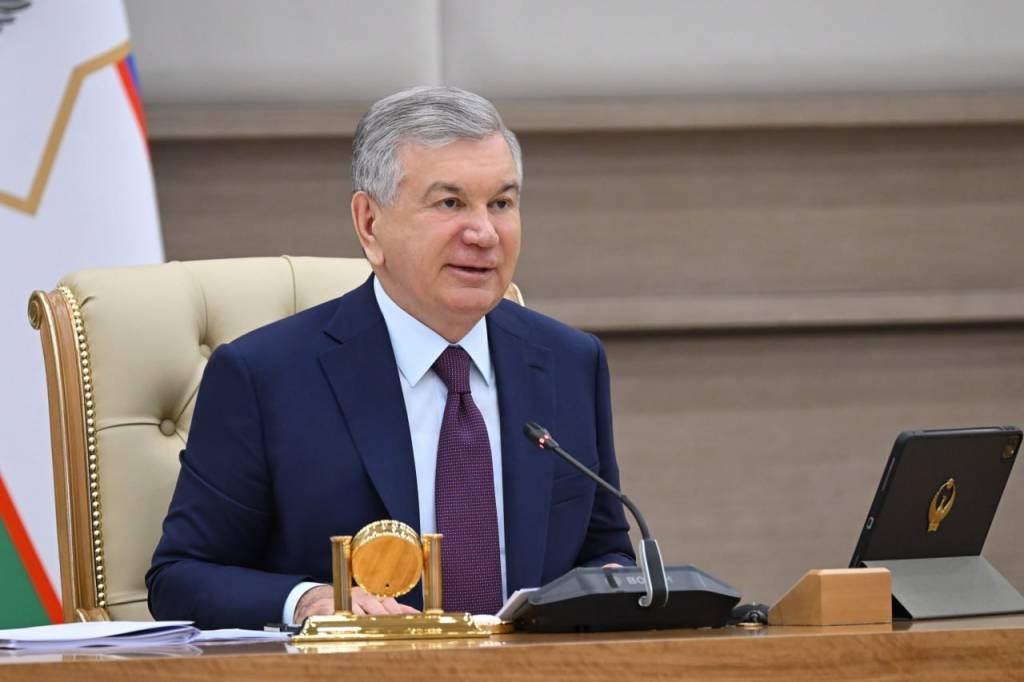
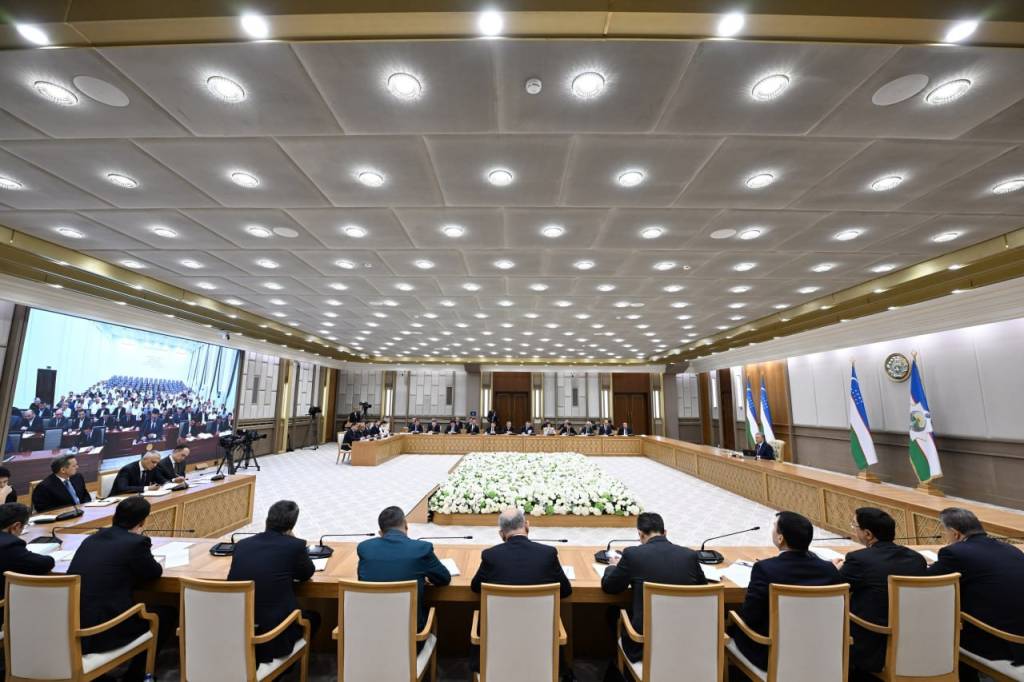
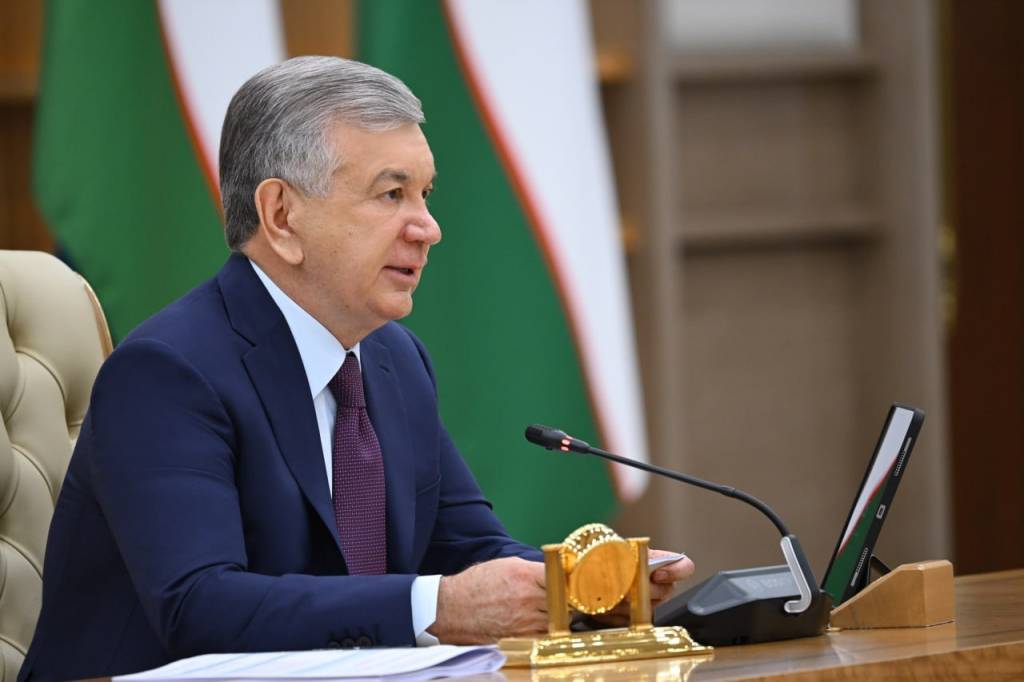
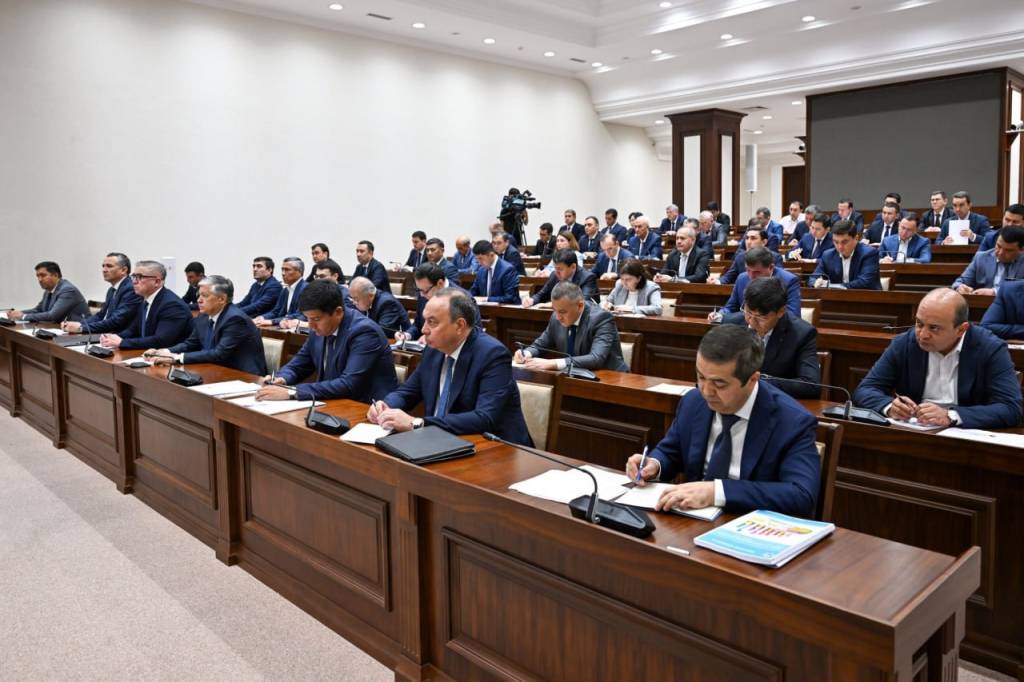
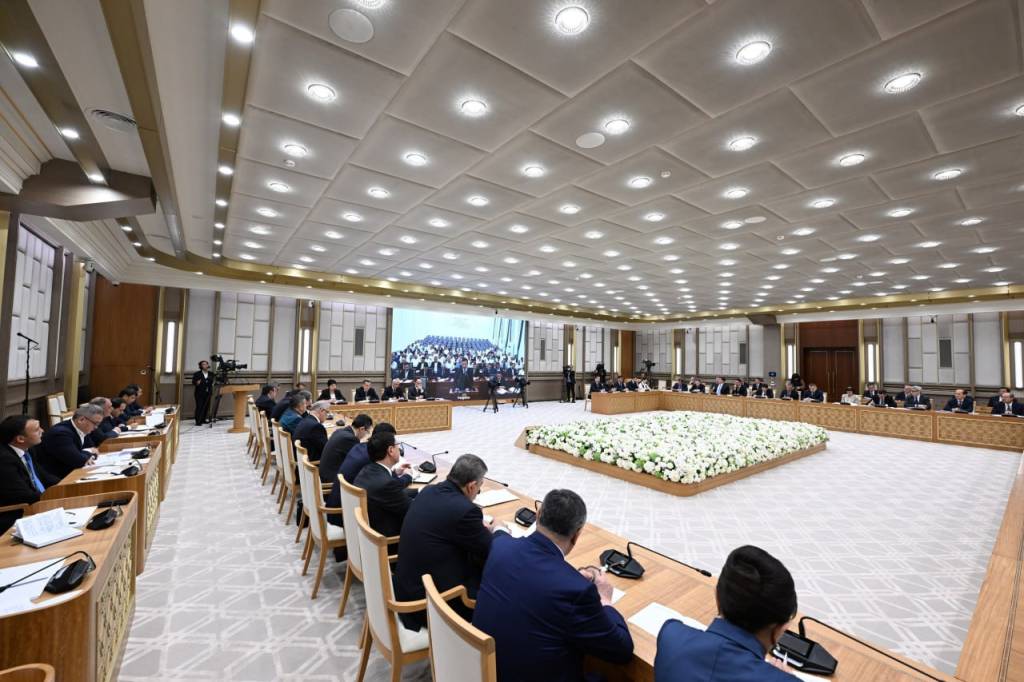
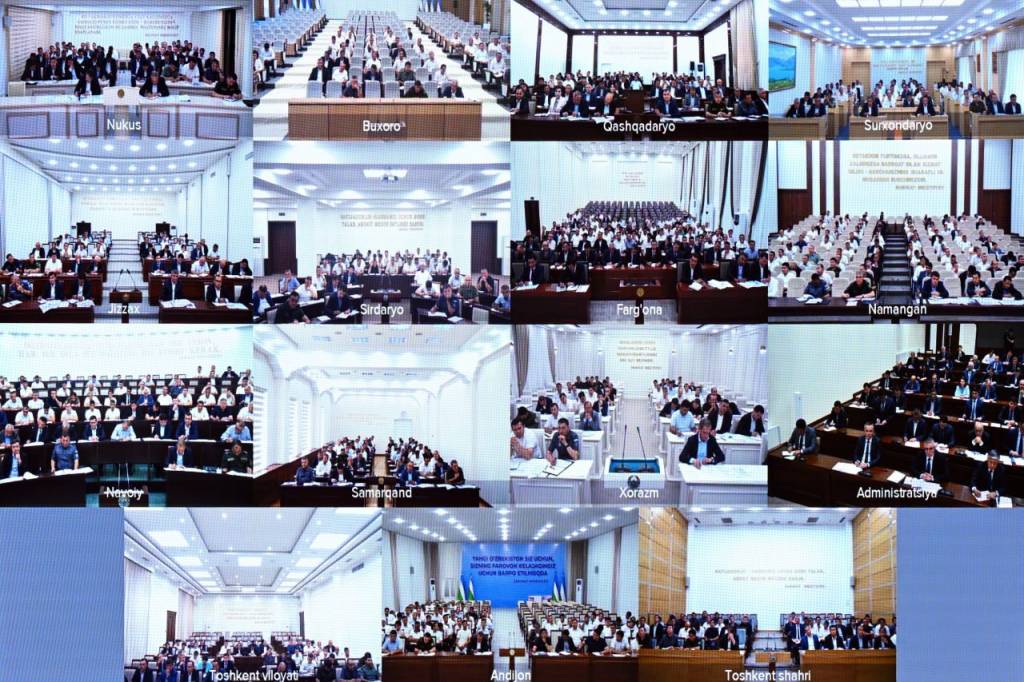
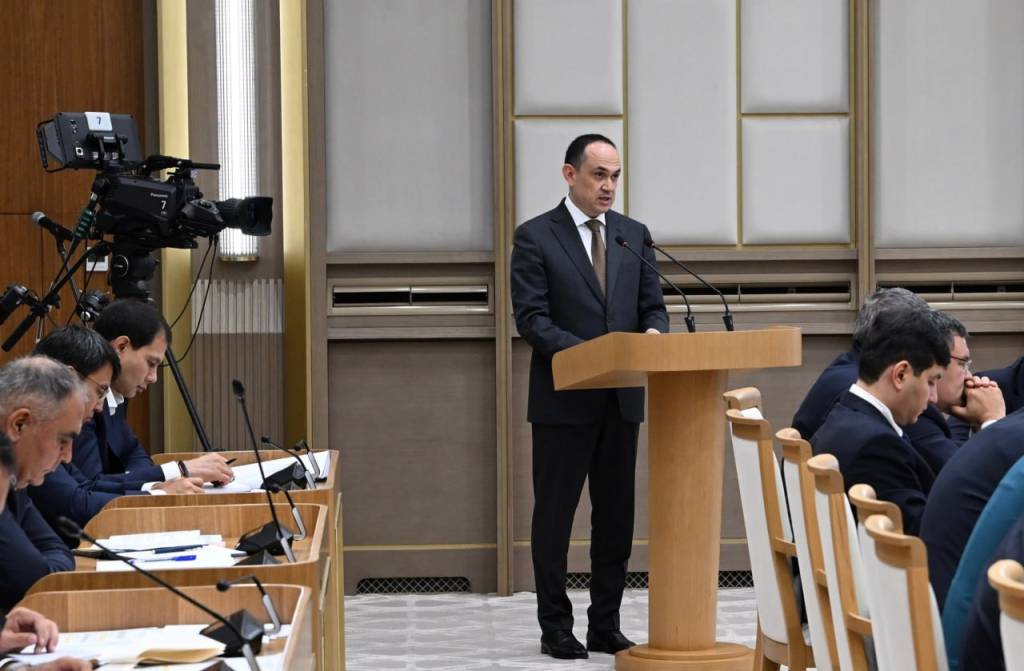
On June 25, President Shavkat Mirziyoyev chaired a meeting to review the progress in the construction materials sector and outline key upcoming priorities.
Before moving to the main agenda, the Head of State discussed the outcomes of the Fifth Tashkent International Investment Forum, held last week with high organizational standards. It was highlighted that 177 agreements worth $43 billion were signed with international partners during the event.
“Every agreement must result in a concrete project, new jobs, and high-value-added products”, the President emphasized.
The responsible officials were directed to prepare a draft resolution for implementing the 120 proposals put forward by foreign investors. Industry leaders and hokims were also advised to reevaluate their strategies to improve the quality and effectiveness of the attracted investment.
Over the past five years, four regions have attracted half of the country’s total investment. There is also a notable disparity in the return on invested capital across regions. Therefore, hokims need to conduct precise calculations to decide which sectors to develop in each district, how to develop them, and which investment projects are the most effective.
Fourteen think tanks, together with 37 specialized research institutes and higher education institutions, have been designated to cover 12 economic sectors. Sector leaders were directed to collaborate with these entities to evaluate each district’s potential and develop project packages that can significantly boost the gross regional product.
The Head of State highlighted the importance of developing the construction materials sector into a reliable industry that provides comprehensive solutions, including quality, standards, product variety, and competitive pricing.
A decade ago, domestic construction materials mainly included sand and gravel mixes, bricks, cement, glass, and slate, making up 30-40 percent of all building materials. In the last ten years, the industry has seen $12 billion in investments and the addition of over 4,000 modern companies.
As a result, production capacities have been established to fully meet domestic demand for over 20 key product types, including cement, glass, basalt materials, ceramic products, aerated concrete blocks, and dry construction mixes. Additionally, the production of thermal insulation and composite materials, eco-friendly finishing products, flooring, and other high-value goods is growing quickly.
Currently, 98% of the materials needed for constructing new residential and industrial buildings are produced locally. Consequently, the industry’s output has grown from 7 trillion to 53 trillion UZS over this period, and exports rose to $1.2 billion last year. Notably, the industry has achieved considerable progress in replacing imports.
At the beginning of the year, a comprehensive program was launched to provide housing for the population. The plan aims to double annual housing construction to 280,000 units by 2040, and to increase the number of New Uzbekistan residential areas from 61 to 120.
Additionally, 20-25 million square meters of commercial buildings are commissioned each year. Residential and commercial construction alone create an annual demand for construction materials valued at $10 billion.
During the Tashkent International Investment Forum, foreign partners were introduced to infrastructure projects valued at an additional $27 billion. These include a nuclear power plant in Jizzakh region, a fourth copper concentrator in Tashkent region, the New Tashkent airport in Urtachirchiq district with a capacity of 20 million passengers, a 55,000-seat football stadium in New Tashkent, and the 282-kilometer Tashkent – Samarkand highway. All of these large-scale initiatives will primarily need construction materials.
Of course, large projects demand strict standards, quality, and material certification. Consequently, the need to develop a new system that allows local manufacturers to participate in these projects was noted.
Investors funding major and megaprojects are seeking exemptions from value-added tax on imported construction materials. Meanwhile, numerous domestic companies are prepared to supply their products for these projects. They have indicated their willingness to compete based on quality and standards, provided that VAT incentives are also available for locally produced goods.
The responsible officials were directed to prepare a draft resolution to establish fair competition between imported and domestically produced goods supplied to major and megaprojects.
The meeting also focused on implementing a two-year program to develop tourism infrastructure in the regions. The program provides for the construction of 34 major tourism facilities and more than 1,000 accommodations, including 200 hotels.
It was noted that hokims must ensure that locally produced materials account for at least 95 percent of the materials used in hotels under construction across the regions.
On average, 65,000 individual houses are built in the country each year, and another 200,000-250,000 apartments are renovated.
“We must be frank: many people remain insufficiently aware of the benefits of energy-efficient materials”, the President noted.
Heating residential premises accounts for 20 percent of total gas consumption in the economy and 11 percent of electricity consumption. If thermal insulation materials are used on house facades and roofs and energy-efficient windows are installed, energy consumption can be reduced by up to 30 percent.
Construction is currently progressing in Qamashi district on the New Uzbekistan residential complex, which includes 4,000 apartments designed with a new approach created by French and British companies. This project solely uses locally produced, energy-efficient materials, resulting in a 20 percent reduction in construction costs and a 25-30 percent decrease in household heating and cooling expenses.
The hokims of regions, districts, and cities were instructed to review the new design approach implemented in Qamashi district. It was emphasized that this year, apartment buildings in 33 districts and cities that are to be renovated in line with the New Uzbekistan image must be built solely in accordance with this approach.
Particular attention was also paid to exports. Neighboring countries import construction materials worth $13 billion annually. It was noted that exports could increase by an additional $440 million through the Central Asian markets alone.
“Understand one thing: amid fierce competition in foreign markets, where every dollar is contested, unconventional solutions are needed to boost exports”, the Head of State said.
Azerbaijan, Georgia, Russia, Kazakhstan, and Kyrgyzstan are undertaking significant projects to develop residential and commercial properties. If Uzbekistan becomes a reliable partner for these countries in housing construction, this will also open up new export opportunities for enterprises in the electronics, home textiles, and furniture industries. Accordingly, officials have been tasked with constructing three to four model energy-efficient residential buildings and organizing roadshows in Baku, Tbilisi, Moscow, Astana, and Bishkek.
Discussions also covered measures to enhance energy efficiency in the industry. Over the past decade, fuel equivalent use by construction materials manufacturers has been cut in half. In the past year, energy audits at 34 key companies, responsible for 65% of the industry’s electricity use, resulted in a savings of 240 million kilowatt-hours of electricity.
It was noted that these measures remain insufficient. Regional hokims were directed to implement a large-scale program to reduce energy use in construction materials enterprises through technological upgrades. Companies that replace kilns for firing and drying, mills, and other energy-intensive equipment with more energy-efficient options will be eligible for compensation covering 7 percent of UZS loans and 4 percent of foreign-currency loans.
It was emphasized that the existing production capacities for cement, basalt, glass, and ceramic tiles are sufficient to meet demand through 2035. Investors should now be encouraged not to expand the output of these products, but to modernize existing capacities and implement high-value-added projects.
A system has been implemented to ensure construction materials companies are fully reimbursed for all costs associated with obtaining certificates. No other industry provides such an opportunity. However, because there is no centralized database of these certificates, buyers more often prefer foreign products with international certification that are already familiar to them.
Responsible officials have been instructed to develop an electronic platform showcasing construction materials with domestic and international certificates. In collaboration with regional hokims, they should also help at least 50 industry enterprises secure international quality certificates within this year.
At the meeting, reports from the responsible officials were presented, along with proposals and initiatives from industry enterprises.
UzA