New horizons for cooperation
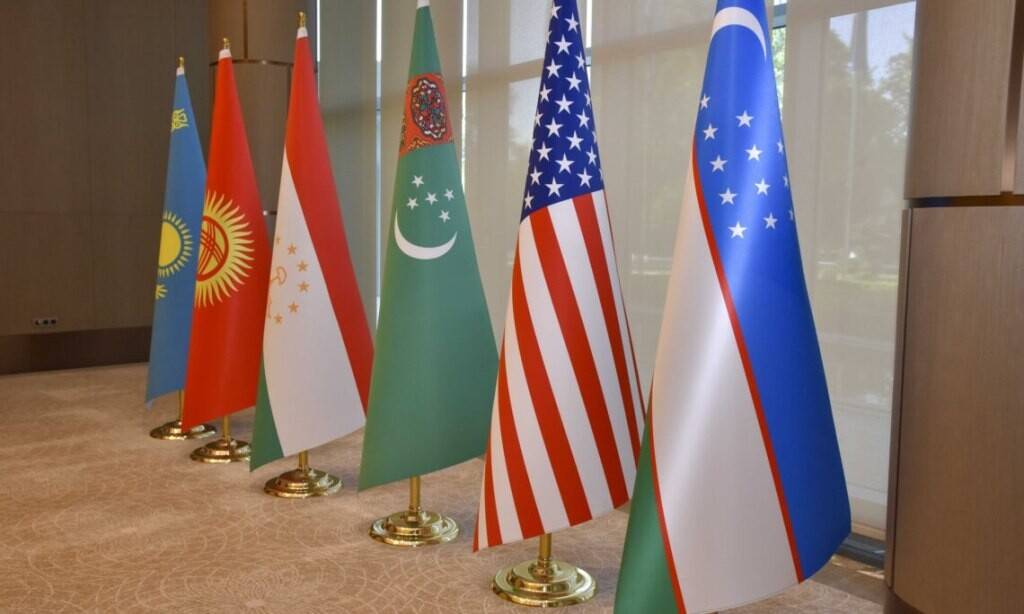
The C5+1 ministerial meeting and the second meeting of the American-Uzbek Business and Investment Council, held in Samarkand on October 19, opened up new opportunities for Uzbekistan.
Bahodir Sadullayev, an official at the Academy of Justice of the Republic of Uzbekistan and Founder of the Legal Perspective, spoke about the role of legal safeguards and professional training in implementing the agreements reached:

– The C5+1 meeting in Samarkand made it possible to turn Uzbekistan’s priorities in transport, industry, technology and education into international cooperation projects.
The first ministerial meeting in this format, bringing together the five Central Asian countries and the United States, was also held in Samarkand in 2015, underscoring the consistency and continuity of this dialogue.
Uzbekistan’s open foreign policy places particular emphasis on trust-based relations with its regional neighbors, as transport corridors, energy, and production chains require coordinated action by all Central Asian countries.
Uzbekistan and the United States have established an Enhanced Strategic Partnership Dialogue, while new agreements worth $12 billion were reached at the council meeting.
Discussions covered the supply and maintenance of locomotives and personnel training in cooperation with Wabtec, the advanced processing of critical minerals with Traxys, and enterprise transformation in partnership with Franklin Templeton.
Every project must align with the country’s development objectives, and all agreements must undergo thorough legal review. Framework agreements involving the state must account for budgetary commitments and environmental requirements, while commercial contracts must clearly define the parties’ responsibilities and dispute resolution procedures.
For example, when purchasing imported equipment, an entrepreneur must consider not only the price but also warranty obligations, spare-parts supply arrangements, software licensing, and compensation terms. The contract should specify in advance the applicable law and the procedure for resolving disputes, whether through litigation or arbitration.
Judicial independence, equality of the parties and the certainty that court decisions will be enforced foster confidence in the legal system.
The Justice 2030 Strategy, approved by a presidential decree on August 14, 2026, lays the foundation for strengthening judicial independence, enhancing transparency, improving the quality of judicial decisions, and advancing digital justice.
Item 56 of the Action Program for 2026-2028 aims to expand cooperation with the legal systems of countries with Uzbek diaspora communities and rapidly growing trade ties. In particular, it provides for studying practices related to executing requests for judicial assistance, as well as the recognition and enforcement of court decisions.
This will enable a detailed examination of practices relating to the service of documents, collection of evidence and enforcement of court decisions in relations between Uzbekistan and the United States.
It would be advisable to organize joint training programs on international commercial disputes, corporate governance and intellectual property. The Academy of Justice has sufficient resources to conduct seminars, internships and online courses involving American experts.
Entrepreneurs also need to understand the opportunities offered by international arbitration. To this end, Uzbekistan has adopted the Law on International Commercial Arbitration.
The 1958 New York Convention, to which both Uzbekistan and the United States are parties, provides an international legal framework for recognizing and enforcing foreign arbitral awards.
The Convention establishes an exhaustive list of grounds for refusing recognition and enforcement of arbitral awards. However, it does not apply to judgments issued by state courts, whose recognition is governed by separate international treaties and national legislation. For this reason, entrepreneurs must clearly understand, even at the contract negotiation stage, how a future decision will be enforced.
Uzbekistan’s accession to the Artemis Accords paves the way for international cooperation in the peaceful exploration of outer space. The document establishes principles of transparency, scientific information sharing and responsible cooperation, expanding opportunities for research and professional training.
The practical outcomes of the Samarkand dialogue will include launched projects, mastered technologies and access to foreign markets.
Interviewed by Norgul Abduraimova, UzA