Measures to preserve cultural heritage and expand international cultural cooperation reviewed
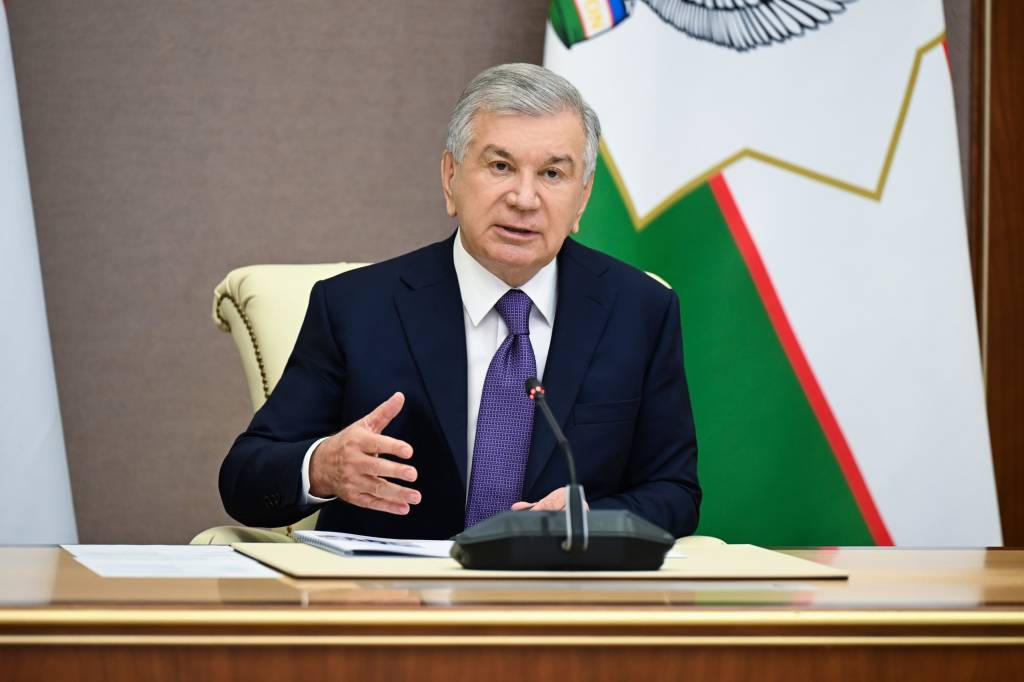
President Shavkat Mirziyoyev reviewed a presentation on further efforts to preserve cultural heritage, develop the museum sector, and promote Uzbekistan’s culture internationally.
In recent years, the country has consistently increased its focus on preserving historical heritage, restoring monuments, modernizing museums, and expanding international cultural cooperation. This work is becoming an important area of humanitarian policy, strengthening national identity, and enhancing Uzbekistan’s appeal to tourism.
Special attention was paid to achievements within UNESCO’s framework. During the 48th session of the World Heritage Committee, Uzbekistan’s national nomination “Modernist Architecture of Tashkent: Modernity and Traditions of Central Asia” was added to the World Heritage List. Uzbekistan made history as the first country in Central Asia and the CIS to have its 20th-century modernist architectural heritage recognized with this distinction. The nomination features 10 significant sites in Tashkent. This marked Uzbekistan’s first inscription on the UNESCO World Heritage List in 25 years.
Thanks to active efforts, the Sun Heliocomplex has been maintained as part of the World Heritage Site.
The new international status creates additional opportunities to preserve and study Tashkent’s architectural heritage, develop cultural tourism, and attract researchers, architects, and international experts. In this regard, the State Program for 2026-2030 on preserving and promoting the capital’s modernist architecture is to be implemented.
The nomination process for the natural site “Zaamin Mountains” for inclusion on the UNESCO World Heritage List was also examined. The area encompasses the Zaamin State Nature Reserve and the Zaamin National Nature Park, which together create a unified mountain ecosystem featuring significant juniper forests and habitats for rare animal and bird species.
During the presentation, measures to improve the activities of the Secretariat of the National Commission of the Republic of Uzbekistan for UNESCO were also considered. It was proposed to expand its coordinating functions for the country’s participation in UNESCO sectoral networks, including the Creative Cities Network, the Global Network of Learning Cities, the Associated Schools Network, UNESCO Chairs, associations and clubs, and the Global Geoparks Network.
Particular attention was paid to practical work in cultural heritage. In recent years, the state budget has allocated 466.4 billion UZS for restoring cultural heritage sites. 305 project and cost-estimate documentation has been prepared, work has been completed at 55 sites, and is ongoing at another 152.
To systematize these efforts, cadastral documentation has been prepared for 8,183 cultural heritage sites. Short-term leases of monuments have attracted 4,187 business entities and generated 27.9 billion UZS for the relevant fund. In 2025, 152.9 billion UZS in domestic and foreign investment was attracted to 52 sites.
The introduction of a fundamentally new Heritage Impact Assessment (HIA) system in Uzbekistan is becoming a key measure to protect the country’s unique historic cities, Bukhara, Samarkand, Khiva, and Shakhrisabz, as well as Tashkent’s modernist architecture amid rapid construction and infrastructure development.
The proposal includes a unified digital cultural heritage platform, digital twins of cultural heritage sites, a Heritage Open Data system, and a cultural heritage situation center. This will enable monitoring through IoT sensors, satellite data, video analytics, and artificial intelligence tools. By 2030, all cultural heritage sites are planned to be digitized.
To manage visitor flows, plans include introducing a Visitor Management system, expanding digital ticketing, forecasting tourist flows, and, where necessary, setting limits on visits to individual sites. On human resources, the plan includes establishing a system for training specialists, opening a specialized higher education institution for restoration in Bukhara, developing regional branches of the Institute of Archaeology, and introducing licensing for restorers.
New projects combining historical heritage with modern infrastructure were also considered. In particular, it was proposed to establish a specialized mosaic center combining traditional techniques with modern technologies for design, production, and restoration. The center will serve as a platform for preserving the Tashkent school of mosaic art, training specialists, and developing a new direction in monumental art.
The project to establish the Olloqulikhon Karvon Saroyi shopping center within the Ichan-Kala museum-reserve was considered separately. It was noted that the unorganized placement of retail outlets disrupts the visual integrity of historical sites and creates inconvenience for tourists. The new project aims to preserve the spirit of traditional trade, create conditions for artisans, host exhibitions and fairs, and establish a new tourist attraction.
Furthermore, to ensure consistency in state policy on preserving intangible cultural heritage, the Republican Hunarmand Association will coordinate its activities with the Cultural Heritage Agency of the Republic of Uzbekistan.
Particular attention was given to the conservation and restoration project for the Bibi-Khanym complex in Samarkand, being implemented in cooperation with the Aga Khan Trust for Culture. The project introduces international standards for architectural conservation, scientific surveys, and the management of restoration work at cultural heritage sites.
As part of the project, documentation and research of the monument, archaeological and engineering surveys, material analysis, structural modeling, and the development of design solutions will be carried out. Particular attention is paid to training local specialists. Subsequent stages will include conserving the main dome and adjacent structures, landscaping the site, and creating a museum exhibition.
To systematically identify, legally protect, and repatriate unique historical monuments, archaeological artifacts, rare manuscripts, and works of art removed from the country during different historical periods, a decision was made to establish a commission under the President of the Republic of Uzbekistan on the repatriation of cultural property.
In conclusion, proposals for the Cultural Heritage Development Strategy for 2027-2035 were reviewed. The strategy includes programs on the digitalization of cultural heritage, preservation of tangible and intangible heritage, repatriation of cultural property, protection of natural heritage, and restoration development.
The President instructed responsible officials to finalize the proposals and ensure their practical implementation.
UzA