Measures to effectively use water fund lands and floodwaters reviewed
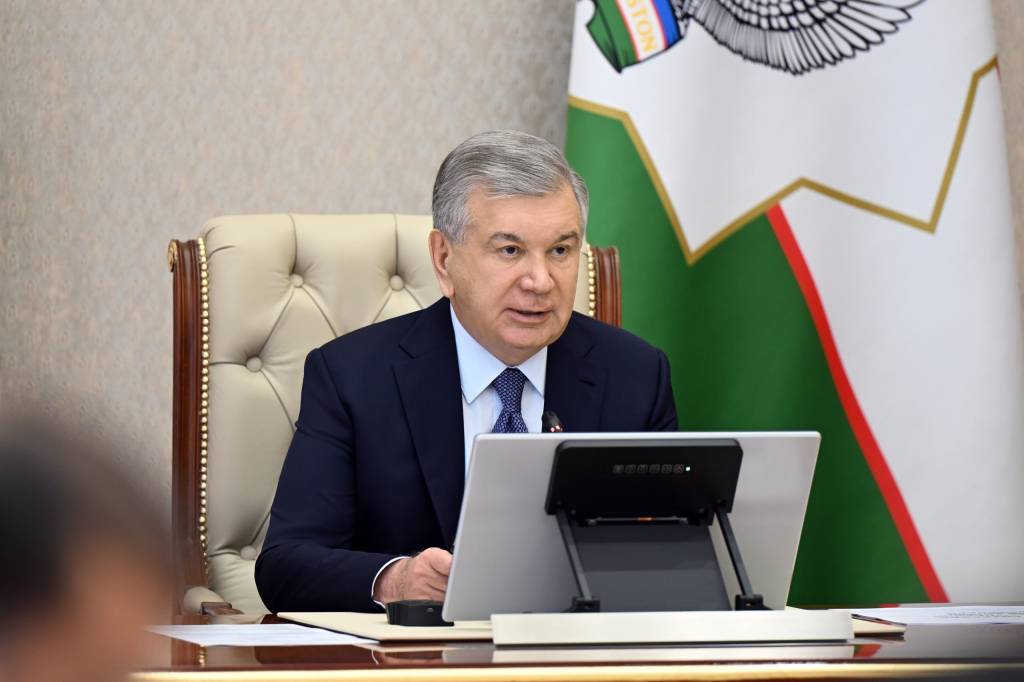
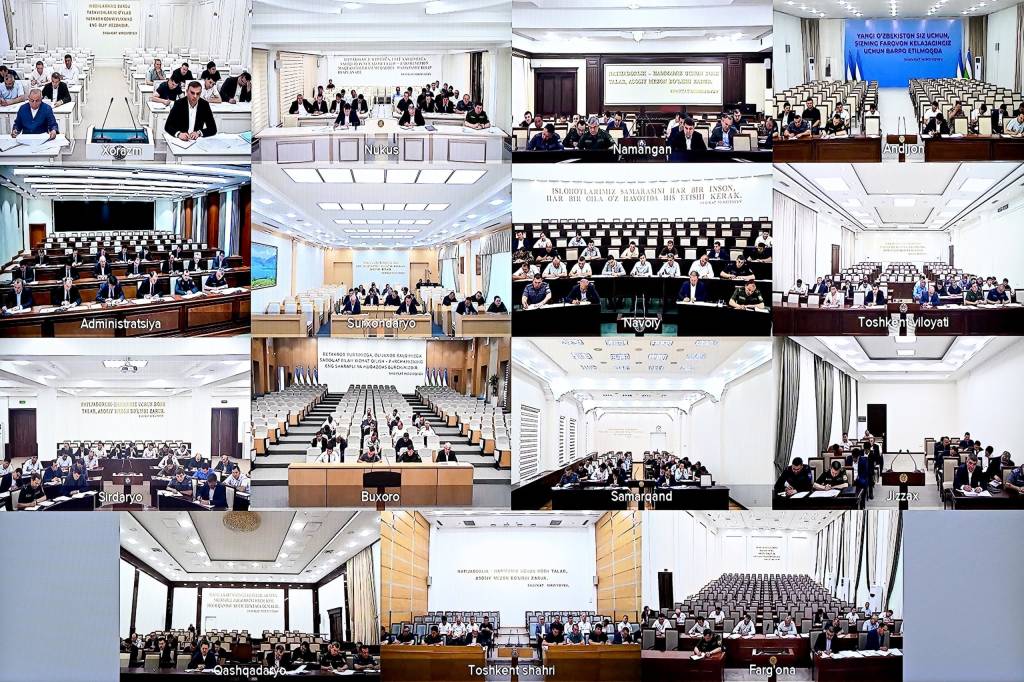
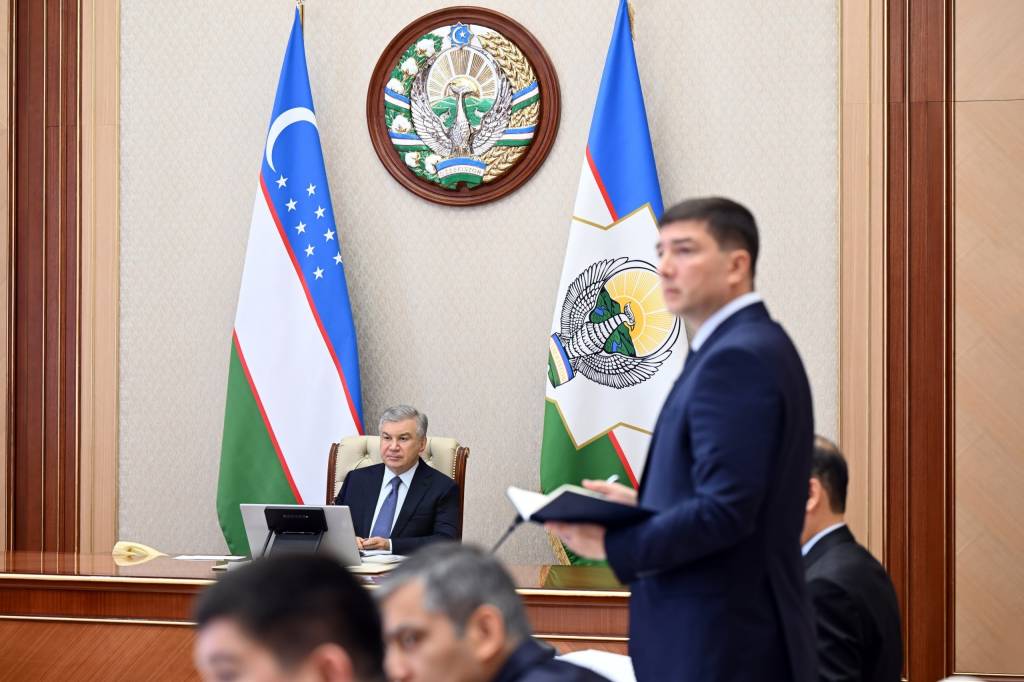
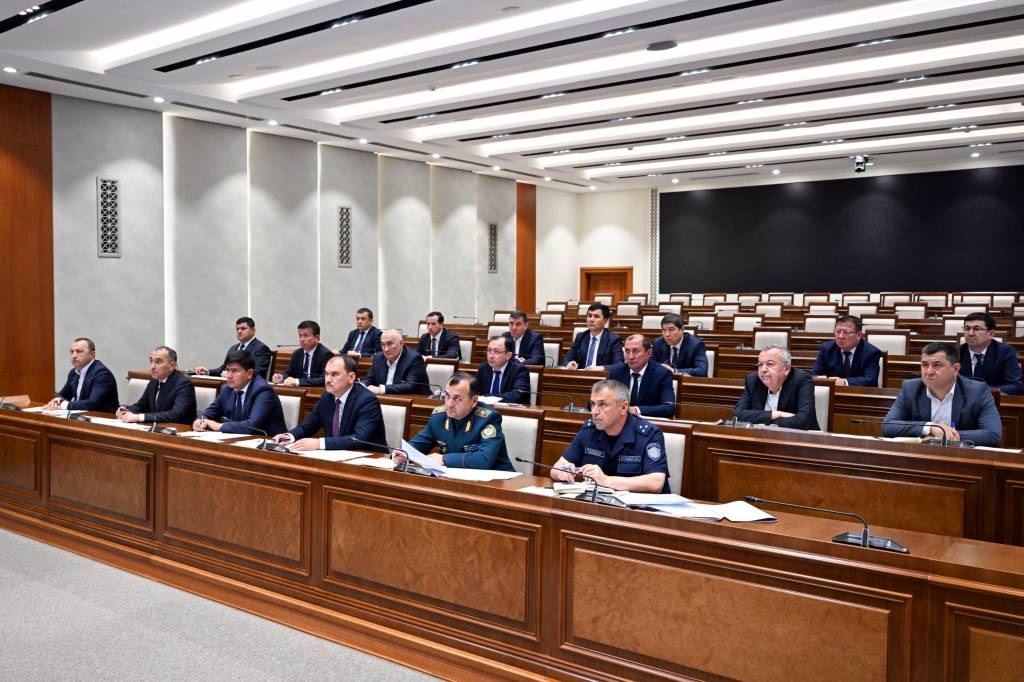
President Shavkat Mirziyoyev chaired a meeting on measures to improve the efficient use of water fund lands and floodwaters.
In Uzbekistan, the rational use of water resources, the modernization of irrigation systems, and water conservation have become key areas of state policy. The work being carried out in this sphere is yielding results.
In particular, the work to concrete the beds of rivers and canals across the country, totaling 150,000 kilometers, saves 1.3 billion cubic meters of water annually, equivalent to the annual water consumption of Navoi region. To date, 2,000 kilometers of main canals have been concreted, and 721 kilometers of canals, 525 kilometers of flumes, and closed networks have been built. Three trillion UZS have been allocated for these purposes. As a result, water supply has improved on 858,000 hectares of land, and 51,000 hectares of land have been brought into agricultural use.
At the meeting, it was emphasized that water infrastructure should be viewed not only as a technical facility but also as an economic asset. It was noted that today, around the world, the use of coastal zones of rivers, canals, reservoirs, and lakes for tourism development, the organization of recreational areas, service facilities, and entrepreneurship has become a major economic sector.
Such projects enable the value of real estate and land plots to increase, revitalize the economies of districts and cities, develop domestic tourism and the service sector, attract investment, create new jobs, and improve environmental sustainability.
Global experience shows that the economic return on every $1 invested in tourism projects related to water infrastructure is estimated at $3- $10.
In this regard, it was emphasized that responsible agencies and hokims should work systematically to make water infrastructure facilities economically efficient projects.
To this end, several new opportunities will be created. In particular, the extraction of sand and gravel will be permitted in areas where their accumulation causes bank erosion and flooding. Entrepreneurs will be involved, without tenders, in cleaning reservoirs, floodwater reservoirs, canals, collectors, natural lakes, and hydraulic structures of sediment and soil. Land plots freed from water in reservoirs and floodwater storage facilities will be leased through auctions for crop cultivation.
At the same time, it was noted that in some regions, these opportunities are not being used effectively. About 100,000 hectares of land suitable for business, tourism, and entertainment facilities have been identified on water fund sites. These areas offer the opportunity to create employment for 100,000 people and generate an additional 220 billion UZS in income per year.
Responsible officials were instructed to implement an information system to move the processes of leasing water fund lands, monitoring, contract conclusion, and report maintenance online. The Space Research and Technology Agency was tasked with accurately calculating the volume of sand and gravel extracted from riverbeds and water management facilities and submitting these data to the relevant agencies.
The issues related to the use of mudflow and floodwaters were also reviewed in detail.
It was noted that due to climate change, short-term heavy rainfall has become more frequent in recent years, increasing the risk of mudflows and floods. The mountainous and foothill areas of Samarkand, Jizzakh, and Tashkent regions are particularly exposed to a high level of mudflow hazard.
Mudflows and floodwaters damage not only infrastructure and agriculture but also industry, the insurance sector, logistics, and foreign trade. At the same time, mudflows are not only a source of risk but also have significant potential to replenish water resources.
Along 60 large rivers at risk of mudflows, about 690 million cubic meters of water flow away every year without being used effectively. It was noted that the rational use of these resources would enable the return of 13,000 hectares of land to use, improve water supply, and create conditions for the development of fish farming.
In this regard, the need to adopt an integrated approach to mudflow water management was noted, without limiting it solely to dam construction. Such an approach provides for the simultaneous implementation of projects aimed at reducing mudflow hazards, accumulating water, and developing agriculture, energy, fish farming, tourism, and the service sector.
The Head of State gave responsible officials several instructions to turn water infrastructure into a source of economic activity, reduce mudflow and flood risks, use water resources more effectively, and expand private-sector participation.
UzA