Eldor Tulyakov: “Uzbekistan and Tajikistan are moving toward deep economic integration”
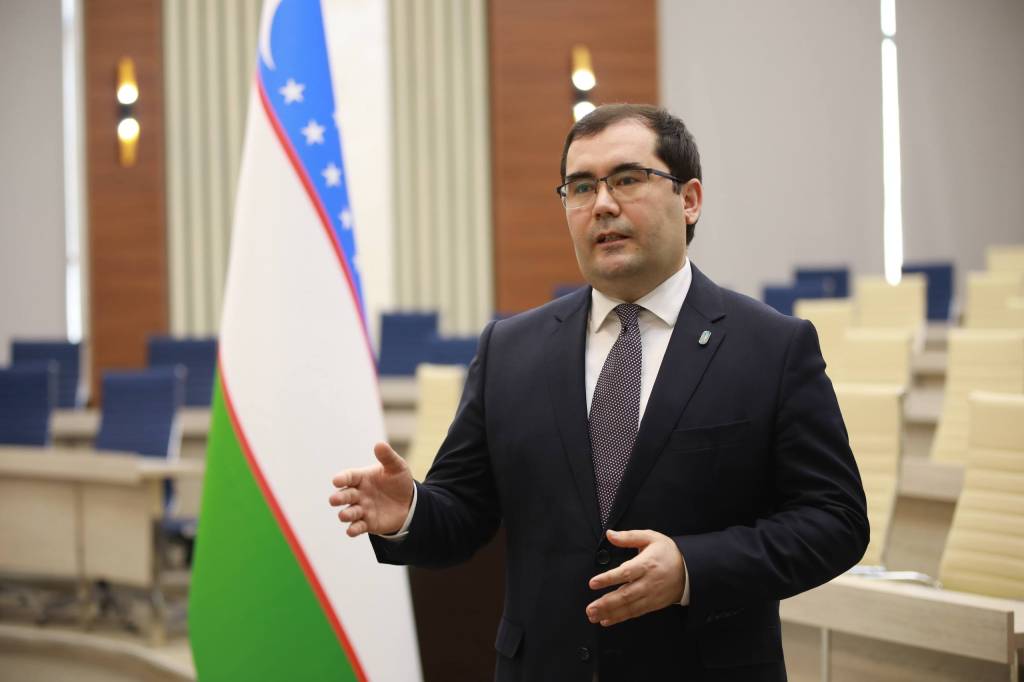
Uzbekistan and Tajikistan are actively developing economic and infrastructure ties, strengthening bilateral cooperation, and stimulating investment.
Eldor Tulyakov, Executive Director of the Development Strategy Center, in an interview with UzA correspondent, spoke about the key achievements of the two countries, including the growth in the number of joint enterprises, the implementation of major transport, logistics, and energy projects, as well as the successful development of interregional cooperation. According to him, the upcoming visit of the President of Tajikistan, Emomali Rahmon, to Uzbekistan could give new impetus to bilateral relations and further integration of the region’s economy and infrastructure.
– Eldor Sobirjonovich, in recent years, relations between Uzbekistan and Tajikistan have noticeably intensified, which is reflected both in the economy and in infrastructure projects. Which specific achievements in these areas would you consider the most significant and indicative for strengthening cooperation?
– In recent years, relations between the two states have reached a qualitatively new level. The signed agreements on strategic partnership and allied relations have created an institutional framework to enhance trade and economic interaction and strengthen bilateral ties.
Among the most significant joint initiatives, projects in the transport and logistics sector occupy a special place. In particular, one of the largest is the creation of the Andarkhon trade and logistics center in Fergana region, which includes more than 200 facilities: production sites, warehouses, hotels, and financial infrastructure, with a total value of about $100 million.
At the same time, projects are being implemented to modernize and expand the capacity of border checkpoints, such as “Jartepa – Sarazm” and “Oybek – Fotehabad”, and to establish new logistics centers in border areas. These centers are expected to handle up to 100 trucks per day. In particular, the construction of a major logistics hub near the above-mentioned checkpoints is under consideration, with the involvement of international financial institutions and public-private partnership mechanisms. In addition, the establishment of a logistics center in Urgut district is under discussion to handle significant cargo flows and streamline border procedures. Special attention is also being given to developing multimodal transport corridors. In particular, the launch of pilot shipments along the China – Tajikistan – Uzbekistan route is being explored to enhance the region’s transit potential and connect it to the “New Silk Road” initiatives.
An important step is also the transition to an electronic permit format for international road transport, which significantly reduces border crossing time. It should be noted that Uzbekistan, located at the heart of Central Asia, possesses considerable transport and transit potential. Based on this, Tajikistan’s transport and logistics network is closely interconnected with our country. Consequently, the joint use of infrastructure capabilities contributes to the development not only of the two countries but also of the entire region.
At the same time, cooperation in the energy sector is deepening. Key projects include the construction of the Yavan and Fandarya hydropower plants with a total capacity of about 320 MW. These facilities are designed to generate around 1.4 billion kWh of electricity annually, with equal distribution between the countries, making them an important element of regional energy security. Cooperation is also developing around the largest project – the Rogun hydropower plant, which is being integrated into the region’s energy system.
– The number of joint enterprises is increasing every year. This indicates growing investment activity and trust between the countries. Which sectors are currently of the greatest interest for joint business and why?
– Indeed, the growing number of joint entities is a direct confirmation of a high level of trust and the creation of a favorable investment climate. According to the latest data from the National Statistics Committee, as of February 1, 2026, 410 enterprises with Tajik capital participation are operating in the country. Of these, 102 function as joint ventures (JVs), while 308 operate as foreign enterprises with full ownership by partners from Tajikistan. These figures reflect the steady expansion of business activity by Tajikistan’s investors across various sectors of the Uzbek economy. The largest number of such enterprises is concentrated in the trade sector, where 144 companies are operating. An analysis of the investment structure makes it possible to identify key sectors demonstrating the greatest investment attractiveness – these include trade and retail, industry, construction, the technology and services sector, where a strong presence is observed in the segment of information technology and communications, as well as tourism, particularly hospitality and logistics.
It should also be noted that the Uzbekistan–Tajikistan Investment Company, established in 2021, plays a special role in providing institutional support to business. With an authorized capital of $50 million (75 percent from the Fund for Reconstruction and Development of Uzbekistan and 25 percent from TajInvest), this structure catalyzes business activity. Currently, the company is supporting projects across 36 priority areas, including energy, healthcare, and banking, to ensure the long-term sustainability of bilateral economic cooperation. Thus, the current dynamics indicate a gradual transition from predominantly trade-based interactions to more diversified, investment-oriented cooperation across key sectors of the economy.
– To what extent has Uzbekistan’s reform experience, including economic liberalization, the development of the investment climate, and the model of interregional cooperation, influenced the deepening of interaction with Tajikistan, and which specific results of this influence do you consider the most indicative?
– Uzbekistan’s reform experience has had a practical impact on Tajikistan through the adaptation of certain instruments, primarily in the areas of economic openness, investment, and regional cooperation. The most illustrative example is the normalization of relations and the resolution of border issues, as well as the introduction in 2018 of a visa-free regime for up to 30 days for mutual travel by citizens of the two countries, which led to increased trade and a rise in the number of joint enterprises. Last year, Uzbekistan was visited by about 11.7 million foreign tourists, which is 47 percent more than in 2024. Among them, citizens of Tajikistan ranked second (more than 2.7 million tourists). An important element has been the model of interregional cooperation, namely direct ties between border regions, which has made it possible to accelerate economic interaction at the local level. As a result, interregional cooperation between the Sughd and Khatlon regions of Tajikistan with Samarkand and Surkhandarya regions of Uzbekistan has developed positively in recent years.
In June 2021, the first Interregional Investment Forum was held in the city of Bokhtar in Khatlon region of the Republic of Tajikistan. On April 18, 2024, as part of a high-level visit to Tajikistan, agreements and roadmaps for cooperation were signed between Sughd region and Andijan, Namangan, Syrdarya, Fergana, and Khorezm regions of the Republic of Uzbekistan, as well as between Khatlon and Kashkadarya regions.
Uzbekistan’s experience in improving the investment climate also proved significant – through incentives, business simplification, and the creation of special economic zones, which stimulated bilateral investment and the establishment of joint enterprises.
– In the period from 2017 to 2025, mutual trade turnover increased almost fourfold – from $238 million to $912 million, with both exports and imports rising significantly. How do you assess the prospects for further growth in trade between the countries, and what barriers currently hinder the full development of trade turnover?
– The prospects for further growth in trade between Uzbekistan and Tajikistan remain significant and largely untapped. The dynamics already achieved – an almost fourfold increase in trade turnover between 2017 and 2025 – indicate a high degree of complementarity between the economies and the effect of removing political and administrative barriers. By the end of 2025, mutual trade turnover amounted to $912 million, up 30 percent from the same period the previous year. During high-level bilateral negotiations, the parties reached an agreement to increase trade volumes to $2 billion.
According to expert estimates, the growth potential remains at least 30-40 percent, primarily due to the substitution of Tajikistan’s imports from third countries with Uzbek products, especially in industrial segments (automobiles, household appliances, chemicals, textiles). Significant opportunities also include the development of industrial cooperation – creating joint processing enterprises in border regions and expanding agrologistics infrastructure. An additional driver could be the deepening of allied relations, moving from simple trade to a model of joint investment and integration of production chains.
– Which Tajik analytical centers does the Development Strategy Center cooperate with, and which joint projects are already yielding results?
– In recent years, the Development Strategy Center has been consistently developing expert and institutional cooperation with relevant analytical and government structures of the Republic of Tajikistan. Among the key partners is the Center for Strategic Studies under the President of the Republic of Tajikistan, with which regular dialogue is maintained, and in which participation in joint international events devoted to the development of relations between Uzbekistan and Tajikistan and to relevant aspects of the regional and global agenda is carried out.
The practical dimension of this cooperation includes organizing and participating in expert meetings and discussion platforms. In particular, in 2019, a meeting was held at the Development Strategy Center with Zarif Alizoda, Assistant to the President of the Republic of Tajikistan for Legal Affairs and the President’s Plenipotentiary Representative in Parliament. During the dialogue, prospects for strengthening bilateral cooperation were discussed, including developing interaction between civil society institutions and expanding information exchange. In addition, last year our Center served as a co-organizer of a panel session at the first Fergana Peace Forum, in which Murodjon Umarov, Deputy Director General of the Chamber of Commerce and Industry of Sughd region, participated. During the discussions, the importance of deepening economic integration in the region, including through the development of joint enterprises, was emphasized as a means of improving public welfare and strengthening sustainable peace in Central Asia. Thus, cooperation with Tajik analytical centers is systemic and is already yielding practical results, including expanded expert dialogue, the development of coordinated approaches, and the promotion of joint initiatives in regional development.
– Looking 5-10 years ahead, cooperation between Uzbekistan and Tajikistan has the potential for qualitative growth. How do you see the level of economic and social interaction between the countries in the coming years, and which projects could become “transformational players” for the region?
– In the coming years, interaction between Uzbekistan and Tajikistan is expected to move from trade growth to deeper economic integration. Trade turnover is projected to increase by another 30-40 percent due to industrial cooperation and import substitution, as well as strengthened investment cooperation and joint production in border regions. Key transformational projects may include: the creation of joint processing enterprises and agro-logistics centers; the development of transport and logistics infrastructure and transit corridors; the expansion of industrial cooperation (in automotive, machinery, textiles, and chemicals); and the deepening of energy and infrastructure cooperation. In addition, social connectivity will continue to grow: an increase in tourist flows (already more than 2.7 million citizens of Tajikistan annually) and the expansion of air connectivity (up to 10 flights) are shaping sustainable humanitarian and business integration. Overall, the model of interaction will evolve toward closer economic integration with integrated production and transport linkages, strengthening the role of both countries in the regional economy of Central Asia.
– To what extent can the upcoming visit of the President of Tajikistan, Emomali Rahmon, to Uzbekistan give a new impetus to the development of bilateral relations and regional cooperation?
– First of all, this visit can significantly strengthen the dynamics of bilateral fraternal and allied relations and provide new momentum for regional cooperation. At previous meetings, the leaders of the two countries have noted the positive dynamics of cooperation: growth in trade turnover, increased cargo transportation, expanded air connectivity, and intensified cultural and humanitarian exchanges. The negotiations will also cover the development of coordinated measures to increase mutual trade, promote projects in industrial, energy, and agricultural cooperation, and strengthen interregional ties, thereby laying the foundation for deeper integration of the two countries’ economies and production chains.
In addition, the exchange of views on the international and regional agenda contributes to the coordination of positions within Central Asia and the CIS, thereby strengthening political trust and creating conditions for joint infrastructure and investment projects. Thus, the visit may become not only a symbolic confirmation of allied relations but also a practical instrument for accelerating the development of trade, industrial cooperation, and sustainable regional interaction.
Interviewed by Aziza Alimova, UzA