What are the changes happening in Samarkand?
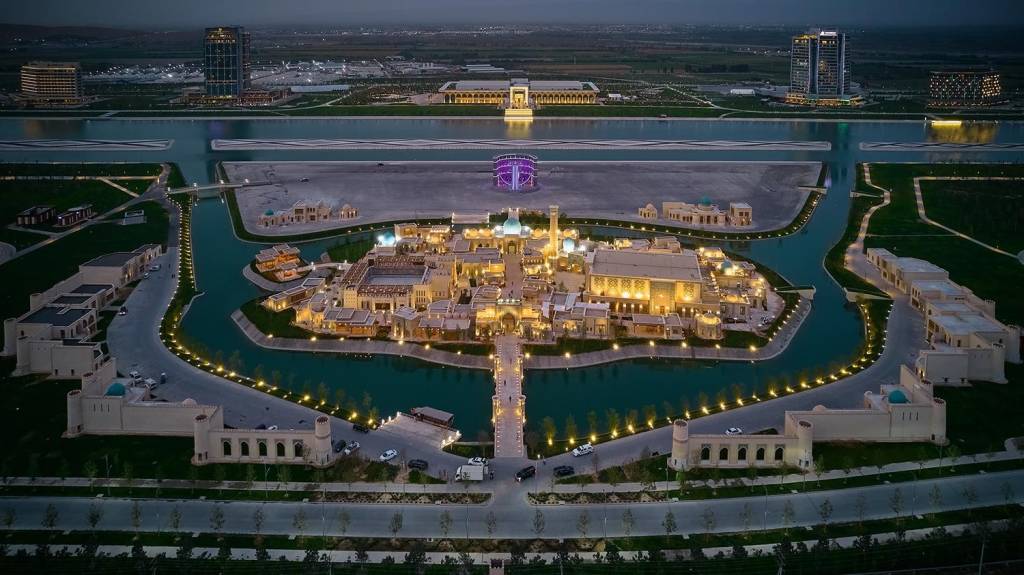
Today, Samarkand appears markedly different from its recent past, when its tourism infrastructure was just starting to develop. The number of tourists increases annually, and the city consistently ranks as one of the top destinations in major international publications.
The easing of visa restrictions has significantly contributed to this development. Direct flights now link Samarkand with cities like Moscow, Istanbul, Dubai, and Beijing, increasing travel opportunities for tourists from various continents.
Ancient heritage that has persisted over centuries
Samarkand’s top treasure is its architectural heritage, listed as a UNESCO World Heritage site. Registan Square, featuring its three grand madrasahs – Ulugbek, Sherdor, and Tillaqori – is celebrated as one of the most stunning architectural ensembles worldwide.
The Gur-e-Amir Mausoleum, final resting place of the great commander Amir Temur, has been meticulously restored. Its renowned ribbed dome, decorated with turquoise tiles, shines anew as intended. Likewise, the Shah-i-Zinda necropolis has undergone a remarkable transformation, revealing a distinctive complex of mausoleums decorated with intricate majolica tiles.
Imam Al-Bukhari holds a special place in spiritual heritage as a renowned scholar whose hadith collection has been esteemed for centuries. The Al-Bukhari Mausoleum, situated in Hartang village near Samarkand, is one of the most venerated Islamic sites. After extensive reconstruction, it now features a grand architectural complex with a spacious courtyard, iwans, and a dome. Annually, it draws hundreds of thousands of pilgrims and tourists from across the globe.
President Shavkat Mirziyoyev has repeatedly visited the Imam Al-Bukhari Mausoleum. His visits consistently included directives to improve the area, better facilities for pilgrims, and develop modern infrastructure. During each visit to Samarkand, he checked on construction progress and stressed that the complex should evolve beyond a pilgrimage site into a hub of science, learning, and spiritual leadership. The goal is for Imam Al-Bukhari’s works, knowledge, and spiritual values to inspire especially the youth.
Advanced tourism infrastructure
In Samarkand, alongside the restoration of historic sites, modern infrastructure is rapidly expanding. A few years ago, hotel options were limited, but now the city hosts dozens of hotels, from charming boutique establishments in historic buildings with traditional courtyard iwans to large international chains providing all amenities. Many hotels feature designs inspired by local architectural styles, including carved wooden columns, glazed tiles, and fountains in inner courtyards, which help create an ambiance reminiscent of the distant past.
In April 2021, President Shavkat Mirziyoyev announced plans to enlarge the city by adding 18,000 hectares from nearby districts, initiating a major transformation. By January 2025, the Oliy Majlis deputies adopted a draft law to change Samarkand’s boundaries, which was then approved by the Senate in February. After the expansion, the total area of the city will be 28,080 hectares.
The territory will be split into five districts: Qorasuv, Siyob, Sogdiana, Bogishamol, and Marokand. With Samarkand’s population expanding quickly, the old administrative system can no longer handle this growth. The new districts are being created with careful consideration of the city’s existing structure, including the historic center with its monuments and tourist sites, industrial and logistics zones, and expanding suburban areas that have essentially become part of the city. This new division aims to improve city management, speed up infrastructure projects in each district, and distribute investment more evenly. Plans also include building new roads, schools, hospitals, and public spaces to better connect the historic core with the fast-growing outskirts.
The quality of tourist services has notably enhanced. Visitors can explore historic quarters using audio guides in multiple languages, and information boards with detailed descriptions of attractions have been placed around the city. Guides also provide a variety of themed tours, from traditional sightseeing to specialized routes.
Culture
The Sharq Taronalari International Music Festival – “Melodies of the East" – holds a special place in the city’s cultural scene. Held in Samarkand every two years, it has become one of the most important musical events not only in Central Asia but also globally. Established in 1997, the festival first showcased the melodies of performers who gathered on this historic land.
Performers from numerous countries take the stage in Registan Square, showcasing the traditional music of their cultures. The impressive walls of the madrasahs serve as a backdrop for sounds from instruments like the oud, dutar, and karnay. The festival includes concerts, masterclasses, folk instrument exhibitions, and gatherings of musicians and cultural specialists.
Orash Akaboyev, UzA