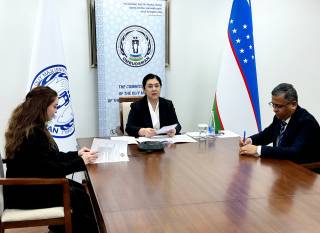
Weixiong Chen: “I encourage Uzbekistan to share its effective experience”

The Deputy Executive Director of the Security Council Counter-Terrorism Committee Executive Directorate, Weixiong Chen, took part in the first meeting of the Central Asia Regional Expert Council on rehabilitation and reintegration of returnees from armed conflict zones in Tashkent.
The UN representative paid serious attention to the measures taken in the fight against terrorism, the strategy for the rehabilitation and reintegration of suspected and returned militants and members of their families, as well as the policy of Uzbekistan in this direction.
The speaker raised several important issues.
The first is the international legal framework. The importance of respecting international law, including human rights, humanitarian law, and refugee rights, was emphasized when developing and implementing a strategy for the rehabilitation and reintegration of returnees. This shows the need for a balanced approach that ensures safeguards while respecting fundamental rights.
The second is regional leadership and proactive measures. Weixiong Chen acknowledged the active position of Uzbekistan in the fight against terrorism. He noted that with initiatives such as Operation “Mehr”, the country is demonstrating a kind of leadership in this direction, and other countries in the region are also following the same path. The UN representative called on Uzbekistan to share its practical experience not only in Central Asia, but throughout the world.
The third is the community approach. Weixiong Chen recognized that comprehensive approaches have been adopted, involving both government and non-governmental organizations in the rehabilitation and reintegration of women and children victims of terrorism in Central Asian countries. He noted that this approach confirms the multifaceted nature of the impact of terrorism and the importance of public participation in the fight against this scourge.
The fourth is the role of regional cooperation in the fight against terrorism. According to the expert, the updated Joint Action Plan is a special regional instrument that provides tailored technical assistance to improve the effectiveness of the fight against terrorism. This, in turn, helps strengthen regional security.
Weixiong Chen noted the need for a comprehensive strategy that not only addresses security issues, but also protects human rights and brings parties together. He also emphasized the importance of further enhancing regional cooperation to find a sustainable solution in the fight against terrorism.
Gayrat Khonnazarov, UzA