Uzbekistan’s experience in legal guarantees presented in Vienna
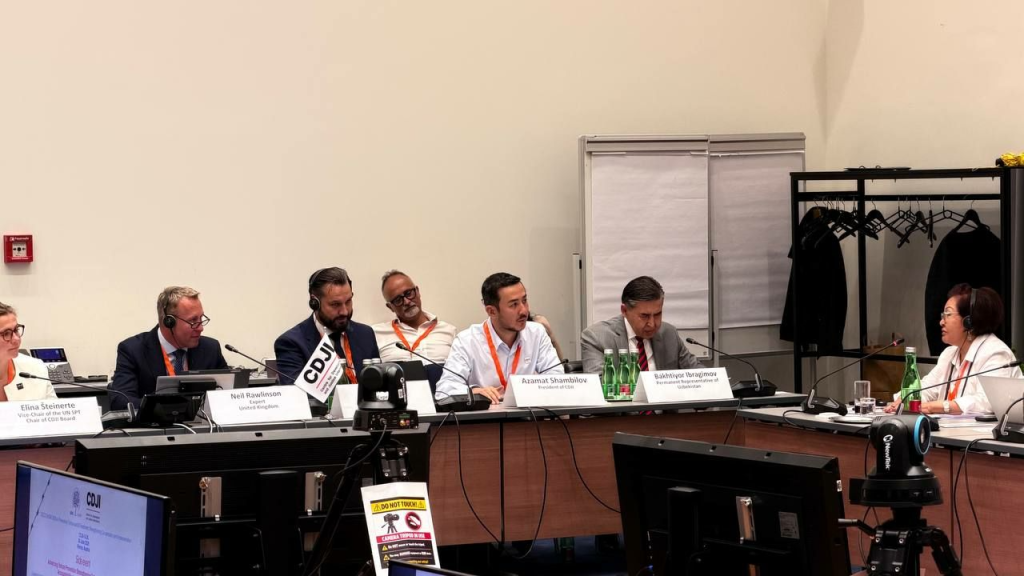
Uzbekistan’s experience in improving its criminal justice system and strengthening legal safeguards was presented in Vienna at an event held during the OSCE Supplementary Human Dimension Meeting.
A side event titled “Advancing torture prevention: strengthening legal safeguards, oversight, and accountability in the criminal justice system” was held during the OSCE Supplementary Human Dimension Meeting “Preventing torture and ill-treatment: strengthening cooperation and law enforcement”.
In the statement delivered on behalf of Uzbekistan, it was emphasized that the prohibition of torture is absolute and allows for no exceptions, regardless of the circumstances. It was noted that Uzbekistan, which acceded to the UN Convention against Torture in 1995, views strict compliance with it as one of the most important priorities of state policy in the area of human rights protection.
Participants commended the reforms being implemented in Uzbekistan aimed at strengthening the national torture prevention system, improving legislation and law enforcement practices, and ensuring the effective protection of human dignity.
The side event was organized by the OSCE Office for Democratic Institutions and Human Rights, the International Center for Development and Justice, and the Office of the UN High Commissioner for Human Rights.
The event was attended by over 50 representatives of OSCE participating States, international organizations, national human rights institutions, and civil society. Participants discussed issues of effective interrogation, independent monitoring of places of detention, the protection of vulnerable groups, and access to justice.
The discussion focused on improving legal safeguards at all stages of criminal proceedings, strengthening independent oversight of places of detention, protecting vulnerable groups, and implementing modern international interrogation standards based on human rights.
OSCE ODIHR Director Maria Telalian delivered the welcoming remarks. She emphasized that torture prevention is a key area of OSCE human dimension activity and requires close cooperation between government agencies, independent monitoring mechanisms, civil society, and international partners.
Renate Winter, President Emeritus of the Centre for Development and Justice International, emphasized the importance of a gender-sensitive approach and the special protection of women, children, and other vulnerable individuals in detention. She specifically addressed the issue of judicial independence, emphasizing that in some countries the judiciary is truly independent, while in others, judges remain dependent on external influence.
The event presented international approaches to strengthening national preventive mechanisms, ensuring independent oversight of places of detention, developing gender-sensitive protection mechanisms, and the practical application of the Méndez Principles, the Istanbul Protocol, and the Nelson Mandela Rules.
N. Usmanova, UzA