
Uzbekistan, China strengthen collaboration
Relations between Uzbekistan and China have deep historical roots.
The Great Silk Road united the countries, and the states have maintained trade and cultural exchanges for centuries. In recent years, cooperation has risen to the strategic level. The Strategic Partnership Agreement signed in 2016 aims to strengthen it.

China is ready to make large investments in Uzbekistan, which has joined China’s Belt and Road Initiative. China and Uzbekistan regularly implement joint projects in such important areas as cultural exchange, education, and tourism.
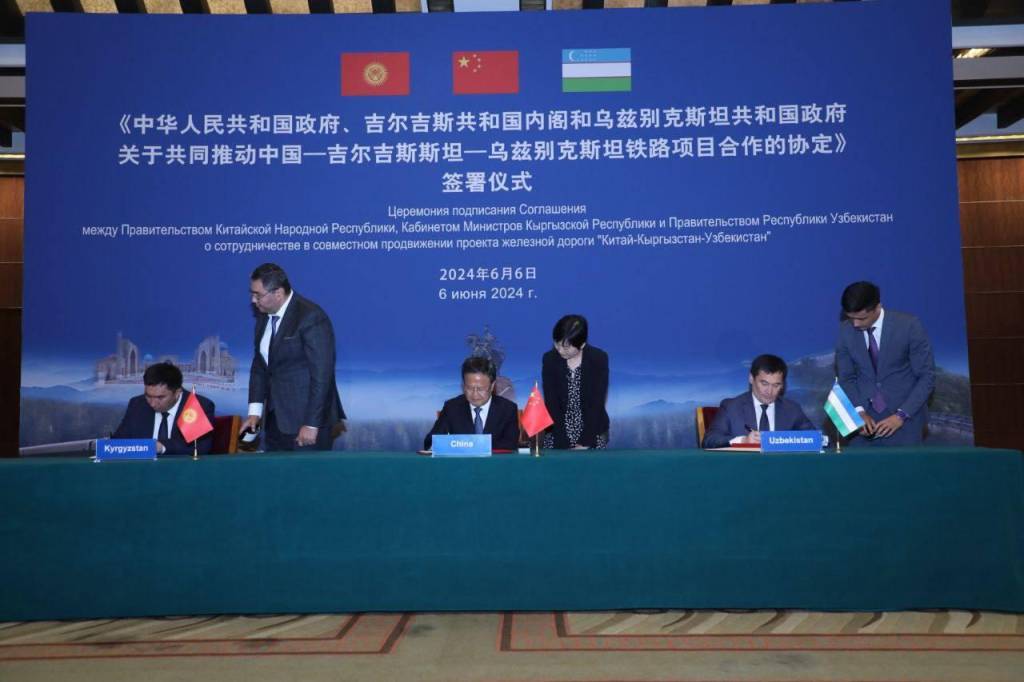
Promoting bilateral ties benefits both countries and positively impacts the region’s development. Kyrgyzstan and Uzbekistan have agreed with China to build a railway as part of the Belt and Road Initiative. At a trilateral meeting held on June 6 in Beijing, with the participation of the Chinese government, the Cabinet of Ministers of Kyrgyzstan, and a delegation from Uzbekistan, an agreement was signed on the joint implementation of the China – Kyrgyzstan – Uzbekistan railway project.
Based on this global project, designed to radically improve transport and trade relations in Central Asia, a new railway will be built leading from the west of China to Central Asian countries through Uzbekistan and Kyrgyzstan. Trade turnover and inflow of investments will increase, the transport and logistics system will improve, and regional cooperation and integration will be strengthened. The most important thing is that the project will bring the Central Asian countries closer to the Chinese market. After the railway is operated, the exchange of goods with China will become much more accessible, the price will decrease, and the choice will expand. Our sunny region’s agricultural products and other goods will be exported to China.

The collaboration is expected to bring about significant economic benefits. Large companies are anticipated to establish enterprises in the region, existing enterprises will be modernized, and infrastructure will be developed. This, in turn, will lead to job creation, economic growth, and improved living standards.
Mirhabib Sayfullayev, UzA


