UN General Assembly: Dialogue and cooperation in addressing global challenges
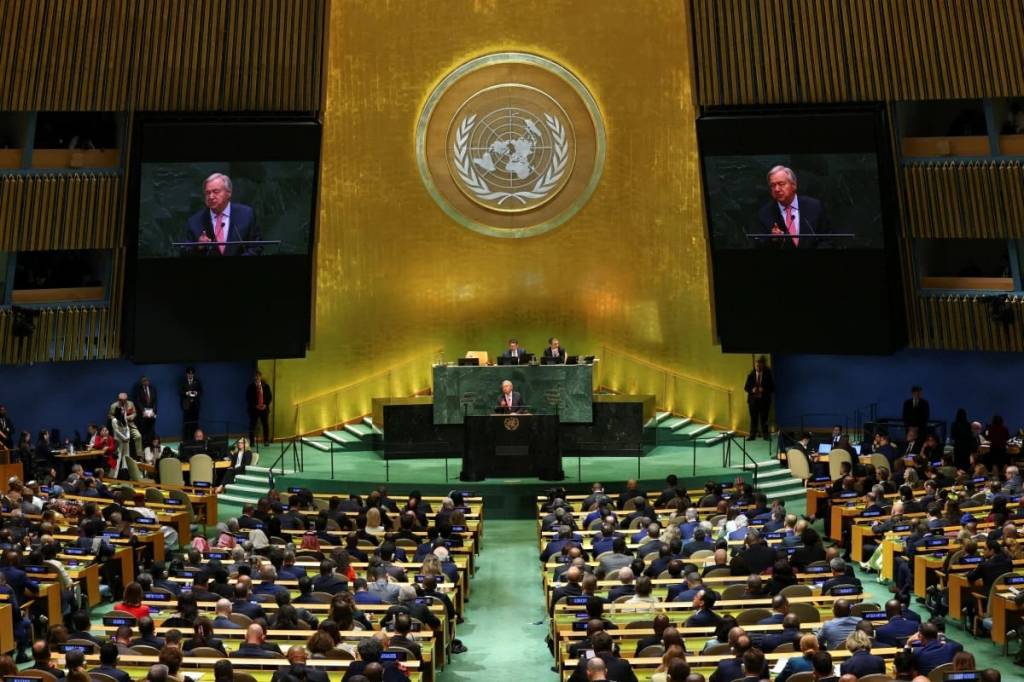
As is known, the 81st session of the United Nations General Assembly began its work in New York, United States, on September 8 this year. The session is being held under the theme “Restoring trust, managing change: An effective UN for all.” The general debate, held from September 22 to 28, traditionally served as the centerpiece of the high-level week. Heads of state and government, ministers, and other senior officials presented their positions on international peace and security, sustainable development, and collective responses to contemporary global challenges.
This year’s discussions were largely shaped by the need to restore trust in international relations and enhance the effectiveness of multilateral cooperation. Against the backdrop of ongoing conflicts, humanitarian crises, climate change, economic instability, and technological transformation, the need to adapt existing UN mechanisms to contemporary realities once again came to the forefront of the global agenda. Opening the general debate, the president of the General Assembly emphasized that trust in the Organization and the practical effectiveness of its work are of particular importance today.
Alongside the general debate, a number of special meetings were held as part of the high-level week of the 81st session. These included discussions marking the 40th anniversary of the Declaration on the Right to Development, as well as meetings on climate action and a just transition, the threats posed by sea-level rise, strengthening pandemic prevention, preparedness and response, and the 25th anniversary of the Durban Declaration and Programme of Action. On September 29, a high-level plenary meeting was also held to commemorate the international day for the Total elimination of nuclear weapons. These events demonstrated that the concept of global security is no longer confined solely to military and political issues, but increasingly encompasses climate, public health, equality, and sustainable development.
Notably, Uzbekistan also used the General Assembly platform to present its approaches to key international and regional issues. Saida Mirziyoyeva, Head of the Administration of the President of the Republic of Uzbekistan, addressed the Assembly on behalf of the country, emphasizing that amid the current complex international environment, Uzbekistan remains committed to the principles of openness, good-neighborliness, and dialogue. Her address focused in particular on developments in Central Asia, the situation in Afghanistan, the rights of children and women, demographic resilience, the rule of law, advances in artificial intelligence, and the protection of human dignity.
Environmental issues, particularly the Aral sea tragedy, also featured prominently in Uzbekistan’s address. The country expressed its goal of transforming the Aral sea region from a symbol of environmental disaster into an area where modern environmental solutions can be tested and put into practice. Plans were also highlighted to expand the use of water-saving technologies and increase the share of renewable energy to 54 percent by 2030. The designation of 2027–2036 as the “Decade of Action for Afforestation and Reforestation,” initiated by Uzbekistan, also reflects the country’s efforts to advance environmental issues through international cooperation.
The high-level events of the 81st session demonstrated that, in today’s interconnected world, it is becoming increasingly difficult to address security, development, environmental challenges, and technological transformation in isolation from one another. In this context, the UN General Assembly continues to serve as a common platform for dialogue among states with diverse interests and perspectives.
Uzbekistan’s participation in the session provided another opportunity to articulate the country’s key foreign policy priorities on the international stage, including strengthening good-neighborly relations in Central Asia, addressing global challenges through dialogue, ensuring environmental security, protecting human interests, and promoting a responsible approach to contemporary technological developments.
Utkir Alimov, UzA