Tashkent Metro expands and modernizes
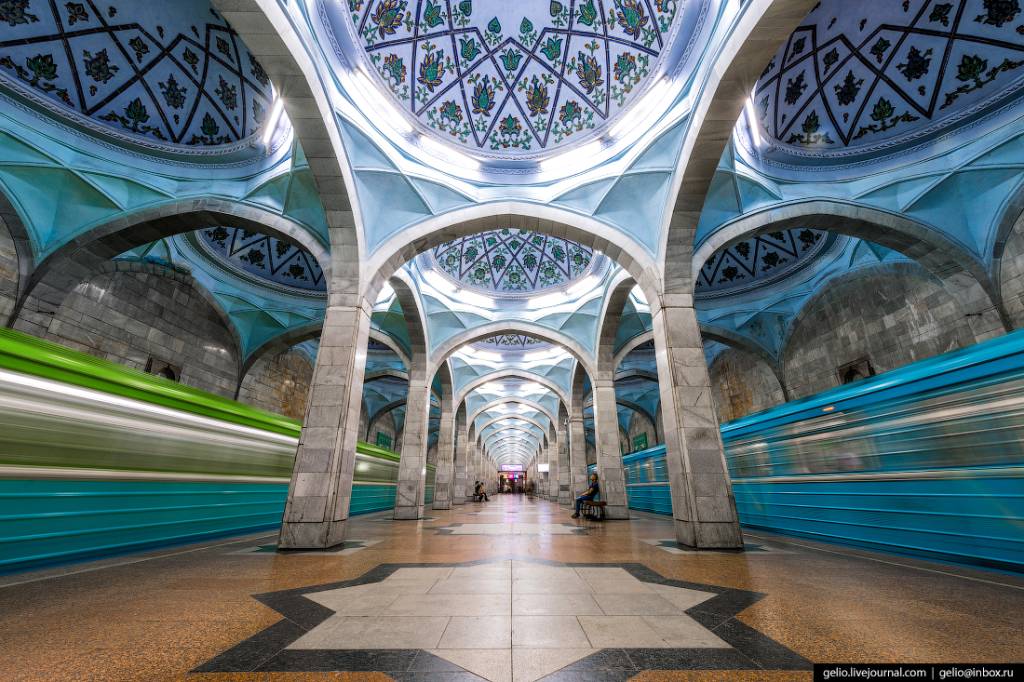
Large-scale reforms are underway in Tashkent to provide residents with convenient, safe, and environmentally friendly public transportation.
Over the past decade, the Tashkent Metro has been modernized through new routes, modern trains, reduced service intervals, digital payment options, and improved mobile connectivity.
The Head of State emphasized that public transport impacts daily life quality, urban mobility, the environment, and the economy. Consequently, officials were assigned to improve transport convenience and safety, expand routes following the agglomeration principle, and implement digital and AI solutions.
The Tashkent Metro was opened in 1977. For almost 40 years, it had 29 stations and 38 kilometers of track. Recently, this has changed significantly. An additional 33 kilometers of new lines have been constructed, and 21 new stations are now operational. The metro system now includes 50 stations and spans 71 kilometers.
The metro is becoming a key component of the capital’s transportation system. However, new stations alone are not enough to carry more than one million passengers. Another major transformation underpinning this progress is the trains.
Renewal of rolling stock
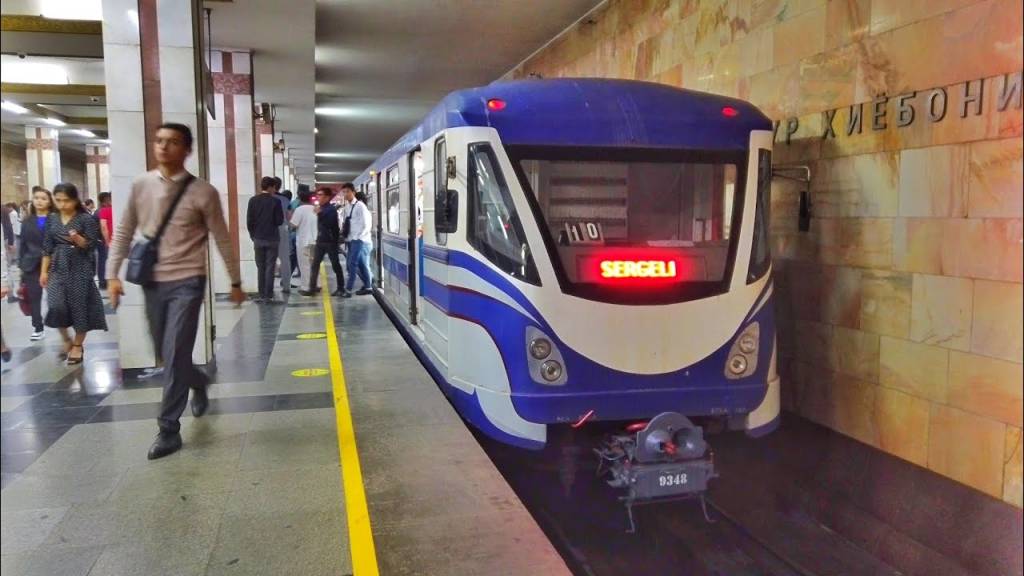
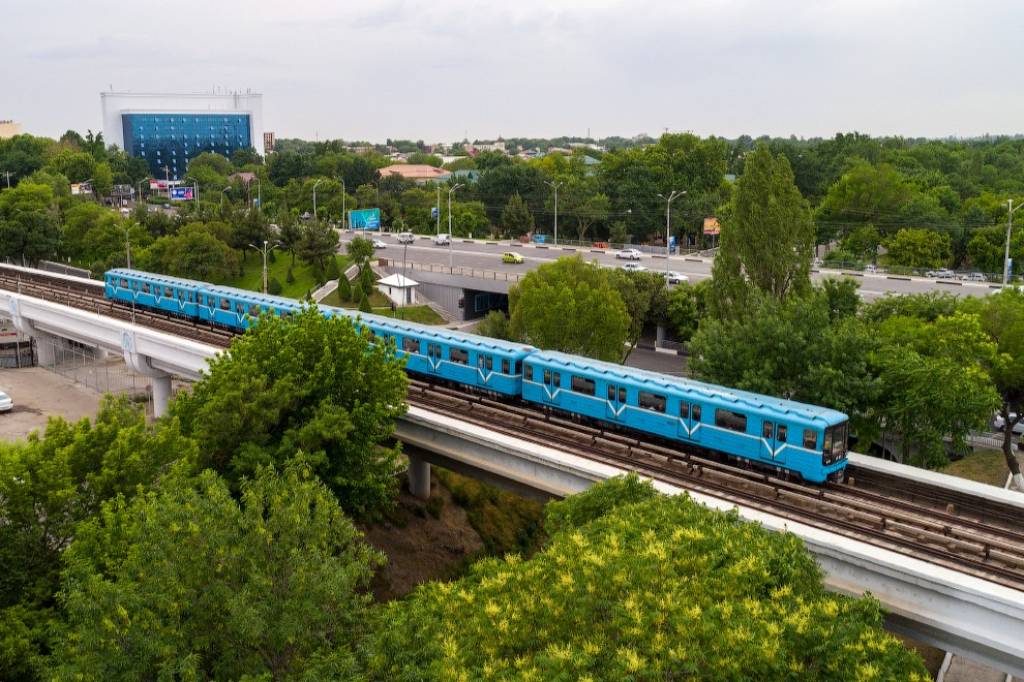
As passenger numbers grew, the rolling stock needed updating. The metro initially operated 40 older trainsets, but in recent years, it has purchased 55 new modern trainsets. In 2026, an additional 14 modern trains were delivered and entered service.
A key indicator of metro changes is train waiting time at stations.
During peak hours:
on the Chilanzar Line, the interval decreased from 5 minutes in 2021 to between 1.5 and 2 minutes;
on the Uzbekistan Line – reduced from 6 to 3 minutes;
on the Yunusabad Line – from 11 to 4 minutes;
on the above-ground Circle Line – from 12 to 8 minutes.
In addition, escalators have been modernized at the Khalqlar Dustligi, Novza, Mustaqillik Maydoni, Pakhtakor, and Hamid Olimjon stations. Mother-and-child rooms and restrooms have also been provided at several stations, including Chilanzar, Pakhtakor, Buyuk Ipak Yuli, Amir Temur Khiyoboni, Beruni, Dustlik, Chorsu, Mustaqillik Maydoni, Olmazor, Bodomzor, and Chinor.
Mobile connectivity
Wi-Fi services have been introduced at stations, and mobile network coverage in tunnels has been expanded.
The fare payment system has also been digitized. Passengers can now pay fares using bank cards, mobile apps, ATTO, Face Pay, and Palm Pay.
Using alternative energy sources
Solar panels are being installed at metro depots. The electricity generated meets the metro’s needs, and any surplus can be sold to the electricity grid. Metro employees have also developed a specialized device for cleaning the solar panels.
Development prospects
An ambitious plan aims to expand the Tashkent Metro to 79 stations and 103 kilometers by 2030, boost daily ridership to 1.8 million, and shorten train intervals to 2-3 minutes.
The metro’s development reduces pressure on major roads, cuts emissions, and helps create an integrated transportation framework for the capital.
Muhayyo Toshqorayeva, UzA