Sibi George: Uzbekistan and India plan to increase bilateral trade to $5 billion by 2030
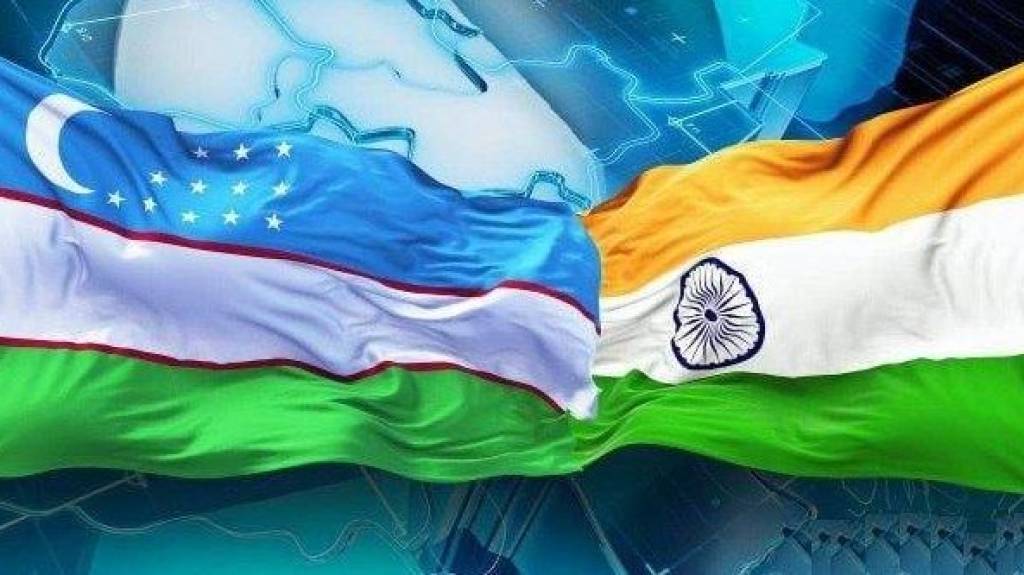
As previously reported, at the invitation of the President of the Republic of Uzbekistan Shavkat Mirziyoyev, the Prime Minister of the Republic of India Narendra Modi paid a state visit to Uzbekistan on August 29-30.
At a briefing for media representatives following the visit, Sibi George, Secretary (West) at the Ministry of External Affairs of India, spoke about the agreements reached and the priority areas of bilateral cooperation.
– In recent years, multifaceted cooperation between Uzbekistan and India has been steadily developing, and political, economic, cultural, and humanitarian ties continue to strengthen, – he noted. – Relations between the two countries, based on mutual trust and shared interests, are acquiring new substance and creating favorable conditions for deepening the strategic partnership.
Following the high-level talks, a signing ceremony for bilateral documents was held, with the participation of the President of Uzbekistan Shavkat Mirziyoyev and the Prime Minister of India Narendra Modi.
The agreements reached provide for expanding trade and economic ties, integrating digital payment systems, and developing cooperation in environmental protection, education, science, culture, traditional medicine, mining, and agriculture.
To give the partnership a strategic character and coordinate its implementation, the parties agreed to establish a special mechanism at the level of foreign ministers.
Expanding trade and economic cooperation was a key focus of the visit. Currently, bilateral trade between Uzbekistan and India totals nearly $1 billion. The two sides have set a target to increase this figure to $5 billion by 2030.
We have significant potential to expand trade and economic cooperation, and both sides are interested in increasing bilateral trade, exploring new areas of cooperation, and strengthening ties between the business communities.
To reach this goal, it is essential to eliminate current trade barriers, foster cooperation among banks, and expand payment options.
In this context, particular significance is attached to the agreement recently signed by India’s NPCI International Payments Limited (NIPL), NPCI, and Uzbekistan’s HUMO payment system. The agreement marks an important step toward integrating the digital payment systems of the two countries.
The agreement is expected to be implemented in practice within the next year. As a result, Indian citizens will be able to make payments in Uzbekistan using mobile applications linked to the UPI system they use in India.
As part of cooperation in digital transformation, the sides also intend to focus on areas such as artificial intelligence, cybersecurity, and digital infrastructure.
During the visit, a Memorandum of Understanding was signed to foster cooperation in geology and mineral resources.
The document provides a framework for expanding cooperation on the supply of critical minerals, including uranium.
We have made substantial progress in negotiations to establish a long-term uranium supply mechanism. The parties are moving closer to signing the relevant agreement soon. This demonstrates the Indian business community’s strong interest in developing cooperation with Uzbekistan in this area.
The sides also plan to expand cooperation in the agricultural sector, particularly in seed production, drip irrigation, and horticulture.
Collaboration in this field is ongoing with the Indian Council of Agricultural Research (ICAR) and the National Center for Knowledge and Innovation in Agriculture, under Uzbekistan’s Ministry of Agriculture.
During the discussions, the leaders focused on environmental protection. The parties highlighted the similarities between Uzbekistan’s “Yashil Makon” nationwide project and India’s “Plant a Tree for Mother” initiative.
In this regard, Prime Minister Narendra Modi announced that the Government of India would provide a $1 million grant to support efforts to restore the Aral Sea region and improve its environmental conditions.
Several important initiatives were also proposed in the cultural and humanitarian spheres. Plans were announced to establish a Sanskrit Chair of the Indian Council for Cultural Relations (ICCR) at Tashkent State University of Oriental Studies.
In addition, the sides exchanged a protocol of intent to support the conservation and restoration of the Buddhist cultural heritage sites of Fayoztepa and Qoratepa in Termez.
These initiatives, which focus on promoting education and culture, safeguarding the environment, and strengthening people-to-people ties, will help deepen bilateral relations between India and Uzbekistan.
The formation of the strategic partnership, along with agreements on trade, economic cooperation, geology, mineral resources, agriculture, digital technologies, and cultural and humanitarian cooperation, will lay a strong foundation for expanding our collaboration.
Nasiba Ziyodullayeva, UzA