New production chains are emerging
The relationship between Uzbekistan and Azerbaijan continues to grow dynamically across political, diplomatic, and economic areas. Collaborative projects in trade, investment, industry, logistics, agriculture, and energy help tap into the economic potential of both nations.
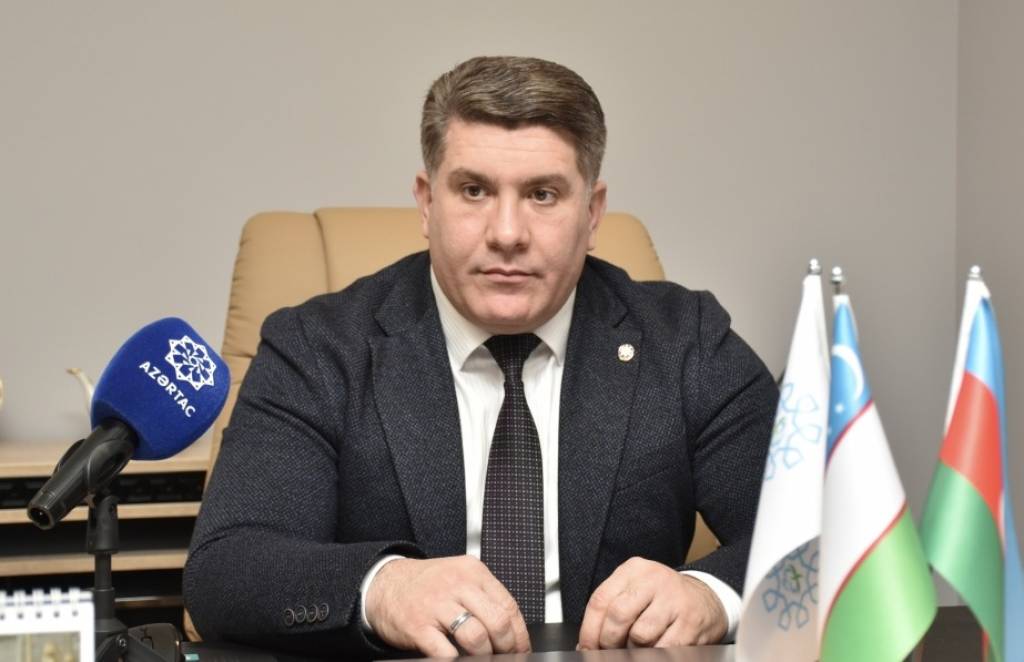
Ramin Sharifov, Director of the Uzbekistan Trading House in Baku, stated this in an interview with AZERTAC. He noted that the increase in mutual trade clearly shows that economic relations have entered a new, more advanced stage.
By 2025, the trade turnover between the two nations tripled to $795 million. Between January and July 2026, this amount surpassed $200 million. In terms of investment cooperation, the Azerbaijan-Uzbek Investment Company, founded in 2023 with an authorized capital of $500 million, has emerged as a key mechanism.
The increasing presence of enterprises with Azerbaijani capital in Uzbekistan reflects expanding economic cooperation. Last year, 280 such enterprises, including 58 joint ventures and 222 private companies, operated in the country. By July 2026, this number grew to 442.
A key trend is the shift from basic trade in goods to joint production projects. By 2025, several agreements were signed across sectors such as industry, construction, production, and infrastructure. These agreements include projects such as manufacturing dry building mixes and drywall, housing development in Namangan, and producing dairy products, household chemicals, and high-voltage cables.
Mr. Sharifov notes that this trend reflects a shift in the nature of economic cooperation. It used to center on trading finished goods, but now there is a growing emphasis on developing production chains that generate higher added value.
The transport and logistics sector is increasingly vital to the bilateral partnership. Azerbaijan links Central Asia with Europe via the Caspian Sea, while Uzbekistan, one of the region’s largest economies, has substantial potential to access neighboring markets.
In this context, the Middle Corridor, which involves transportation across the Caspian Sea and the development of new logistics routes, has substantial potential to boost bilateral trade volumes. Uzbekistan’s interest in using Termez’s logistics infrastructure to supply Azerbaijani products to neighboring countries reflects an expanding geographical scope of economic cooperation.
Musulmon Ziyo, UzA