New approaches outlined for the development of Tashkent’s districts

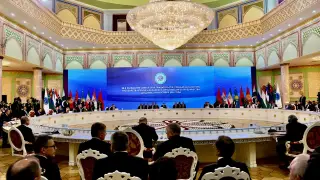
President Shavkat Mirziyoyev chaired a meeting to discuss the socio-economic development of Tashkent, increasing investment and employment, and creating modern infrastructure in mahallas.
It was noted that, given the current challenging conditions, new approaches are needed to fully utilize the potential of every district and mahalla, increase added value and investment volumes, and create more high-income jobs. It was emphasized that the capital’s districts should specialize in specific economic areas based on their respective potential.
In particular, significant opportunities were noted to establish large logistics complexes in Sergeli, Yangihayot, and Bektemir districts, to increase the number of modern business and financial centers in the central districts, and to actively attract investment to education, healthcare, trade, and services in Almazar, Chilanzar, and Uchtepa districts.
This year, $9 billion in investment is planned to be attracted to the capital’s 12 districts. It was noted that work needs to be accelerated in certain districts to meet the established targets.

In this regard, a new system will be introduced to address investors’ concerns directly on site, eliminating the need to apply to various government agencies. Officials at the national and city levels will visit the districts weekly and meet with entrepreneurs and investors. For issues requiring high-level decisions, substantiated proposals will be submitted to the Presidential Administration on the same day.
Instructions were given to develop a specific plan to attract $10 billion in investment to the capital next year and to create 150,000-200,000 permanent, high-paying jobs.
At the meeting, particular attention was paid to efforts to comprehensively develop the mahallas and streets of Almazar district. Since the beginning of the year, nine streets in the district have been transformed into areas attractive to businesses, residents, and tourists.
The positive results of the transformation in Qichqiriq mahalla were particularly notable. Previously, the area lacked adequate infrastructure, but it now features a 450-place kindergarten, sports grounds, a recreation area, an amphitheater, pedestrian walkways, and fountains. A modern, comfortable environment has been created for the mahalla’s 5,500 residents.

Plans are underway to extend this experience to another eight streets in Almazar and to other districts of the capital. 1 trillion UZS has been allocated for the comprehensive renovation of 100 streets in Tashkent. In addition, a four-year program worth 10 trillion UZS will be developed to improve 400 mahallas using the Qichqiriq mahalla model.
Instructions were given to develop, by November 1 and in collaboration with foreign companies, a unified concept and a portfolio of specific projects for the comprehensive development of the historic part of the capital – the Old City.
To expand opportunities in the services sector, the effective use of government-owned buildings was also considered. Today, Tashkent has 497 administrative buildings totaling 765,000 square meters. Entrepreneurs will be provided with opportunities to offer retail, service, medical, and educational services in vacant and underutilized premises.
The need to link the privatization of state-owned property to the implementation of new business projects was emphasized. In Almazar district alone, 52 state-owned properties, valued at 100 billion UZS, are being put up for auction.

Particular attention was paid to improving the urban environment by promoting residents’ health and comfort. In Qichqiriq mahalla, an eco-park and 12.5 kilometers of pedestrian paths have been created along a 2.5-kilometer stretch of the canal. The number of such walking areas along the capital’s canals and major irrigation channels will be increased. In particular, a project will be developed to create a continuous 20-kilometer pedestrian path along the Bozsu Canal.
New opportunities will also be used to develop small businesses and the service sector in mahallas. For entrepreneurs wishing to start a business in Tashkent, the limit for unsecured loans will be increased from 100 million to 200 million UZS.
In Almazar district, instructions were given to use these opportunities to support 300 new entrepreneurs and create 1,000 jobs by the end of the year, while across the capital, 20,000 residents are to be provided with income-generating employment.
Particular attention will be paid to fully utilizing the potential of the 305-hectare industrial zone in Miskin and Ibrohim Ota mahallas. The area has the potential to increase employment from the current 35,000 to 100,000 and raise exports to $600 million. Entrepreneurs will be offered financial instruments such as industrial mortgages, loans, and leasing.

The importance of training personnel to meet labor market needs and address employment issues was highlighted. Employers in Almazar currently need approximately 5,000 specialists with different qualifications.
Therefore, a 400-seat technical school specializing in IT and advanced technologies will be established at Almazar District Center for Professional Competencies, while modern vocational training centers will be set up in existing buildings. In cooperation with Germany, language courses for 500 people will be organized, and targeted training projects for medical workers to secure employment in the Czech Republic and Slovakia will be launched. In addition, 20 major recruitment companies from developed countries are planned to be engaged.
Work will commence on developing an innovation cluster on the 42-hectare Youth Campus, including an IT park, high-tech industrial facilities, and educational institutions.
Particular attention was paid to fully unlocking the educational and scientific potential of Almazar district. Currently, 75,000 students are studying there.

A unified management system will cover students’ education and housing, employment, social support, cultural and recreational activities, and safety. A separate directorate will be established to ensure decent living conditions for nearly 18,000 young men and women residing in 41 student dormitories across seven higher education institutions.
The online system for monitoring access to university dormitories and student attendance through the Student Town Situation Center was instructed to be introduced in other districts of the capital by the end of this year and, next year, in all higher education institutions nationwide.
Additional tasks were set to expand preschool education coverage. At present, coverage in Almazar district stands at 67 percent. Drawing on the experience of Kindergarten No. 441, where a new 450-place facility was built alongside the existing 385 places, instructions were given to begin implementing at least five more such projects by the end of the year.
Given that 1.5 million vehicles travel through the capital every day, it was noted that traffic congestion should be addressed not only by widening roads but also by introducing intelligent transport systems. Instructions were given to begin practical work in this area by the end of the year.

The results of the new approach to crime prevention introduced in Almazar district were also analyzed at the meeting. Cooperation between the teaching staff of the Law Enforcement Academy and investigators, as well as the introduction of a dual education system for cadets, is helping to improve the effectiveness of preventive work.
As a result, no crimes were recorded in 13 of the district’s 64 mahallas, and no mahallas now have serious crime. The number of crimes involving women decreased from 22 to 10. At the same time, instructions were issued to develop Almazar district’s experience in significantly reducing offenses among young people.
Instructions were given to continue systematic efforts to ensure the stable operation of energy and utility infrastructure and to improve mahallas.
It was noted that the approaches and tasks considered, using Almazar district as an example, are relevant to all districts of the capital.
Reports from responsible officials on the implementation of assigned tasks were heard.
UzA