Military-patriotic education: The key to inviolable borders and the prosperity of New Uzbekistan
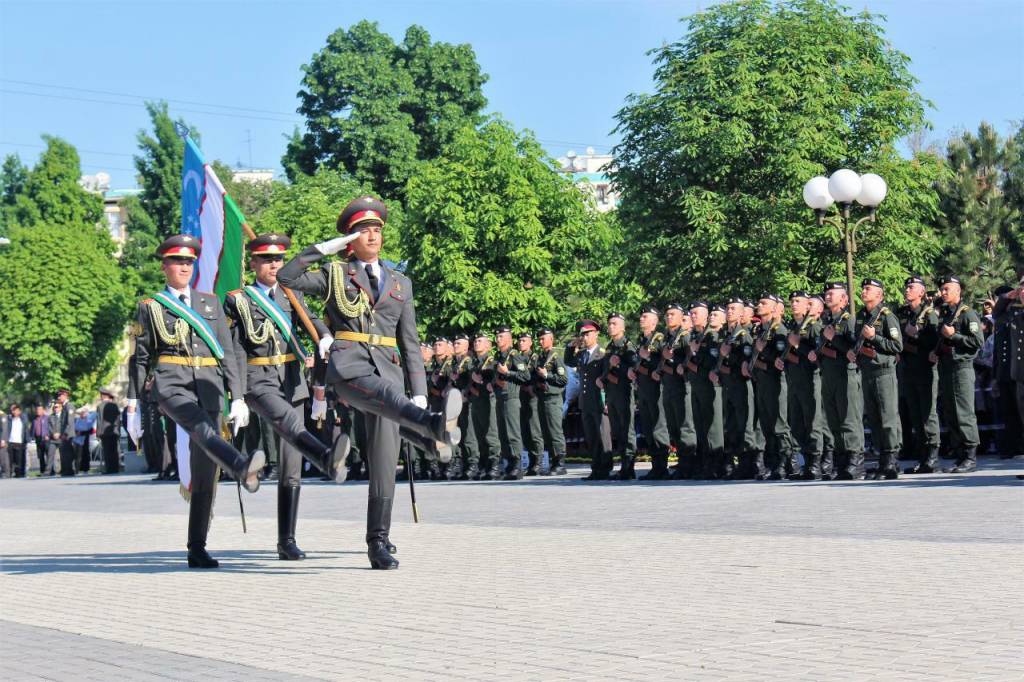
In the current conditions of the development of the international situation, strengthening the defense capability is one of the key conditions for maintaining peace, stability, and prosperity in the New Uzbekistan.
In developing its own national defense model, the country’s leadership pays close attention to educating the younger generation in the spirit of high patriotism and love for the Motherland. It serves not only to shape the spiritual image of youth but also as a key strategic force determining the military potential of the army.
The concepts of “patriotism” and “military service” are closely intertwined and cannot be considered in isolation. Instilling in the younger generation a sense of loyalty to the Constitution, an awareness of military duty, and a profound responsibility for the fate of the Motherland and its people facilitates their active involvement in all spheres of the country's socio-political life, including the military.
This task is particularly important for Uzbekistan, given the country’s demographic structure. Today, about 64 percent of the country’s citizens are under the age of 30. This largely determines the priorities of state policy, including education for young people, the strengthening of civic responsibility, and the preparation of the younger generation to protect the country’s national interests.
In this regard, the State is pursuing a consistent policy to improve the system of youth and patriotic education. As of 2026, 5 laws and more than 55 subordinate regulations have been adopted in this area, defining the organizational and ideological foundations of the State’s youth policy.
At the same time, special attention is paid to strengthening the system of military-patriotic education for young people and improving regulatory and legal mechanisms in this area. As a result, a comprehensive legal framework was established that defined the key areas of defense construction and the basic principles for preparing young people to serve the Motherland.
It is based on the Law of the Republic of Uzbekistan “On Defense”, the Defense Doctrine, resolutions of the President of the Republic of Uzbekistan – the Supreme Commander-in-Chief of the Armed Forces, the Concept for improving the effectiveness of military-patriotic education of youth for 2023-2027, and other strategic documents. Their implementation aims not only to strengthen the state’s defense capability but also to form a generation that regards service to the Motherland and the defense of the country as an essential civic duty.
The entire work is based on the concept of “The Motherland is Great, Duty is Sacred”, aimed at educating young people in the spirit of patriotism, supporting their comprehensive development, and forming individuals with strong convictions.
One of the key areas of implementing this idea was strengthening cooperation among the state, society, and the Armed Forces. In this regard, the principle of “Army and people – one body, one soul” is being consistently implemented in the country, thereby consolidating efforts in defense, security, and the patriotic education of youth.
An important stage of this policy was the creation of a system of military-administrative sectors, initiated by President Shavkat Mirziyoyev. This mechanism enabled the integration of territorial defense, coordination with the regions, and youth work, while strengthening cooperation among the army, local authorities, and the population.
At the same time, the country is pursuing a consistent course to increase the openness of the Armed Forces. Military units are gradually becoming not only elements of the defense system but also platforms for the civic and patriotic education of the younger generation.
Open days, youth meetings with military personnel and veterans, and military-patriotic and educational events play an essential role in this area. These initiatives help strengthen confidence in the army and foster a deeper understanding among young people of the importance of military service in ensuring the country’s security.
At the same time, reference to the country’s historical heritage plays an important role in the system of military-patriotic education. In modern conditions, it is considered not only part of national memory but also a tool for shaping the military identity of young people. Particular attention in this work is given to the legacies of Amir Temur, Jaloliddin Manguberdi, and Zahiriddin Muhammad Babur.
The personality and legacy of Amir Temur are highly respected within the Armed Forces of Uzbekistan. The image of Sahibkiran is widely represented in the army’s symbols. The unit’s emblems feature the helmet and sword of the great commander, and his famous principle of “Strength in justice” remains an important ideological guideline for military personnel.
The idea of intergenerational continuity is also reflected in the state awards system. Established in 1996, the Order of Amir Temur is awarded for outstanding service in strengthening statehood and for courage in defending the homeland. At the end of the year, the best military district receives the “Battle Banner of Amir Temur” – one of the most prestigious awards in the army. Graduates of the “Temurbeklar Maktabi” schools also wear special badges as a symbol of their connection to the traditions of the great commander.
The idea of generational continuity is also reflected in the state award system. Established in 1996, the Order of Amir Temur is awarded for outstanding achievements in strengthening statehood and for courage in defending the Motherland. At the end of the year, the best military district receives the transitional “Battle Banner of Amir Temur” – one of the most honored awards in the army. Graduates of the Temurbeklar Maktabi schools also wear special badges as a symbol of their connection to the traditions of the great commander.
At the same time, a continuous system of military-patriotic education for young people is being established across the country, covering all stages – from school to military service. Each level focuses on specific tasks: developing discipline, leadership skills, and basic military skills, and training a personnel reserve.
The first link in this system is basic pre-conscription training in schools. At this stage, students gain an initial understanding of the requirements of a modern army, including proficiency with weapons and equipment, advanced technology, and tactical training.
Reforming the system of initial pre-conscription training is a strategic necessity today. In the context of a changing global security system, military-patriotic education of young people is not just an academic discipline but a complex process aimed at forming national identity and modern skills.
Another important element of this system is the children’s and youth military-patriotic movement “Vatan Tayanchi” under the Ministry of Defense. Its task is to instill civic responsibility, moral fortitude, and basic military training in young people and to build a personnel reserve.
The movement has a wide network: more than 11,000 groups in schools, lyceums, and technical schools, bringing together about 500,000 students. Participants’ activities are based on practical training in military-technical and applied fields, from signallers and drivers to dog handlers and other specialists. The most active among them receive letters of recommendation from the Ministry of Defense, which provide additional advantages for admission to higher military educational institutions.
The results confirm the system’s practical effectiveness: this year alone, 1,100 participants were trained at military technical centers and assigned to military service. At the same time, the movement’s youth is also demonstrating success internationally – in the Aybin competition in Kazakhstan, the Uzbek team placed 2nd in 2024 and 1st among 55 teams in 2025.
Along with this, the Organization for Assistance to the Defense of the Republic of Uzbekistan “Vatanparvar” has been included in the system of military-patriotic education, with its activities expanded and integrated into work with mahallas (local self-governance) and educational institutions within the framework of the new Concept. Previously, Vatanparvar was primarily considered a driver training structure, but today it has transformed into a comprehensive platform for military applications and personnel training for the Armed Forces.
At the same time, the “Military unit – Mahalla” model of interaction is developing, focused on involving local communities in the education of young people and on strengthening the connection between society and the army. In the same direction, at the initiative of the President of the Republic of Uzbekistan, training camps “School of Courage” are systematically organized. Their goal is to meaningfully organize leisure activities for unorganized youth and people with preventive health records, to form their military-patriotic values, and to promote employment.
The scale of the project is expanding annually. In the 2025-2026 academic year, more than 32,000 young people took part in the training camp, and for 2026-2027, about 5.5 thousand more participants are planned. Such events foster greater respect for the national army among young people and reinforce the understanding that protecting the Motherland is a sacred duty of a citizen of Uzbekistan.
In conclusion, military-patriotic education is one of the most important areas for ensuring national security. The tasks set by the Head of State to further develop the Armed Forces and enhance the country’s defense capability give this area special importance and relevance. Peace, social stability, and the state’s sustainable development largely depend on the effectiveness of military-patriotic education. Therefore, it is an important factor in the formation of civic responsibility, the strengthening of national unity, devotion to the Motherland, and a sense of national pride.
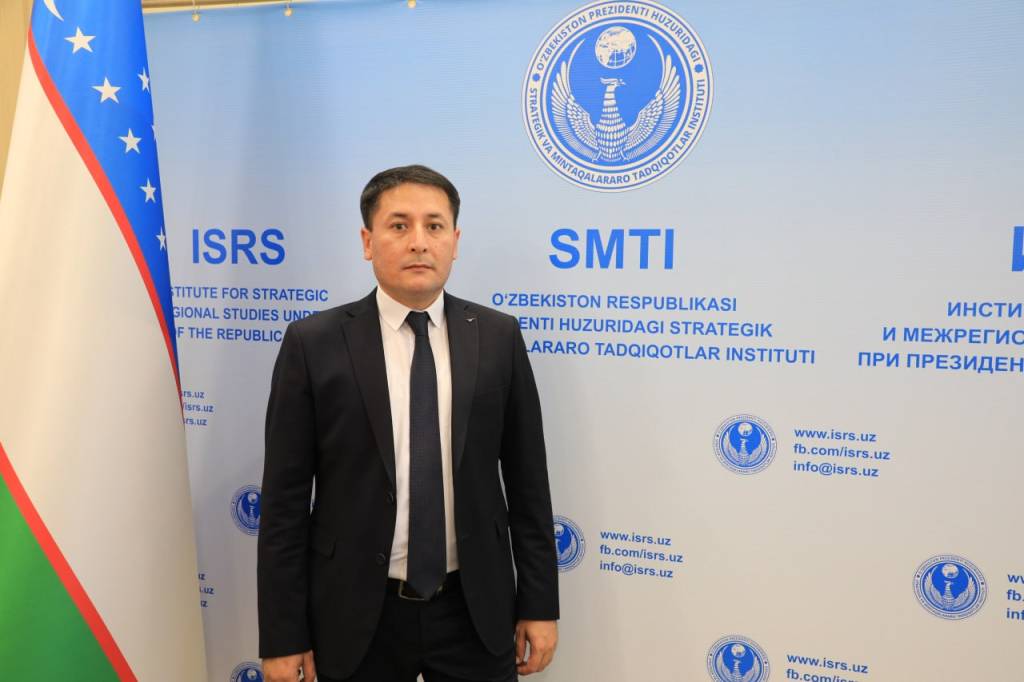
Narimon Nabiyev,
Leading Research Fellow,
Institute for Strategic and Regional Studies under the President of the Republic of Uzbekistan