Measures reviewed to increase livestock productivity and improve feed supply
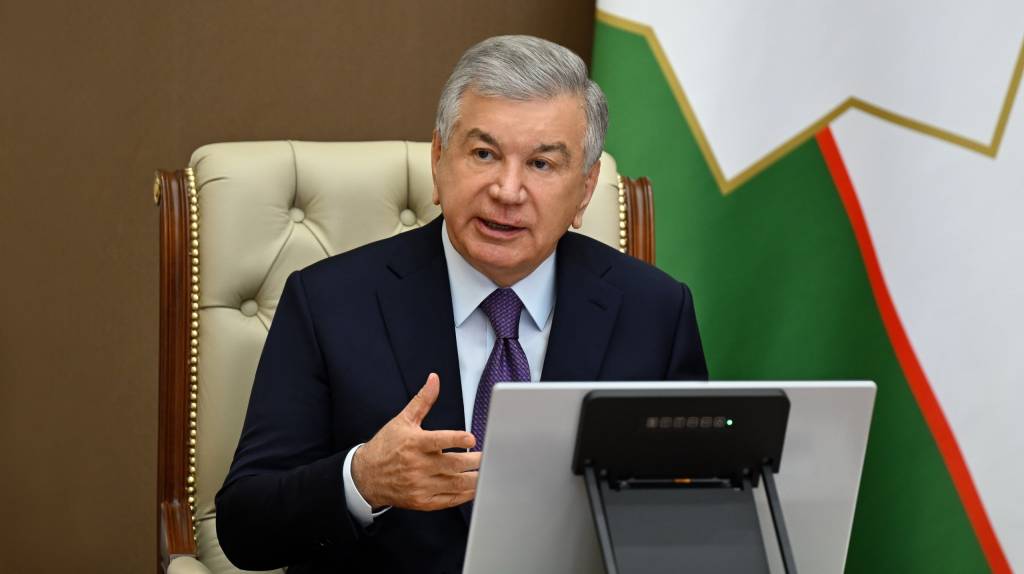
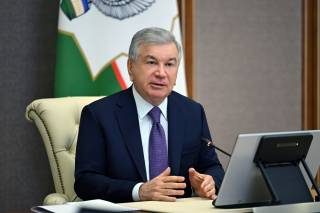
President Shavkat Mirziyoyev reviewed a presentation on measures for the comprehensive development of the livestock feed supply system.
As a result of population and income growth, as well as the rapid development of tourism in Uzbekistan, demand for meat and dairy products is increasing year by year. Under these conditions, meeting domestic market demand, reducing production costs, and maintaining price stability are particularly important.
Feed currently accounts for 30 percent of meat production costs. Uzbekistan has 12.5 million head of cattle, 23 million head of sheep and goats, and 125 million head of poultry. Annually, 48 million tons of feed are produced, which does not fully meet demand. In particular, the annual feed requirement per head of cattle is 6.5 tons, while in practice, this figure does not exceed 4 tons.
At the same time, at least 20 percent of the nearly 480,000 hectares of land allocated for livestock farming is used inefficiently. Forage crop yields, the system for supplying the population with high-quality feed, and livestock breeding do not fully meet modern requirements.
In this regard, comprehensive measures were proposed during the presentation, envisaging an increase in feed production to 64.5 million tons in 2027 and up to 90 million tons by 2030.
First, it is planned to establish a feed supply-and-demand balance for each region and fully digitize records of areas planted with forage crops and the plant species grown. Space technology will be used to monitor whether land allocated for livestock farming is being used for its intended purpose.
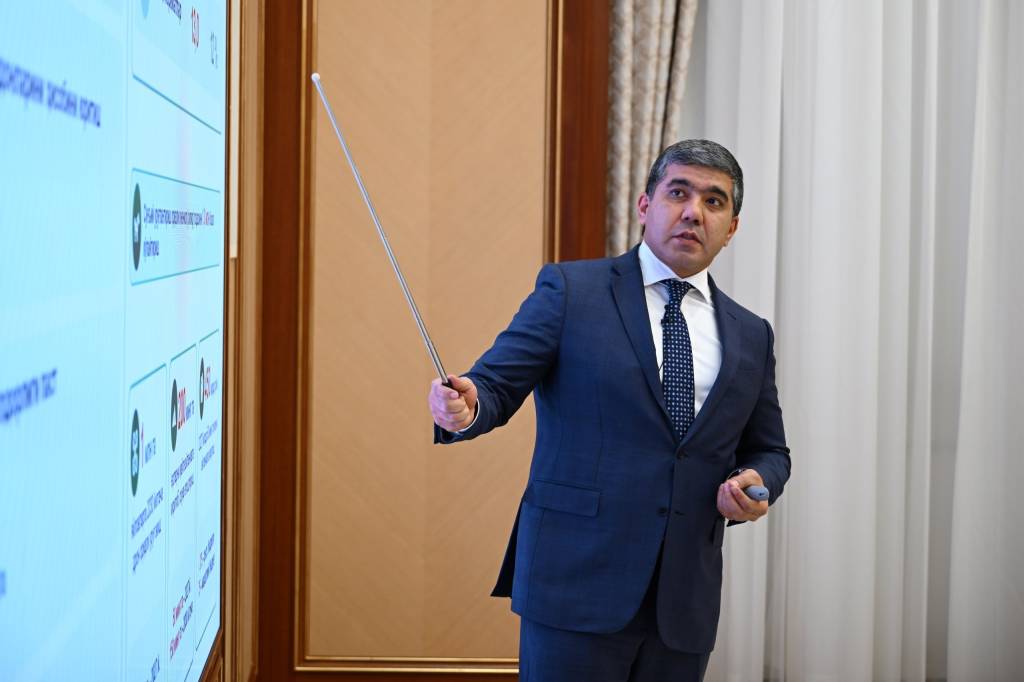
Through the effective use of existing cultivated areas, the expansion of double-cropping practices, and the introduction of high-yielding varieties and modern agricultural technologies, it is planned to increase forage crop yields from 350 to 500 centners per hectare.
In addition, by 2030, it is planned to bring 200,000 hectares of land into agricultural use and establish fodder crop cultivation on these areas. Next year, similar work will be carried out on 50,000 hectares.
The presentation emphasized the importance of increasing pasture productivity. In particular, the cultivation of drought- and salinity-resistant fodder crops will be introduced in eight districts of Kashkadarya region, drawing on international experience. By 2030, it is planned to seed 1 million hectares of pastures across the country using drones.
It was proposed to establish a unified system covering all stages – from feed production to processing, storage, procurement, and delivery to consumers.
To this end, more than 100 feed centers and sales outlets will be established in the regions. The centers will organize wholesale feed purchases, processing, the creation of necessary reserves, and an uninterrupted supply of feed to the market.
This system will play an important role in providing high-quality, affordable feed to personal subsidiary farms, which account for 87 percent of the country’s cattle population.
The presentation also covered new mechanisms for providing financial support to entrepreneurs engaged in livestock farming.
In particular, it was proposed to build water reservoirs with a capacity of up to 100,000 cubic meters using local budget funds for entrepreneurs who have developed more than 500 hectares of land for growing fodder crops and introduced modern irrigation systems.
It is also planned to increase subsidies for introducing sprinkler irrigation technology from 2.5 million to 4 million UZS per hectare, as well as reimburse up to 50 percent of the cost of purchasing equipment that uses renewable energy to irrigate land plots of at least 10 hectares.
Officials proposed allowing entrepreneurs who have developed pastureland in the Republic of Karakalpakstan and the Navoi, Bukhara, Kashkadarya, and Khorezm regions to build livestock complexes on parts of these areas.
In addition, the measures envisage providing preferential loans to establish feed centers and grow fodder crops, granting additional incentives for purchasing modern agricultural machinery, and partially reimbursing the costs of engaging foreign specialists and upgrading the qualifications of local staff.
It was proposed to introduce a pilot system in Kashkadarya region starting in 2027 to subsidize 10 percent of the cost of purchasing feed for livestock kept in personal subsidiary farms of the population.
The presentation emphasized the importance of widely applying scientific advances and developing seed production in the sector. Currently, imports cover 95 percent of the demand for fodder crop seeds.
The presentation outlined plans to establish research and seed-breeding centers in Kashkadarya region with the participation of Egyptian scientists. Their activities will focus on developing high-yielding, drought- and salinity-resistant varieties adapted to local climatic conditions, as well as gradually reducing seed imports.
Additional opportunities to increase meat and milk production by improving the genetic quality of livestock were also highlighted.
In particular, it was proposed to expand the use of artificial insemination technologies and the transfer of embryos with high genetic potential, develop breeding services in the regions, and establish cooperation between large livestock farms and personal subsidiary farms of the population.
It was noted that implementing the measures presented will significantly increase livestock productivity, raise the live weight of cattle at slaughter from 250-350 to 450-550 kilograms, and create the capacity to produce an additional 400,000 tons of meat.
The President emphasized that ensuring sustainable growth in the livestock sector requires, above all, establishing a reliable feed supply, making rational use of land and water resources, and increasing production efficiency through scientific advances and modern technologies.
The Head of State instructed responsible officials to develop the proposals presented in greater detail, define specific financing mechanisms, formulate projects for each region, and ensure price stability for meat and dairy products in the domestic market.
UzA