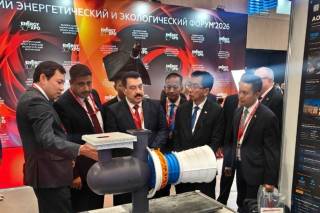
InnoWeek 2026 in Tashkent: Uzbekistan universities’ innovations in robotics, drones and clean energy
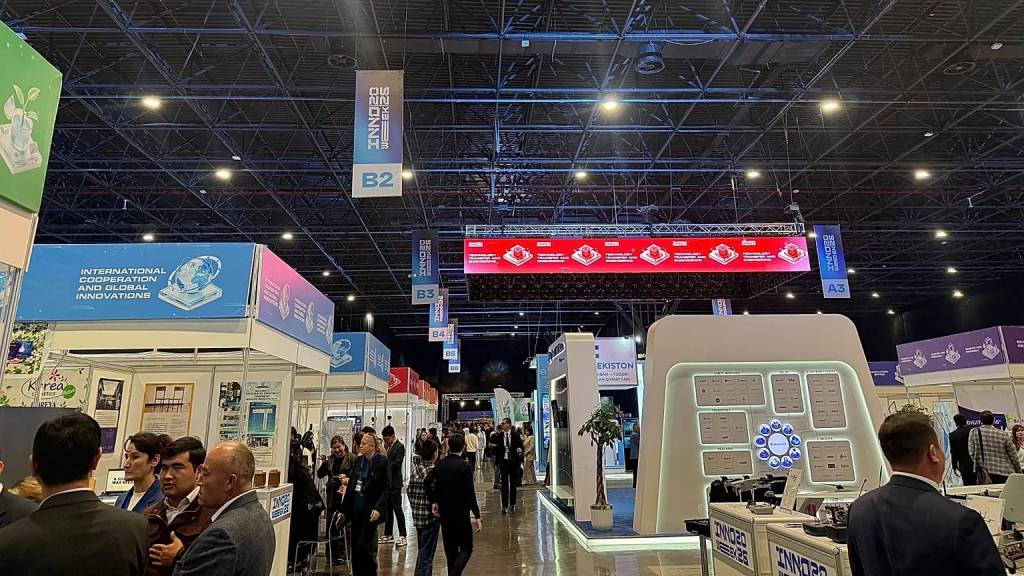
From remote-controlled firefighting equipment to agricultural drones and student-built electric vehicles, Uzbekistan’s innovators are developing practical solutions, exploring opportunities for mass production, and entering international markets. A fire breaks out at a gas station. Instead of sending firefighters into the most dangerous areas, rescuers could deploy a remote-controlled robot to approach the fire and direct a water cannon at the flames.
A tracked prototype developed in Uzbekistan was among the technologies showcased at InnoWeek 2026 in Tashkent, where researchers, companies and students demonstrated inventions aimed at addressing challenges ranging from industrial safety to boosting agricultural productivity and energy efficiency.
The firefighting robot can be operated from 500 to 800 meters away, allowing rescuers to stay out of dangerous zones. According to the developers, its tracks are designed to operate at temperatures of at least 500 °C, while the metal-track version is built to withstand up to 1,000 °C. The team is also working on integrating artificial intelligence, including automated water cannon control.
The project was created in cooperation with the Ministry of Emergency Situations of Uzbekistan and is still at the prototype stage, with a patent application pending.
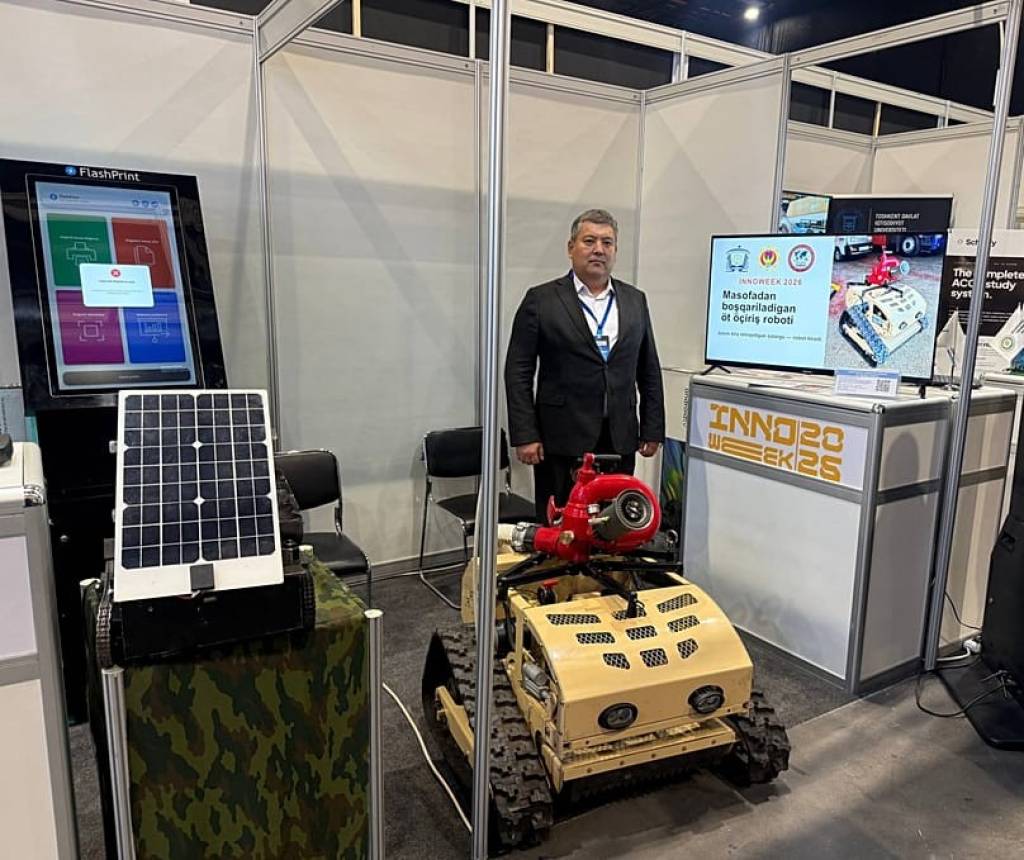
According to estimates, the prototype costs about €8,100. The team considers filling stations and gas stations as potential customers and is exploring the possibility of exporting to neighboring Kyrgyzstan and Tajikistan.
Uzbek manufacturer Sahro Drone Industry develops unmanned aerial vehicles for agriculture and emergency response, and also produces military drones. At InnoWeek, the company presented a multipurpose drone capable of carrying up to 50 kilograms of cargo. By changing the platform and tank, the device can be adapted for applying agricultural chemicals or for firefighting.
In agriculture, drones can distribute fertilizers and other crop protection products across mature fields, reducing reliance on tractors that might damage crops.
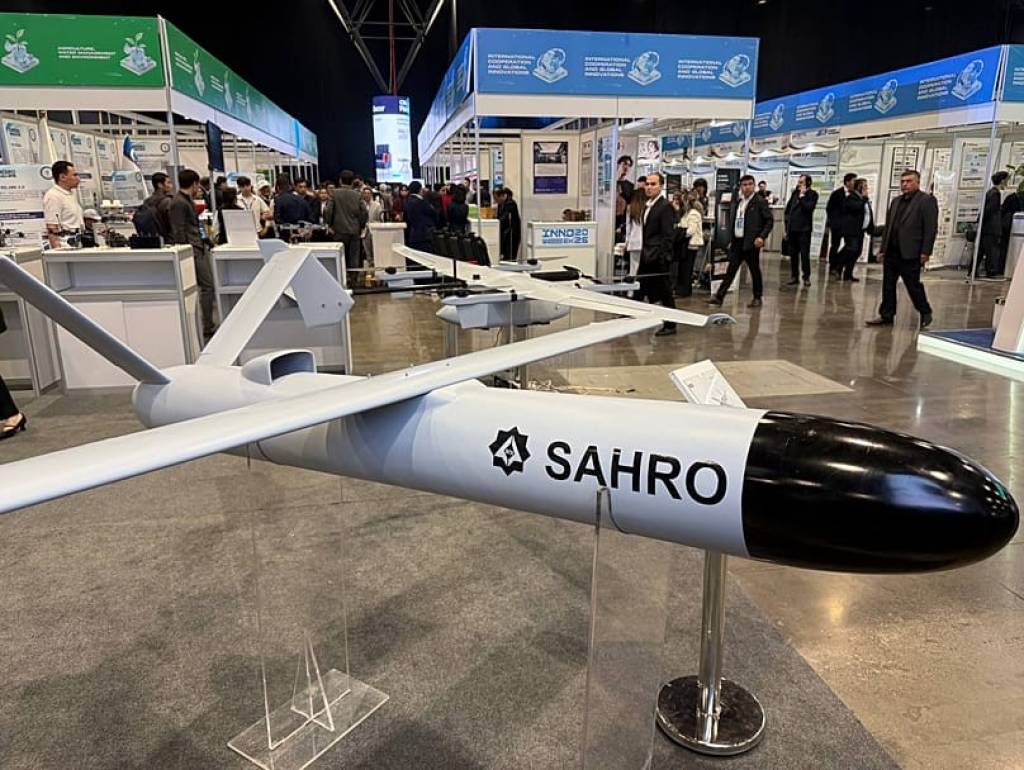
The company is planning to start exporting drones in 2027. Annual output could reach approximately 100 large devices and up to 60,000 small models, driven by market demand.
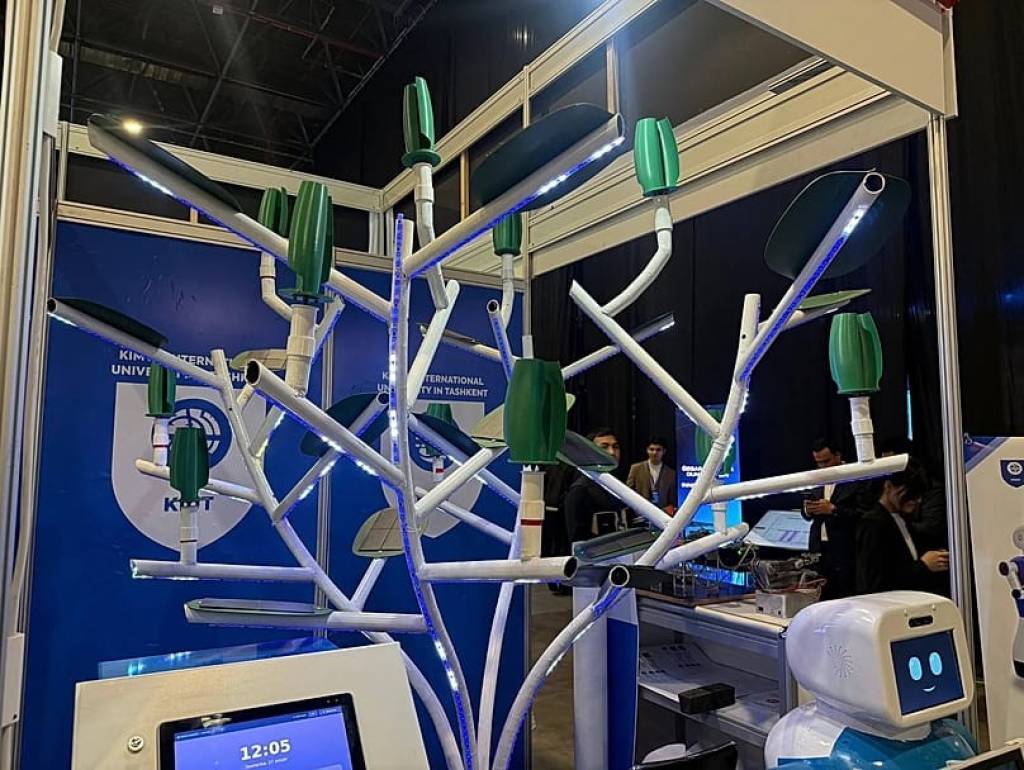
Students at Kimyo International University in Tashkent have developed a tree-shaped installation that combines solar panels and small wind turbines to generate electricity for outdoor lighting and security cameras. The system includes a battery pack to store the generated energy.
The university estimates that producing the finished setup can cost about $2,000, and the potential selling price will range from $2,200 to $2,500.
Students at Turin Polytechnic University in Tashkent created an electric car weighing 250 kilograms, intended for energy-efficiency competitions.
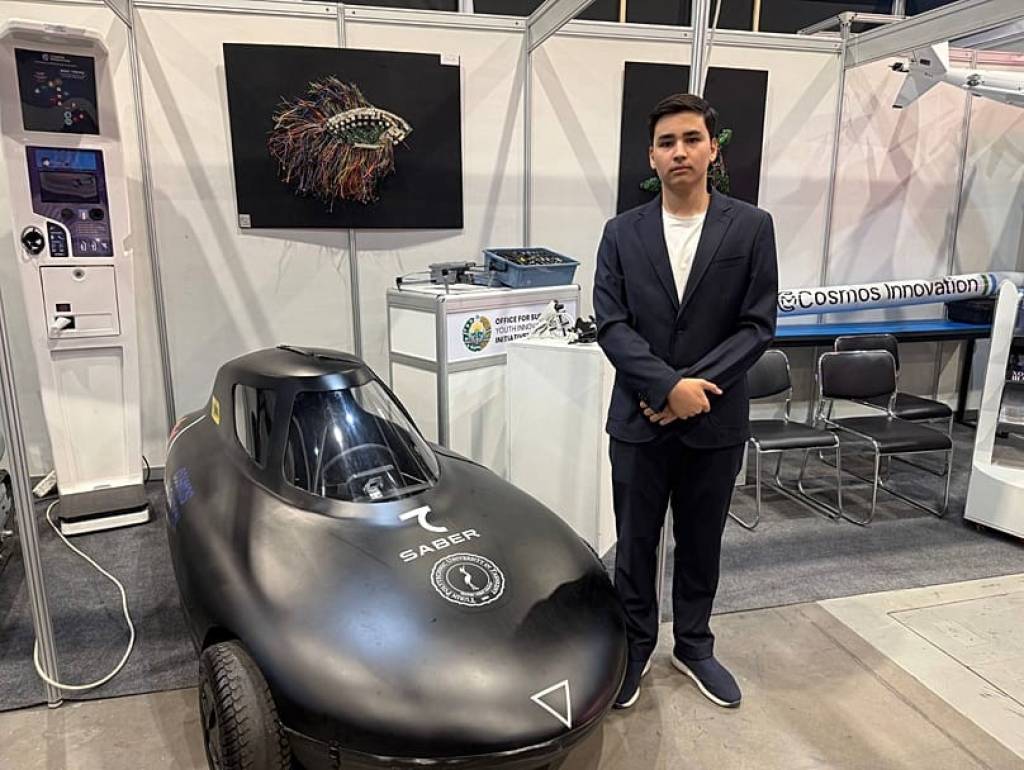
The vehicle developed by the Cosmos Innovation team consumes 0.6 kilowatt-hours of energy per 10 kilometers. The team aspires to compete in the 2027 Shell Eco-marathon in the United States.
G. Khonnazarov, UzA