From heritage to modernity: How Uzbek culture is becoming part of the global cultural landscape
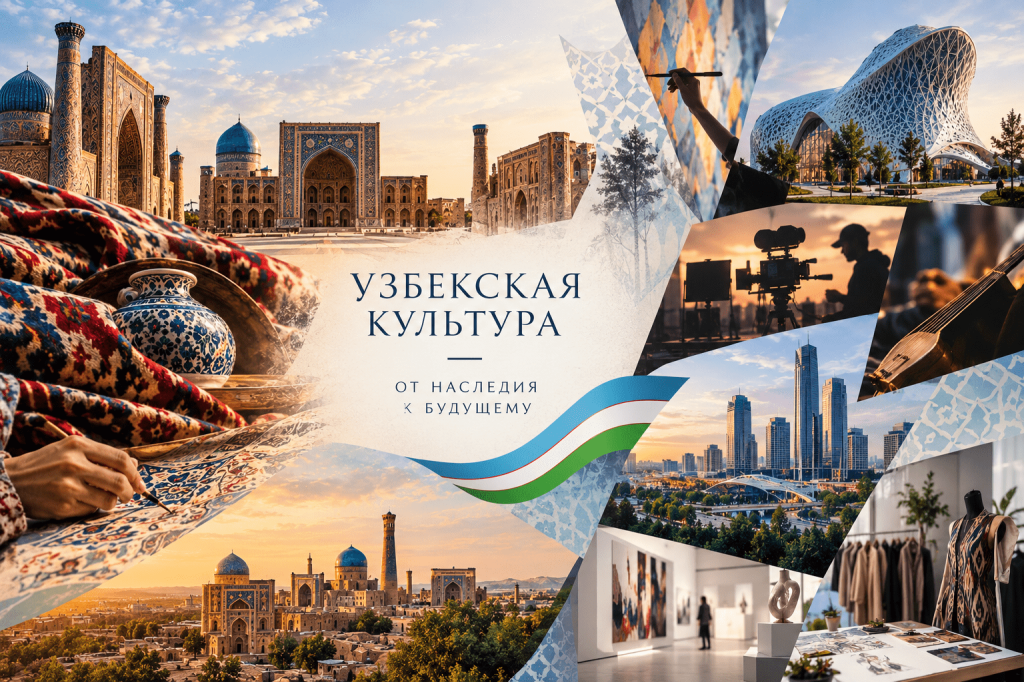
Until recently, discussions about Uzbekistan’s cultural influence abroad mainly focused on its ancient cities, architectural landmarks, Oriental miniatures, ceramics, silk, and traditional crafts. Samarkand, Bukhara, Khiva, and Shakhrisabz were regarded as the country’s primary cultural symbols.
Today, this image is evolving significantly. Uzbekistan increasingly showcases itself to the world not just through its historical heritage but also via contemporary art, design, architecture, fashion, opera, theater, and new cultural formats. Meanwhile, national motifs are no longer isolated from the global cultural scene. They are now featured in international exhibitions, biennials, design projects, and major theatrical productions. This shift is no longer just about promoting culture. A new approach to the country’s global cultural presence is emerging, where heritage serves as a base for developing modern cultural content.
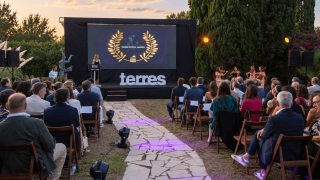
Perhaps one of the most visible symbols of this process has been the Venice Biennale. In 2021, Uzbekistan presented its national pavilion at the Biennale for the first time. The project “Mahalla: Urban Rural Living” invited international audiences to view the mahalla not as an ethnographic phenomenon but as a distinctive social and architectural model. In 2025, Uzbekistan presented the project “A Matter of Radiance” in Venice, dedicated to the Solar Complex near Tashkent, one of the Soviet period’s largest solar energy and scientific infrastructure facilities. Rather than simply recounting the history of a monument, the project raised questions about the future of science, technology, and modernism. In 2026, at the 61st Venice Biennale of Art, Uzbekistan’s national pavilion, “The Aural Sea”, addressed one of the country’s most painful issues – the Aral Sea. Yet here, too, the focus extends beyond the environmental disaster itself. The artists explore the sea through memory, mythology, personal stories, and contemporary art, transforming a regional issue into a universal conversation about climate, loss, and humanity’s capacity to reimagine the future. According to state-level figures, the pavilion has already welcomed more than 60,000 visitors.
This reflects an evolution: from showcasing what was created in the past to a conversation about what the future might look like.
Another important example is the Bukhara Biennial, held under the theme “Recipes for Broken Hearts”. Its inaugural edition last year became the largest event of its kind in Uzbekistan’s contemporary art history. Over ten weeks, international artists, designers, and traditional craftspeople worked in historic Bukhara. The works were created in Uzbekistan and, in many cases, were closely connected to specific locations. Representatives from various countries took part in the events, and visitors exceeded 1.8 million. The distinctive feature of the Bukhara Biennial is precisely its ability to bring together two worlds. An ancient mosque, madrasah, or caravanserai is not simply an attractive backdrop for an exhibition. The historic setting itself becomes part of the artwork and of a contemporary dialogue. This represents a fundamentally new approach to heritage.
Instead of preserving culture exclusively behind glass, the idea is to carry it forward through new forms, ideas, and collaboration with artists from different countries. In this sense, Bukhara is becoming not only a museum city but also a platform for creating new culture.
Just a few years ago, traditional Uzbek textiles, ceramics, embroidery, and craft techniques were primarily regarded as decorative and applied art. Today, they are becoming a source of inspiration for international design.
On September 6, 2026, the Center for Contemporary Art opened in Tashkent, while work continues on a new National Museum designed by architect Tadao Ando. In Bukhara, a cultural district linked to the Biennial is under development, with plans to establish a fine arts museum, an exhibition space, a music school, an art studio, and a digital archive. In other words, this is no longer a series of isolated events.
A comprehensive cultural ecosystem is gradually taking shape. Uzbekistan is beginning to export not only artifacts but also ideas. The geographical scope of its projects is also expanding. In 2026, the exhibition “Uzbekistan: Heritage in Motion” is planned for the Museum of Islamic Art in Doha, followed in November by the archaeological exhibition “Global Antiquity” at Fondazione Prada in Milan. In 2027, more than 200 archaeological artifacts from Uzbekistan are expected to be displayed at Palazzo Grimani in Venice and the Nara National Museum in Japan. More than 150 works, including gold embroidery, suzani, ikat, and jewelry, are planned for exhibition at Palazzo Reale in Milan. What is particularly important, however, is that contemporary cultural initiatives are developing alongside these heritage-focused projects.
Archaeology and contemporary art, traditional crafts and design, opera and new stage concepts, architectural heritage and contemporary urban culture – all these areas are gradually beginning to work together. That is why today’s cultural process cannot be reduced to promoting heritage alone. This is especially important at a time when culture is becoming one of the ways to tell the world about modern Uzbekistan – a country that preserves its historical memory while seeking its place in the global cultural landscape.
This is the key change in recent years. While Uzbekistan was once presented to the world primarily through its heritage, today it is increasingly portrayed as a country that creates something new from that heritage.
Suzani is becoming a material in contemporary design. The yurt is being reinterpreted by architects. Ikat is finding new life in fashion. Ancient Bukhara is being transformed into a space for contemporary art. The history of the Aral Sea is becoming the subject of international artistic dialogue. National musicians are performing on world stages, while Uzbek artists are gaining platforms at major international biennials.
Cultural globalization does not necessarily mean abandoning national identity. On the contrary, in today’s world, a unique cultural code can become a foundation for international dialogue if it is not only preserved but also continuously reinterpreted. Uzbekistan is gradually moving in precisely this direction: from preserving heritage to carrying it forward, from showcasing culture to creating it, and from cultural presence to full participation in the global artistic process. If this process continues, perceptions of Uzbek culture will eventually extend beyond its well-known symbols – Samarkand, Bukhara, silk, and ceramics. They will also encompass contemporary artists, designers, architects, directors, musicians, and brands that are shaping a new cultural image of the country – one rooted in heritage yet oriented toward the future.
Aziza Alimova, UzA