Dinora Shermatova on U.S. Legal Education, Litigation Practice and Cross-Border Law
UzA correspondent interviewed Dinora Shermatova about her legal studies in the United States, her work in civil and commercial litigation involving consumer finance and creditors’ rights, and her research on contract-termination issues in cross-border commercial practice.
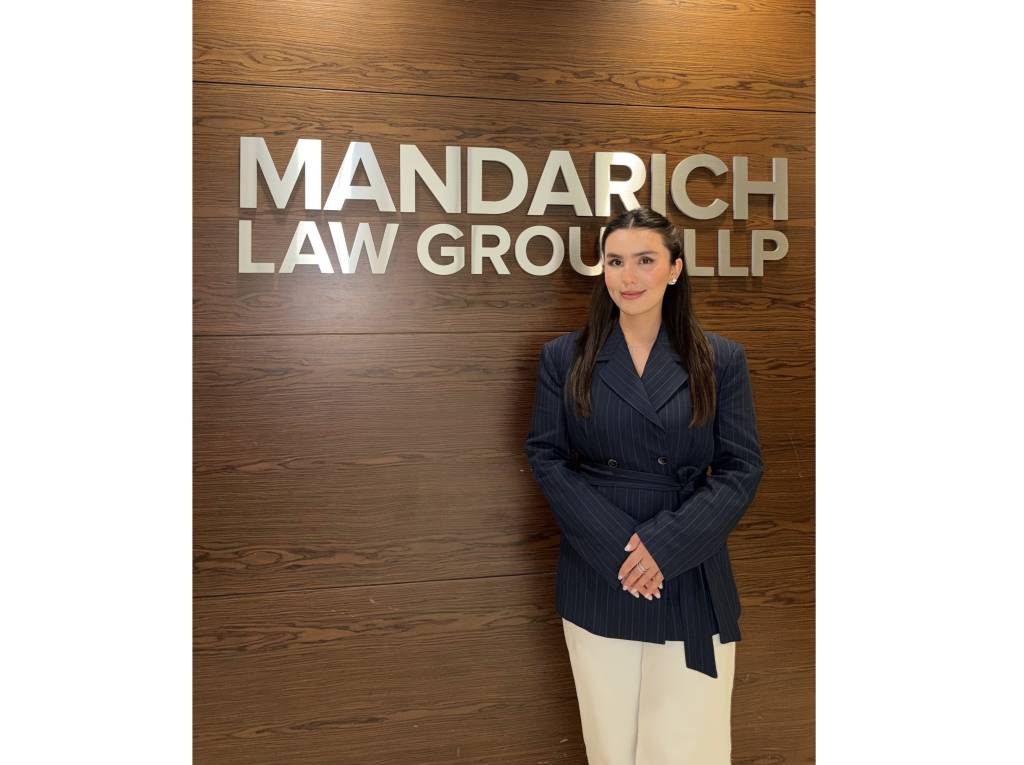
Dinora Shermatova grew up in Uzbekistan’s Khorezm region and earned her Bachelor of Laws from Tashkent State University of Law, graduating with a 3.63 GPA. Selected for Uzbekistan’s El Yurt Umidi (“Hope of the Nation”) presidential scholarship program, she moved to the United States to complete a Master of Laws (LL.M.) at the University of Illinois College of Law, finishing in December 2025. She now works as a legal assistant at Mandarich Law Group in Chicago, where she supports attorneys handling consumer finance and creditors’ rights litigation, and she is completing a law review article examining how choice-of-law rules under Article 9 of the Uniform Commercial Code apply or fail to apply to consumer-finance contracts involving foreign-domiciled debtors. We spoke with her about that journey, her day-to-day litigation work, and the research question she can’t stop thinking about.
– You received your legal education in Uzbekistan before pursuing an LL.M. at the University of Illinois Urbana-Champaign. What motivated you to continue your legal education in the United States?
– My goal was to deepen my understanding of the U.S. legal system and broaden my perspective as a lawyer. Coming from a civil-law background, studying in the United States gave me the opportunity to compare different approaches to legal education, litigation, and commercial practice. The LL.M. program at the University of Illinois also allowed me to focus on areas closely aligned with my professional interests, including business, commercial, and U.S. legal practice.
– Why did you choose the University of Illinois Urbana-Champaign for your LL.M.?
– I chose the University of Illinois for its strong academic environment and the flexibility of its LL.M. program. As an internationally educated lawyer, I was particularly interested in deepening my understanding of U.S. law while developing my areas of specialization. The program allowed me to study various areas of law and develop both analytical and practical legal skills.
– How did your experience at the University of Illinois change your approach to legal practice?
– One of the biggest changes was learning to approach legal problems more analytically and practically. In the U.S. legal education system, students are encouraged not only to know the law but also to analyze competing arguments, work with precedent, and consider practical solutions. This experience has shaped how I approach legal research and litigation-related issues in my professional work.
– Which parts of U.S. legal training turned out to be most valuable once you started practicing?
– Civil procedure, honestly, doesn’t get the attention that substantive courses do, but it’s what I use every day. Understanding pleading standards, motion practice, and how a case moves from filing to judgment to post-judgment enforcement is exactly the skill set my current litigation work depends on. I’d also point to legal writing instruction. Uzbek legal drafting and U.S. legal drafting reward different things. U.S. practice wants concision, a clear theory of the case up front, and citation discipline, and that took deliberate, repeated practice to internalize rather than study.
– What would you advise another Uzbek law student considering an LL.M. in the United States?
– Go in with a specific area you want to develop, not just “U.S. law” in general. The degree is short, and you get far more out of it if you’re already choosing courses and clinics around a direction, whether that’s commercial law, litigation, or something else. And don’t treat the internships and clinic work you did at home as separate from this mine. The Mirabad District Court and BLG Law Firm gave me the practical reference points that made U.S. doctrine make sense faster. The degree is more useful when layered on real practice experience than standing alone.
– You’re now a legal assistant at Mandarich Law Group in Chicago. What does your role involve?
– I support attorneys handling consumer finance and creditors’ rights matters from case initiation through judgment and post-judgment proceedings. Specifically, this includes preparing, reviewing, and filing pleadings, motions, affidavits, and court forms in compliance with state court rules, conducting legal research on the procedural rules, statutes, and case law that bear on a given filing, and reviewing account records, contracts, and payment histories against the supporting evidence before anything goes to court. It’s detail-intensive work. A filing is only as good as the accuracy of the record behind it.
– Consumer finance and creditors’ rights litigation is a specialized civil practice area. What does it involve, and what drew you to it?
– It sits at the intersection of contract law, consumer protection statutes, and civil procedure. You’re litigating a debt or account dispute, but every step is shaped by both the underlying contract and the statutory protections built around consumer transactions. What drew me to it is that it’s litigation with a real procedural arc, from initiation and motion practice to judgment and the post-judgment work of enforcement, which most civil litigation experience never even touches. It also connects directly to the research question I’ve been writing about, namely how consumer-protection rules interact with the contract and commercial-law framework underlying a transaction, which is exactly what this practice area tests every day.
– What’s the most important skill for someone in this kind of litigation support work?
– Precision under volume. You’re reviewing account records, contracts, and payment histories against pleadings and court forms, and a single inconsistency a date, a balance, a missing notice can affect whether a filing holds up. The research side matters just as much as procedural rules, and applicable statutes vary by jurisdiction and change, so you can’t rely on what was true on the last filing. I’d put those two together careful record review and current, jurisdiction-specific legal research as the core of doing this well.
– Are there recurring issues in creditors’ rights litigation that you think deserve more attention?
– The choice-of-law and jurisdictional questions that arise when the underlying consumer transaction crosses a border, involves a debtor who has relocated internationally, or concerns an account originated under one state’s law but enforced where the debtor no longer resides. That’s not a hypothetical. It’s a pattern I see reflected in the case law, and it’s also the subject of the research I’m currently writing, because the existing framework wasn’t built with many of these cross-border fact patterns in mind.
– You interned at a courthouse and a law firm in Tashkent before moving into U.S. litigation practice. How has that experience shaped your current approach?
– At the Citizens Court of Mirabad District, I researched and drafted court documents and memoranda across civil, business, and international law issues, working directly under a judge who gave me an early sense of how a court evaluates a filing, not just how to write one. At BLG Law Firm, I worked directly with lawyers on civil, international, and business matters, including submitting client filings through Tashkent’s digital court platforms. Both experiences taught me that litigation is as much a procedural discipline as it is substantive law, a mindset I rely on now when reviewing filings for compliance with state court rules at Mandarich.
– You’re writing a law review article on choice-of-law issues under UCC Article 9 in cross-border consumer finance. What’s the core problem?
– Article 9 determines which jurisdiction’s law governs a secured transaction largely by reference to the debtor’s location under UCC §§ 9-301 and 9-307. That framework works cleanly when the debtor is a domestic consumer. It becomes much harder to apply, and much easier to manipulate, when the debtor is foreign-domiciled: which jurisdiction’s consumer-protection law travels with the debt, and which law governs when and how the underlying contract can be terminated or enforced, are questions Article 9 doesn’t clearly answer for that fact pattern. My article focuses on that gap and how it creates room for choice-of-law arbitrage in cross-border secured consumer finance.
– Why does that gap matter specifically for foreign-domiciled debtors?
– Because the consumer-protection rules that would normally constrain a lender’s ability to accelerate, terminate, or enforce a contract are, in large part, tied to the debtor’s domestic location. When the debtor is abroad, a lender may be able to select a governing law that minimizes those protections without violating the letter of Article 9, since the statute is silent on layering a consumer-protection floor on top of its choice-of-law mechanics. That’s not a theoretical risk. It’s a structural incentive, and the debtors least equipped to litigate a foreign choice-of-law provision are the ones most exposed to it.
– Your research also addresses TILA/Regulation Z and the CFPB’s nonbank registry rulemaking. How do those relate to the UCC gap?
– They’re the federal consumer-protection layer that Article 9’s choice-of-law rules don’t account for. TILA and Regulation Z impose disclosure and substantive protections on consumer credit, and the CFPB’s nonbank registry rulemaking aims to increase visibility into nonbank lenders’ practices, but neither is drafted with cross-border, foreign-domiciled debtors in mind, and neither displaces a validly chosen governing law under Article 9. My article traces where those federal frameworks and the UCC’s state-law choice-of-law mechanics fail to overlap, which is exactly where the arbitrage risk sits.
– What reforms are you proposing, and who would need to implement them?
– I’m arguing for change at more than one level because no single body can close this gap alone. Courts interpreting Article 9 could recognize a consumer-protection floor tied to the debtor’s habitual residence that travels with the debt, regardless of the law chosen by contract. The Uniform Law Commission could address foreign-domiciled consumer debtors directly in Article 9’s official comments, since the current text is silent on them. And the CFPB’s nonbank registry could require lenders extending credit to foreign-domiciled consumers to disclose the governing law and termination provisions they rely on, which would at least make the practice visible. None of these are radical changes. They aim to close a gap the current framework didn’t anticipate.
– How does your day-to-day litigation work at Mandarich Law Group connect to this research?
– Directly, it’s the reason I’m writing about this rather than posing a purely theoretical question. Reviewing contracts, account records, and payment histories in active creditors’ rights matters means I’m looking at the exact kind of documentation where a governing-law or termination clause gets tested, not just discussed in the abstract. The practice keeps the research grounded in how these contracts are enforced, and the research, in turn, informs my thinking about the procedural and substantive issues in the cases I’m supporting.
Interviewed by Nozimbek Mardonov, UzA