An economy of open routes: How Uzbekistan is turning geography into strategic capital
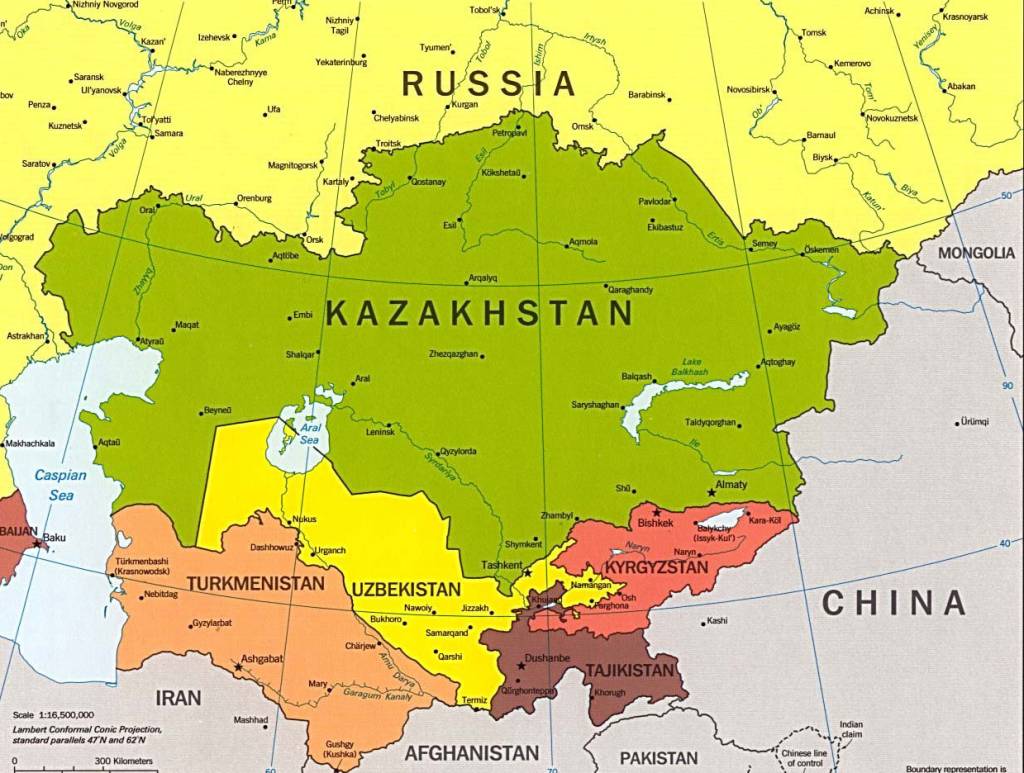
For a doubly landlocked country, geography can be a source of persistent costs, or the basis for a new economic specialization. Uzbekistan has consistently chosen the latter. Its transport strategy is no longer about finding a single “reliable” route to foreign markets. Instead, it focuses on developing complementary corridors extending east, west, north, and south. In this model, sovereignty is measured not by isolation from partners, but by the freedom to maneuver economically as global market conditions change.
This approach can be understood as transit sovereignty: no single route should be the only viable option, no border crossing should become a critical point of dependence, and no foreign market should be the sole source of demand. The China – Kyrgyzstan – Uzbekistan railway, the Trans-Caspian Corridor, the proposed route through Afghanistan to South Asian ports, stronger ties with the European Union, and alignment of national regulations with World Trade Organization standards are all part of a unified geoeconomic framework.
From regional dialogue to joint production
Central Asia remains the foundation of this framework. The Consultative Meetings of the region’s Heads of State have grown from a mechanism for restoring political trust into a platform for developing shared approaches to infrastructure, industrial cooperation, water resources, energy, and security. The chronology is significant: the sixth meeting took place in Astana on August 9, 2024, and the seventh in Tashkent in November 2025. At the Tashkent summit, participants decided to grant Azerbaijan full participation in the format and approved the Concept of Regional Security and Stability and the Catalogue of Risks and Preventive Measures for 2026-2028.
The eighth Consultative Meeting, held on October 8, 2026, in Turkmenistan’s Avaza National Tourist Zone, consolidated the shift to a six-party Central Asia – Azerbaijan format. Following the summit, the leaders adopted a Joint Statement and a decision on multilateral regulatory documents. Yet the summit’s fundamental significance extends beyond institutionalizing the expanded format. Uzbekistan proposed moving beyond increased mutual trade to the joint production of finished goods, capturing this approach in the formula “six economies – one product”.
The proposal’s practical rationale is to distribute production across the participating countries. Raw materials could be extracted in one country, processed in another, assembled into finished products in a third, and exported to international markets through the ports of a fourth. This model would not only increase trade turnover but also keep a larger share of added value within the expanded region.
To advance this cooperation, President Shavkat Mirziyoyev proposed holding a Central Asia – Azerbaijan Business Forum in Khiva in 2027, creating a platform to provide financial and technical support for joint investment projects, and speeding up the establishment of an Infrastructure Development Council. Other initiatives include a joint concept for developing low-carbon energy potential, a Regional Alliance on Critical Minerals, a unified digital map of critical mineral reserves, shared computing infrastructure based on national data centers, and a Regional Atlas of In-Demand Professions.
This marks a qualitative shift from earlier stages of regional cooperation. Negotiations now address not just trade arrangements, but also the tools needed for joint production: financing, energy, data, raw materials, infrastructure, and workforce development.
The economic foundations of international engagement
Uzbekistan’s regional initiatives are supported by its growing domestic economy. Preliminary data from the National Statistics Committee show that the country’s GDP grew by 7.7% in 2025, reaching 1,849.7 trillion UZS, or about $147 billion. Industrial production rose by 6.8%, and fixed capital investment increased by 10.5%. Foreign trade turnover totaled $81.2 billion, with $33.8 billion in exports and $47.4 billion in imports.
In the first half of 2026, real GDP growth accelerated to 8.5%, and nominal GDP reached 1,072.7 trillion UZS. Industry made the largest contribution to growth, at 2 percentage points, followed by trade, accommodation and food services, at 1.8 percentage points, and transportation, storage, information and communication, at 1.5 percentage points. This shows that economic growth is driven not by a single commodity-related or consumption factor, but by a combination of industry, services, construction and logistics.
In its October review, the World Bank raised its forecast for Uzbekistan’s 2026 economic growth to 7.9%. It projects growth of 7.5% in 2027 and 7.1% in 2028. The Bank also highlighted several risks, including geopolitical tensions, a possible decline in remittances, price volatility, food inflation, and worsening water constraints. Potential tailwinds include high prices for gold and critical minerals, along with stronger foreign direct investment inflows.
In August 2026, a new national target was announced: to raise GDP to $300 billion by 2030. This is a strategic goal, not a guaranteed forecast. Achieving it will require sustained high growth, higher productivity, and a significant expansion of export markets. As a result, transport policy, accession to the World Trade Organization, and industrial cooperation are becoming not just complementary policy areas, but essential to meeting the country’s macroeconomic objectives.
WTO: Modernize trade rules instead of focusing on a symbolic date
Accession to the World Trade Organization (WTO) remains central to Uzbekistan’s efforts to restructure its external economic relations. The country missed its initial target of completing the process by the WTO’s 14th Ministerial Conference in March 2026. As of October 9, Uzbekistan was not yet a member, but negotiations were continuing with the aim of completing accession in 2026.
At the Working Party’s July meeting, it was reported that 31 bilateral market access agreements had been deposited with the WTO Secretariat. Since March, Uzbekistan has brought 190 legislative and regulatory acts into compliance with WTO rules, including rules on sanitary and phytosanitary requirements and food safety. Outstanding issues include state-owned enterprises, agricultural support, technical barriers to trade, foreign exchange operations, competition, and trade remedies.
The value of WTO membership lies not in the date of accession, but in the depth of domestic reforms. Predictable tariffs, transparent import regulations, harmonized sanitary standards, and access to the WTO’s dispute settlement mechanism reduce investor risk. At the same time, domestic enterprises face tougher competition. WTO accession is therefore not an automatic source of export privileges, but a process of institutional modernization that will primarily benefit companies able to ensure product quality, production scale, and reliable supplies.
The railway transforming transport routes in the east
The China – Kyrgyzstan – Uzbekistan railway is the clearest example of transport diversification. Construction began in December 2024. The Kashgar – Torugart – Makmal – Jalal-Abad – Andijan route is expected to span 532.53 kilometers, with approximately 312 kilometers running through Kyrgyzstan.
According to figures released by Uzbekistan’s Minister of Transport in August 2026, about 17% of the work had been completed. More than 10,000 workers and over 7,000 pieces of equipment were deployed at construction sites, and eight major bridges were under construction. For now, the possibility of finishing the project a year ahead of its originally planned five-year schedule should be viewed as the minister’s assessment, not an officially approved revision to the timetable.
The project’s total cost is preliminarily estimated at $4.7 billion. About half of the financing is expected to come from a 35-year Chinese loan, with the rest provided by the joint venture’s equity capital. China holds a 51% ownership stake, while Kyrgyzstan and Uzbekistan each hold 24.5%. Under this arrangement, Tashkent becomes a co-owner of the transport infrastructure, rather than merely a user of infrastructure owned by others.
Project estimates indicate that the railway could shorten the route between East Asia, the Middle East and Southern Europe by about 900 kilometers, cutting delivery times by seven to eight days. Its actual impact will depend not only on building the railway line, but also on terminal capacity, how rail gauge changes are organized, tariffs, and connections to routes through Turkmenistan, Iran, the Caspian Sea and Afghanistan.
Southern and Caspian routes: different stages of development
The Trans-Afghan railway project remains at an early stage of development. In July 2025, Uzbekistan, Afghanistan and Pakistan signed a framework agreement to prepare a feasibility study for the railway. Field surveys began in 2026, and detailed assessments are expected to be submitted to the governments by year’s end. The proposed route through Afghanistan is approximately 573 kilometers long, but its final cost, financing arrangements and engineering specifications have yet to be determined. As a result, earlier estimates of $4.6 billion to $7 billion cannot be treated as an approved project budget.
The Trans-Caspian Corridor is further along in its development and offers a westward route through Central Asia, the Caspian Sea, Azerbaijan, Georgia and Türkiye. Its main weakness is not its geography but its fragmented management: multiple border crossings, railway administrations, ports and shipping operators must work together as one integrated chain.
According to a World Bank study, coordinated investment and reforms could more than triple trade along the corridor and halve delivery times by 2040. Pairing infrastructure investment with comprehensive procedural modernization could increase trade volumes fourfold and cut delivery times by two-thirds. These estimates cover all nine economies included in the corridor study, not just Uzbekistan. The required investment is estimated at more than $25 billion for physical infrastructure, plus another $30 billion for access routes, terminals, rolling stock, equipment, and digital systems.
The European Union has already established several support mechanisms: €15 million for technical assistance, €10 million for feasibility and environmental studies in cooperation with the World Bank, and €5 million for pre-investment studies with the European Bank for Reconstruction and Development (EBRD). Separately, the European Investment Bank (EIB) is considering a loan of up to €100 million to develop a road route in Nukus, backed by a €6 million EU guarantee. These amounts should be distinguished: the €10 million is for project preparation, not for constructing the entire corridor.
From a transport corridor to a production platform
The Enhanced Partnership and Cooperation Agreement between Uzbekistan and the European Union, signed on October 24, 2025, reinforces this westward dimension. It covers trade diversification, transport connectivity, digitalization, critical raw materials, water and energy cooperation, and support for Uzbekistan’s accession to the World Trade Organization (WTO). However, signing the agreement does not necessarily mean that all procedures required for its entry into force have been completed.
Investment diplomacy complements transport diplomacy. At the fifth Tashkent International Investment Forum, held on June 16-18, 2026, organizers signed 166 agreements worth $43.1 billion. The forum drew more than 10,400 participants, including 3,802 foreign delegates from 102 countries. However, this figure reflects the value of signed agreements, not capital already invested. Their ultimate effectiveness will depend on how many reach financial close and move into construction and production.
At the same time, non-commodity digital exports are growing. According to the Ministry of Investment, Industry and Trade, IT services exports reached $940 million in 2025, rounded to $1 billion in official policy statements. The 2030 target is $5 billion. This sector reduces export earnings’ dependence on physical logistics, but also requires reliable energy, data centers, skilled personnel and access to global digital infrastructure.
Strategic conclusions
Uzbekistan cannot change its landlocked geography, but it can reshape its economic role. The railway to China expands access to the east, while the Caspian route links the country to the Caucasus and Europe. The Trans-Afghan project could open access to South Asia. WTO accession and the agreement with the EU provide a regulatory framework for trade, and regional cooperation turns neighboring countries from transit territories into partners in joint production.
This model does not eliminate risks. Transport corridors require substantial investment, coordinated tariffs, digital interoperability and political stability throughout their length. Investment agreements still need to result in operational enterprises, while large-scale railway projects must overcome technical and financial challenges.
Nevertheless, the strategic direction is clear: Uzbekistan is building transit sovereignty not around a single megaproject, but through a portfolio of alternative routes that can complement one another and provide safeguards against disruption. The strategy’s ultimate objective is not simply to collect transit fees from foreign cargo, but to develop industrial zones, logistics centers, energy facilities, service companies, and digital platforms along these routes.
Geography becomes capital not merely when goods pass through the country, but when every new route strengthens domestic production, exports, and employment and broadens the range of economic choices available.
Abduaziz Khidirov, UzA