Alexei Skatin: “Uzbekistan is becoming a crossroads of Eurasian transport corridors”
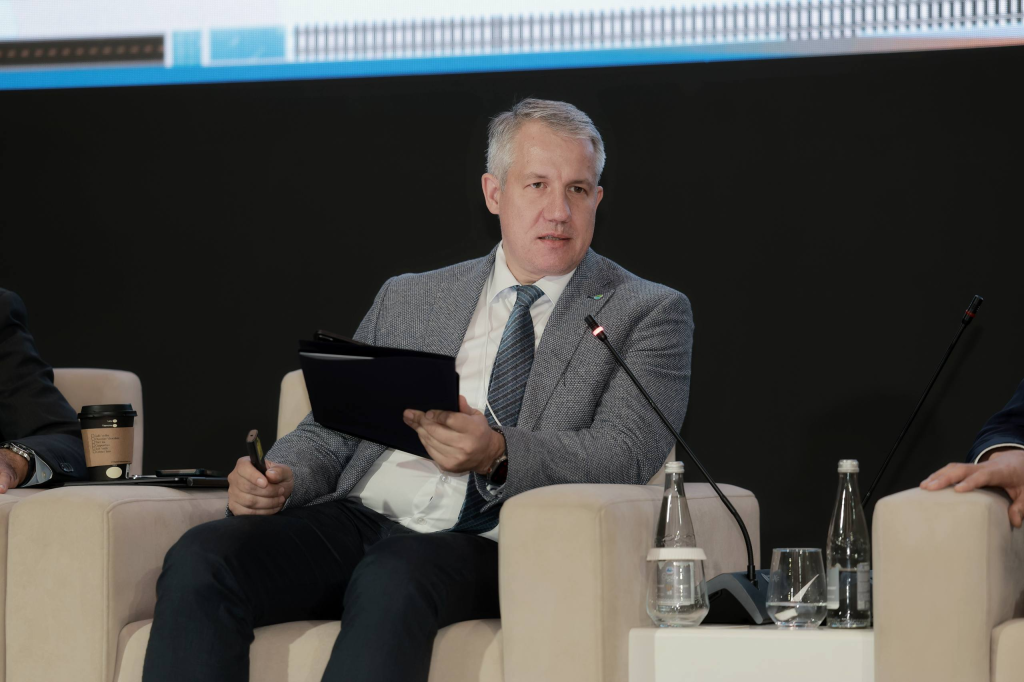
Alexei Skatin, Deputy Chairman of the Eurasian Development Bank’s Management Board, participated in the panel session titled “Transforming the Railway Sector and Developing New Logistics Corridors in Central Asia: Investment Opportunities and Regional Connectivity” during the Tashkent International Investment Forum.
In his speech, Alexei Skatin emphasized Uzbekistan’s strategic position as a hub where major trans-Eurasian transport routes intersect. He noted that three primary railway corridors pass through the country: the China – Kyrgyzstan – Uzbekistan route (currently under construction), the Trans-Afghan pathway, and the new Tashkent – Samarkand high-speed rail line. Additionally, the completion of the Darbaza – Maktaaral railway in Kazakhstan and the establishment of a new border crossing will connect Uzbekistan to the Trans-Caspian International Transport Route (Middle Corridor), enhancing trade between these nations.
Alexei Skatin remarked that Uzbekistan is evolving from a landlocked nation into a hub of East – West and North – South routes. He emphasized that it is the convergence of these routes that establishes Uzbekistan as a key intersection, rather than merely a transit point.

The speaker states that the development of transport corridors is impossible without the simultaneous development of warehousing infrastructure, dry ports, and container terminals. According to EDB estimates, demand for warehousing in Uzbekistan could grow more than sevenfold. Current availability remains low – and that is room for growth.
“A transport corridor only works when goods move along it. That is why we consider warehouses, dry ports and terminals together with transport routes, not separately. Warehouses are not an add-on to corridors – they are a condition for corridors to generate revenue,” Skatin emphasized.
The EDB is the leader among multilateral development banks in terms of non-sovereign financing in Central Asia. The Bank sees its task as unlocking the investment potential of both corridors and nodes – warehouses, dry ports, and terminals – in Uzbekistan to give development additional impetus.
Alexei Skatin highlighted the China – Kyrgyzstan – Uzbekistan corridor as a key railway initiative. Currently under development, it will create a direct container link between Uzbekistan and China, with routes reaching Turkmenistan, the South Caucasus, Türkiye, and Gulf countries. Container traffic through Uzbekistan is expected to increase fivefold, from 100,000 to 500,000 TEU. The Trans-Afghan railway will provide direct access to Pakistani ports, reducing Uzbek cargo distance by at least 1,000 km. Additionally, the Tashkent – Samarkand high-speed rail line, Central Asia’s first dedicated high-speed rail project, aims to free the existing line for freight and container transportation.
Aziza Alimova, UzA