Akramjon Nematov: Uzbekistan and China are shaping a new agenda for strategic partnership in the digital age
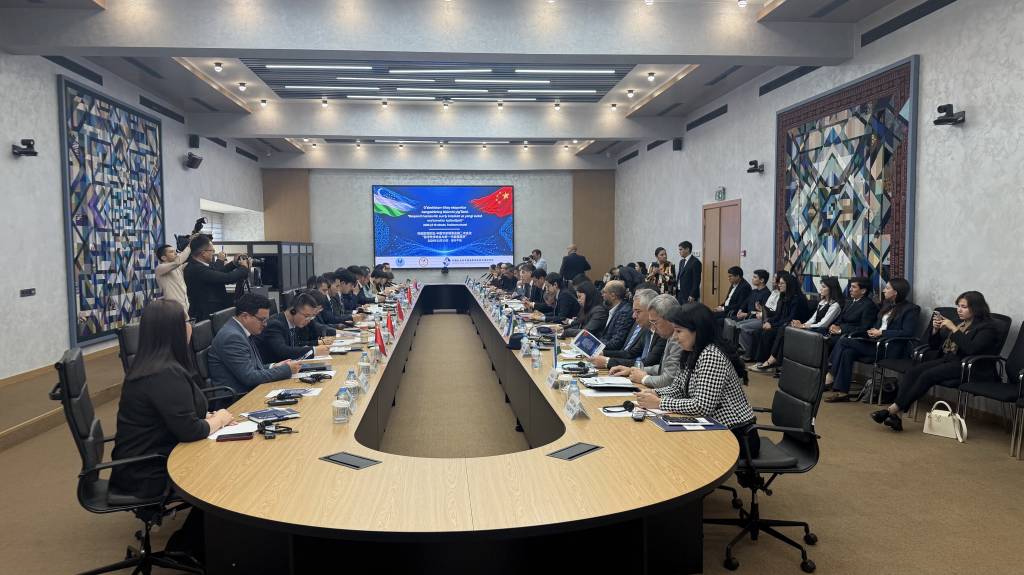
On 19 October 2026, the second meeting of the Uzbekistan – China Expert Council titled “Digital partnership: artificial intelligence and the next-generation data economy” was held in Tashkent.
The meeting was organized by the Institute for Strategic and Regional Studies under the President of the Republic of Uzbekistan (ISRS) and the Institute of Russian, Eastern European and Central Asian Studies of the Chinese Academy of Social Sciences.
The Council brought together representatives of leading analytical, research and educational institutions from both countries, including the University of World Economy and Diplomacy, the Center for Economic Research and Reforms, the Research Institute for the Development of Digital Technologies and Artificial Intelligence, as well as the Institute of Asia-Pacific and Global Strategy and the Institute of Quantitative and Technical Economics of the Chinese Academy of Social Sciences. Heads of diplomatic missions and representatives of government agencies also joined the discussions.
The meeting continued the expert dialogue launched at the Council’s first meeting, held in Beijing on 22 March 2025, which focused on climate issues, the development of the green economy and the adoption of environmental technologies. This time, discussions centered on national digital transformation strategies, approaches to artificial intelligence regulation, investment and innovation, and training qualified specialists.
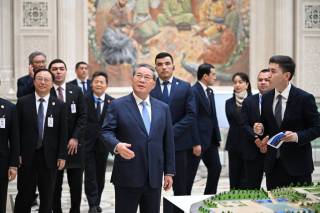
The meeting took place during the visit to Uzbekistan of Li Qiang, Premier of the State Council of the People’s Republic of China. During the visit, he held talks with the President of the Republic of Uzbekistan Shavkat Mirziyoyev and met with Uzbekistan’s Prime Minister Abdulla Aripov.
During the meeting, experts noted that Uzbekistan – China relations had reached an unprecedentedly high level and continued to develop across all areas, from political dialogue and trade and economic cooperation to scientific and technological collaboration, digitalization and humanitarian exchanges.
The scale of the partnership is reflected in concrete results. Over the past five years, bilateral trade has tripled, reaching nearly $18 billion by the end of 2025. Chinese direct investment in Uzbekistan’s economy has reached $17 billion, the number of enterprises with Chinese capital has exceeded 6,500, and the portfolio of projects backed by firm agreements has amounted to approximately $60 billion. Alongside traditional areas of cooperation, high-tech sectors, including digital technologies, artificial intelligence, robotics and green energy, are becoming increasingly important.
Speaking at the meeting, Akramjon Nematov, First Deputy Director of ISRS, noted that artificial intelligence and data were becoming key factors in economic competitiveness, the quality of public administration and technological security. Amid the restructuring of production chains and intensifying technological competition, cooperation in this field is particularly important for Uzbekistan.

According to Mr. Nematov, under the leadership of President Shavkat Mirziyoyev, digital transformation has become one of the main areas of reform. The implementation of the Digital Uzbekistan 2030 Strategy, the Uzbekistan 2030 Strategy and the Strategy for the Development of Artificial Intelligence Technologies 2030 provides a foundation for expanding the use of data, increasing computing capacity and introducing intelligent solutions into the national economy.
Progress in these reforms is reflected in international rankings. In recent years, Uzbekistan has improved its position by 17 places in the United Nations E-Government Development Index, by 16 places in the Global Innovation Index of the World Intellectual Property Organization, and by 25 places in Oxford Insights’ Government AI Readiness Index.
At the same time, the country aims to strengthen its standing. The President has set targets for Uzbekistan to rank among the world’s top 30 countries in e-government development, the top 50 in AI readiness and the top 60 in innovation by 2030. Achieving these goals will require not only developing digital infrastructure and expanding e-services, but also building domestic technological capabilities, broadening the practical application of AI, and strengthening the national digital economy’s competitiveness.
Mr. Nematov emphasized that China was already making a significant contribution to Uzbekistan’s technological and industrial transformation. Alongside expanding trade and investment, cooperation is growing in telecommunications, data processing, digital services, and artificial intelligence. At the same time, further deepening the partnership should involve moving beyond the predominant adoption of ready-made solutions towards more extensive technological cooperation, including technology transfer, the development of engineering capabilities, specialist training and expanded joint research and development.
“It is fundamentally important for us that cooperation with China should not be limited to the acquisition of ready-made solutions, but should contribute to the development of our own capabilities, infrastructure and technologies tailored to the needs of the national economy”, the First Deputy Director of ISRS emphasized.
He noted that technological partnership should help strengthen Uzbekistan’s technological sovereignty while maintaining the openness of its national digital ecosystem and its integration into international technology value chains. Key conditions for such cooperation include data protection, interoperability of digital solutions, developing domestic scientific and engineering capabilities, and ensuring that citizens and businesses have broad access to the benefits of the digital economy.
As an example, Mr. Nematov cited the Samarkand 2028 Earth-observation satellite, launched in August 2026 and developed by China’s STAR.VISION in cooperation with the Uzbekcosmos Agency. Uzbek engineers developed the artificial intelligence module integrated into the satellite. This experience demonstrates the potential to jointly develop high-tech solutions for land monitoring, environmental assessment, and natural resource management.
Outlining prospects for cooperation, Mr. Nematov identified five priorities: developing computing infrastructure and the data economy, including high-performance computing and data centers; jointly developing and deploying AI in industry, key economic sectors and public administration, including agriculture and water management; training specialists and expanding scientific research; developing e-commerce and digital finance; and strengthening cybersecurity.
He attached particular importance to the practical implementation of the initiative put forward by the President of Uzbekistan to establish an Uzbekistan – China Centre for Artificial Intelligence Development, the launch of joint pilot projects and the development of language models for Uzbek. He also stressed the need to develop balanced approaches to AI ethics and regulation that protect citizens’ rights while supporting innovation. Uzbekistan’s participation as a founding member of the World Artificial Intelligence Cooperation Organization (WAICO) offers additional opportunities for cooperation.
In conclusion, Mr. Nematov emphasized that the Uzbekistan – China Expert Council was intended to serve not only as a platform for bilateral dialogue, but also as an effective mechanism for developing practical proposals and advancing joint initiatives that bring together the scientific, technological and business capabilities of both countries.
Chinese experts, in turn, noted Uzbekistan’s progress in developing digital infrastructure and its national innovation ecosystem, as well as its growing potential as a regional hub for information technology and artificial intelligence.
The discussions also highlighted the potential for Uzbekistan to participate in the development of the Digital Silk Road, which supports the expansion of technological cooperation, digital services, data exchange and joint innovation, strengthening digital connectivity between China and the countries of Central Asia.
Participants expressed their readiness to continue the expert dialogue across the full range of digital partnership issues and to develop practical forms of cooperation focused on implementing joint projects in artificial intelligence, the data economy and digital transformation.
UzA