Abdulla Abdukadirov: “Uzbekistan’s active foreign policy is shaping a new environment for regional cooperation”
In the new phase of Uzbekistan’s independent development, fostering mutual trust, good-neighborliness, and cooperation in Central Asia has become a key focus of the country’s foreign policy.
Over the past decade, regional relations have developed considerably. Issues that were once postponed or complicated are now addressed through open dialogue, shared interests, and concrete cooperation.
Central Asia is becoming a region where major geopolitical powers’ interests intersect, yet it also has the capacity to shape its own future, work together to find solutions to common issues, and protect shared regional interests.
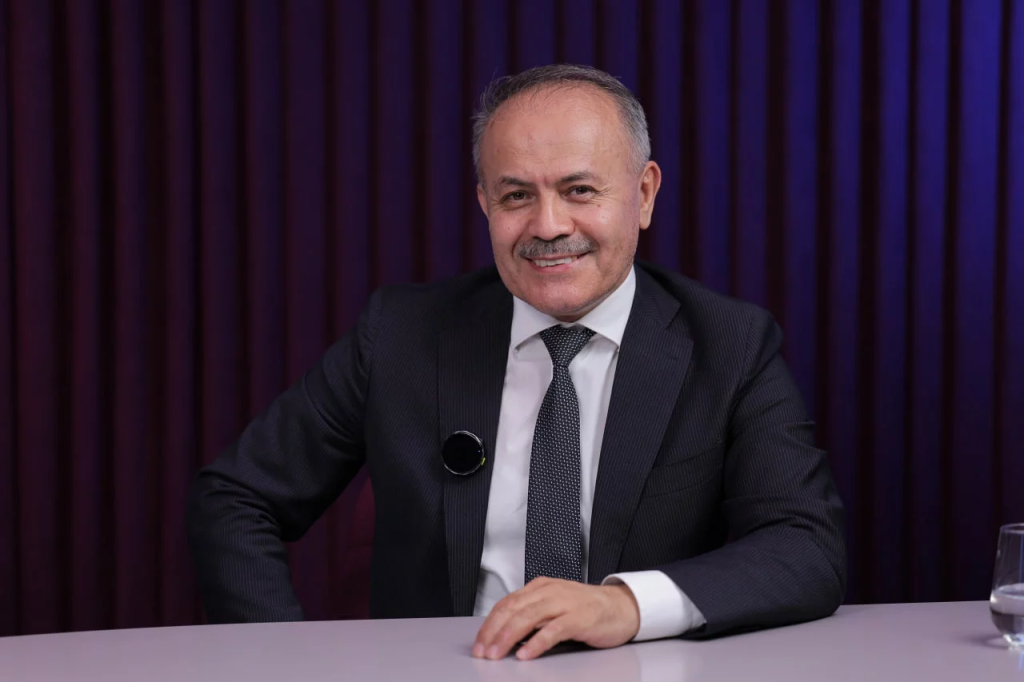
First Deputy Director of the Agency for Strategic Reforms under the President of the Republic of Uzbekistan Abdulla Abdukadirov shares his views on regional integration processes, the main directions of New Uzbekistan’s foreign policy, the country’s role and standing on the international stage, and prospects for further development.
– Speaking about integration processes in Central Asia and the international standing of New Uzbekistan, it should be noted that over the past decade the region has undergone the most significant and positive changes in its recent history, – says Mr. Abdukadirov. After gaining independence in 1991, relations among the five Central Asian states were long complicated by unresolved border issues, disagreements over water and energy resources, and mutual distrust. After 2016, thanks to political changes in Uzbekistan, the situation changed fundamentally.
Of course, Central Asian integration does not yet have as deep an institutional foundation as the European Union. However, a more flexible, consultative, and pragmatic format of interaction, which can loosely be described as “soft” good-neighborliness, is already producing tangible results.
Since 2018, Consultative Meetings of the Heads of State of Central Asia have been held regularly. At the 7th Consultative Meeting in Tashkent in 2025, Azerbaijan was admitted as a full participant, and the format expanded to C6. The informal summit in Cholpon-Ata on July 31 and the Cholpon-Ata Declaration continued this process.
All five countries in the region have repeatedly signed the Treaty on Friendship, Good-Neighborliness, and Cooperation for Central Asia’s Development in the 21st Century, which laid the political groundwork for ongoing regional collaboration.
The near-final resolution of border disputes, especially the trilateral agreement finalized in Khujand in 2025, played a significant role in enhancing regional security.
Mutual trade is expanding, the Trans-Caspian (Middle) Transport Corridor and the Green Corridor energy initiative are under development, and cooperation in water and energy resources is strengthening.
A major reason for this success is that the integration processes are driven by the region’s internal needs rather than external influences, with Uzbekistan and Kazakhstan taking the lead.
Yes, there is not yet a common market, a unified visa area, or strong supranational institutions. However, the region has already embarked on a path of sustainable integration based on the formula of “political trust plus mutual economic benefit”.
During the first 25 years of independence, Uzbekistan focused primarily on strengthening its sovereignty and ensuring domestic stability. Its foreign policy was cautious and limited. After 2016, a new stage began – the period of New Uzbekistan, during which positive changes in the country’s foreign policy became particularly evident.
The normalization of relations with neighboring states and the elevation of cooperation with Kazakhstan, Kyrgyzstan, Azerbaijan, and Tajikistan to the level of allied relations have been among the most significant diplomatic achievements of the past decade.
It is particularly important that Uzbekistan has become one of the main drivers of regional dialogue in this process.
At the same time, Uzbekistan is deepening its relations with the United States, the European Union, China, Russia, Türkiye, Japan, South Korea, and the Gulf states within the C5+1 format.
The advancement of initiatives on key resolutions, Uzbekistan’s election to the UN Human Rights Council and other international bodies, and the country’s increased engagement in regional security and sustainable development issues have become important achievements in recent years.
A significant increase in foreign investment, the expansion of foreign trade, and the advancement of the accession process to the World Trade Organization to its final stage, while maintaining the goal of completing it in 2026, have become practical results of the policy of openness.
The Mehr humanitarian operations, assistance to Palestine, and international initiatives in the field of interfaith and interethnic harmony consistently strengthen Uzbekistan’s international standing and positive image.
In my view, Central Asia is transitioning from a “geopolitical object” to a “geopolitical subject”. Uzbekistan, in turn, is among the most active states contributing to this transition.
Over more than 35 years of independence, Uzbekistan has progressed from a largely closed foreign policy to a more open, active, and initiative-driven diplomatic approach. Nevertheless, the outcomes so far are not the ultimate goal. To deepen integration, we must bolster economic interdependence, undertake large-scale infrastructure projects, and most crucially, maintain the consistency of domestic reforms.
In today’s complex environment, Uzbekistan’s pragmatic and balanced foreign policy, which prioritizes regional interests, continues to play a vital role in enhancing stability and cooperation across Central Asia.
Interviewed by Utkir Alimov, UzA